
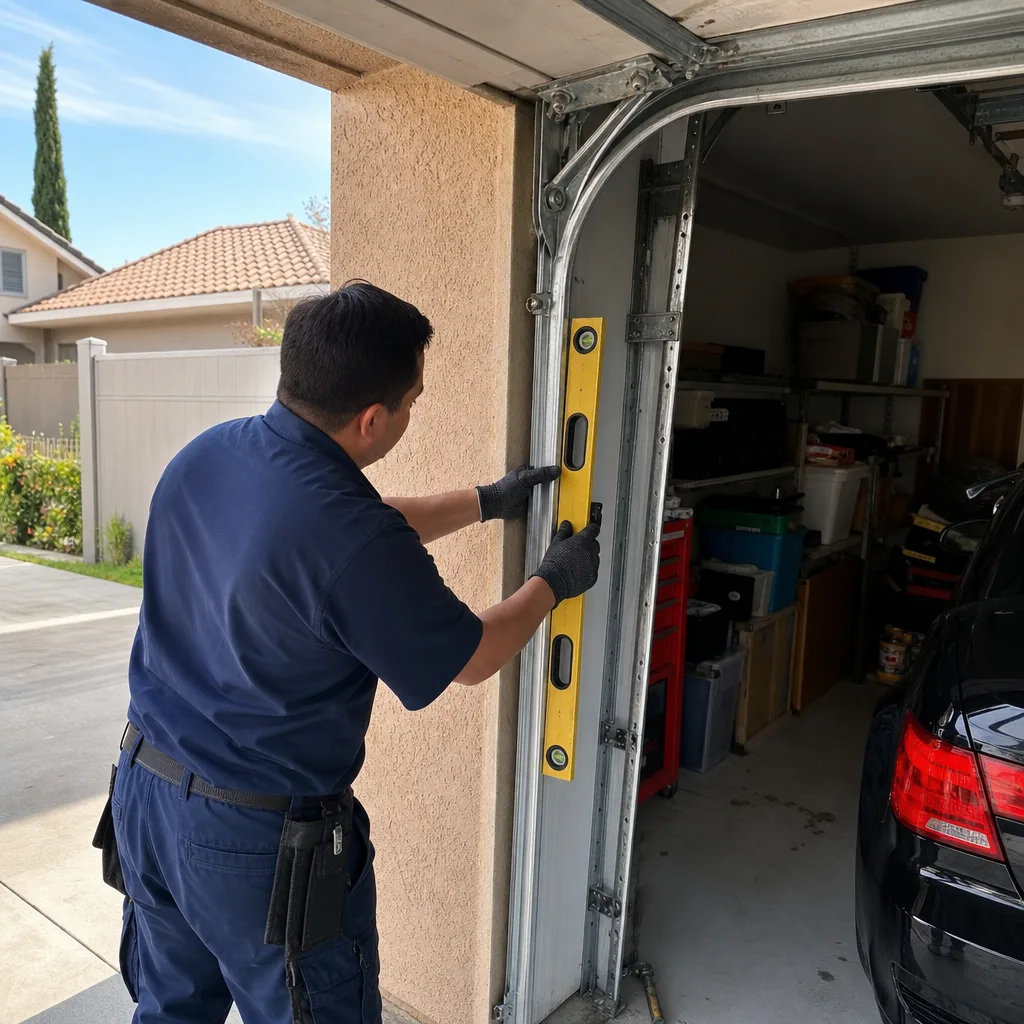
Last updated November 2, 2026
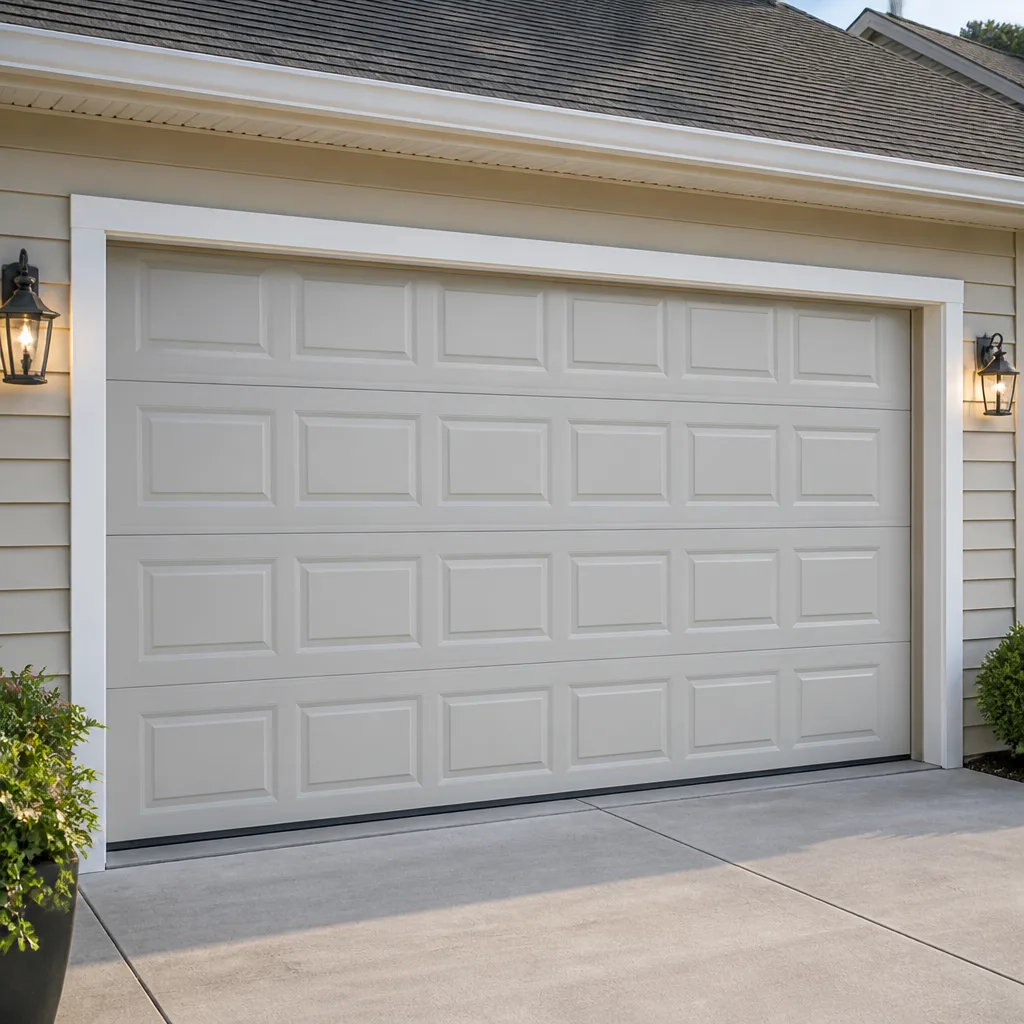 Raised-panel steel
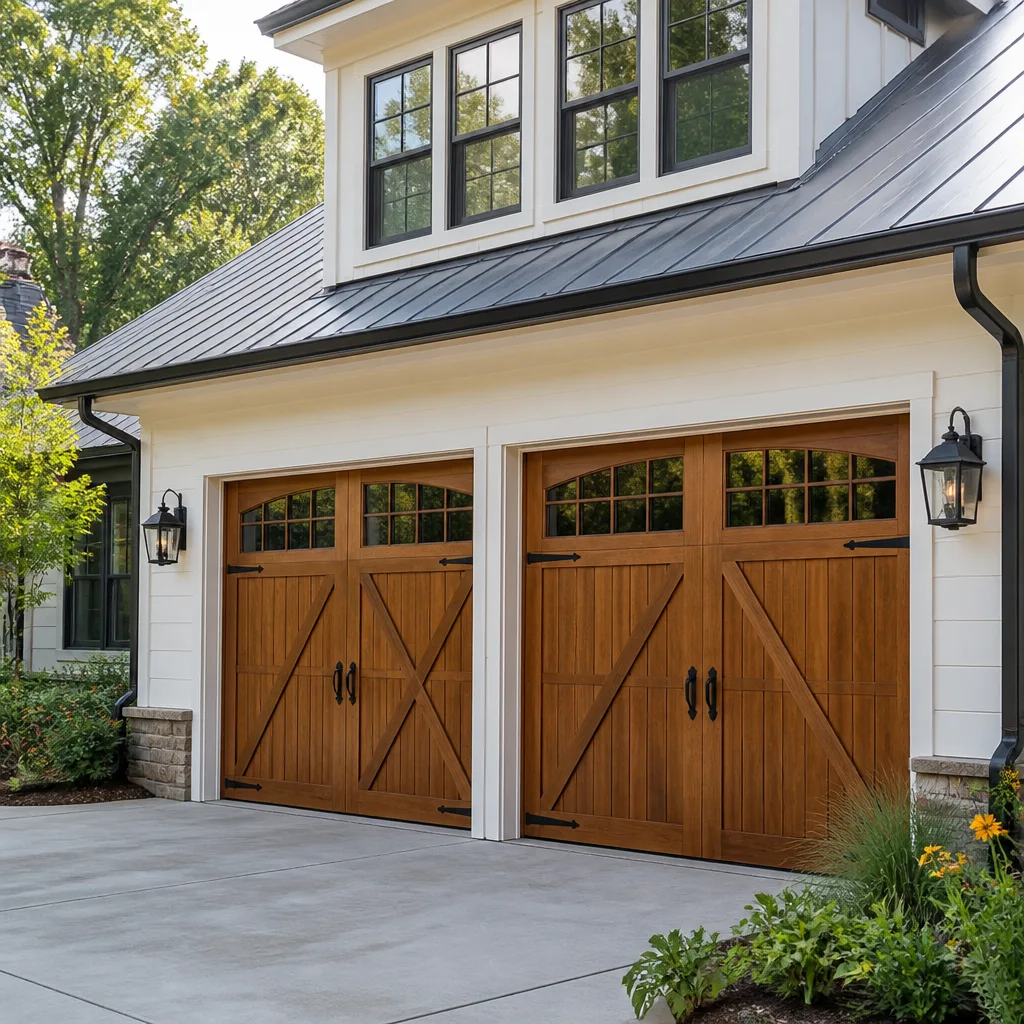 Carriage house
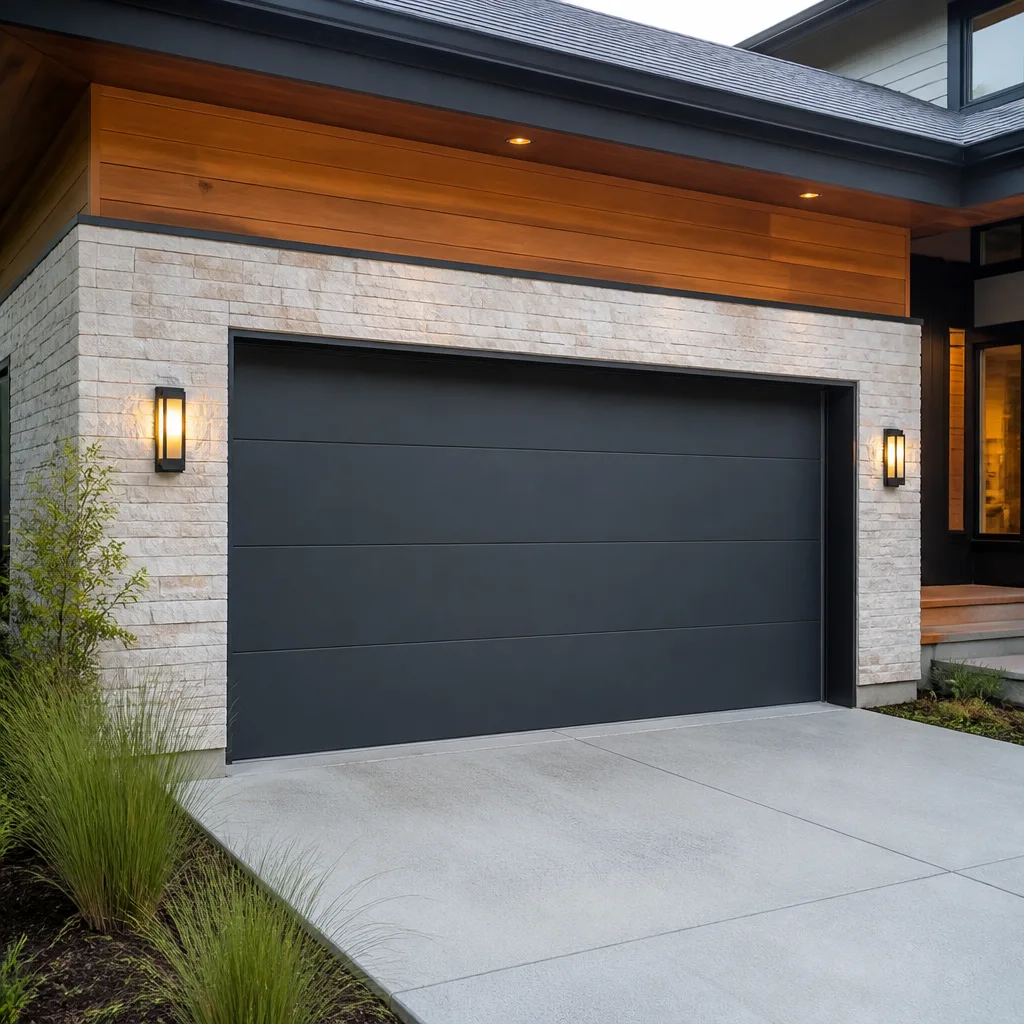 Modern flush
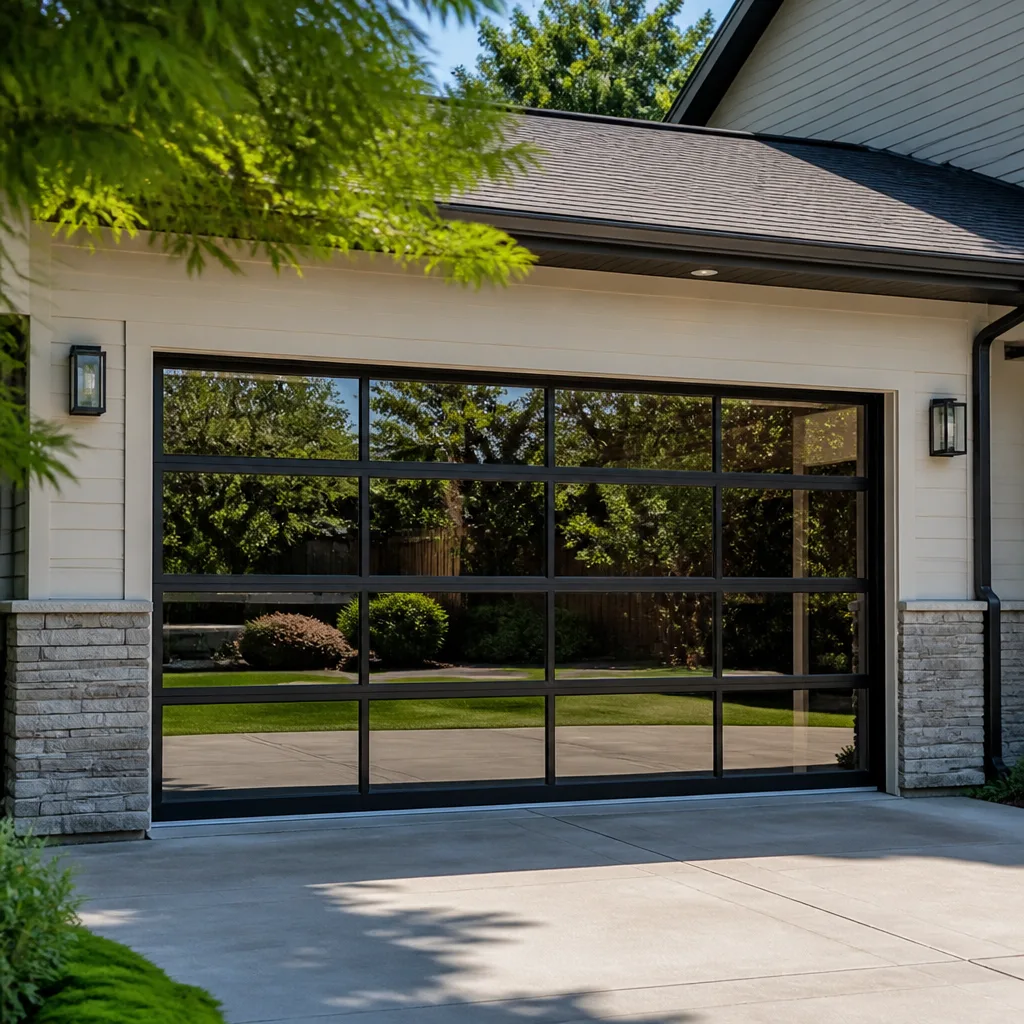 Full-view glass
 LiftMaster openers
 Chamberlain openers
Full 25-point door and opener safety check with every visit - springs, cables, rollers, tracks, and your LiftMaster or Chamberlain opener included
You get a price before we start. It does not change when the truck arrives.
Get your free estimateGarage Door Permits, Codes & Inspections in CA: What You Need to Know
If you replaced your garage door without pulling a permit and you’re selling your house, a sharp home inspector will find it – and it can hold up escrow or hand the buyer a negotiating chip. Most Fullerton homeowners assume a garage door swap is cosmetic, like changing a faucet. It rarely is in California. This guide covers the real permit triggers, the code sections inspectors enforce, what a Fullerton inspector actually looks at during a garage door inspection, and how to clean up unpermitted work before it becomes someone else’s problem. For related reading, see our guide to garage door warning signs in Fullerton.
Quick Answer
In California, a garage door permit is generally required when the work changes the structure – replacing the door and frame together, enlarging the opening, or adding a new door where one didn’t exist. Like-for-like door replacement where the frame stays intact often falls under minor repair and doesn’t need a permit, but converting a door to a motorized opener triggers UL 325 compliance requirements. California fire code (Title 24 Part 9) and the 2022 California Building Code govern the specifics, and Fullerton’s Building Division enforces these at the local level.
Styles & brands we work with
- Raised-panel steel
- Carriage house
- Modern flush
- Full-view glass
- LiftMaster openers
- Chamberlain openers
Table of Contents
- When a Permit Is Required in California vs. When It Isn’t
- UL 325 Compliance: What Automatic Openers Must Meet
- Fullerton Municipal Code: How the Building Division Handles Garage Door Permits
- What a Fullerton Inspector Checks During a Garage Door Inspection
- Retroactively Addressing Unpermitted Garage Door Work Before Listing
- Permit Costs, Timeline, and the Inspection Process in Fullerton
- Common Mistakes to Avoid
- When to Call a Professional
- Frequently Asked Questions
When a Permit Is Required in California vs. When It Isn’t
The threshold in California comes down to one question: does the work alter the structure, or does it replace components within an existing, compliant opening? The California Residential Code (CRC) Section R105.1 states that any work that modifies structural elements – beams, headers, wall framing, or the opening itself – requires a permit. A garage door isn’t just a door. It’s a structural opening in a load-bearing wall, and in many Fullerton homes built between the 1950s and 1980s, that wall is the primary lateral support for the front of the house.
Here’s the practical breakdown we see in the field:
- No permit needed: Replacing a single garage door panel, swapping worn rollers, replacing tracks that match the original spec, changing out a torsion spring, or installing a new door that fits the existing frame without modifying it.
- Permit required: Replacing the door and the frame together (the frame is considered part of the structure), enlarging or widening the opening, converting a single-car opening to a double-car, adding a garage door where the wall was previously solid, or any work that touches the header.
- Gray area that Fullerton treats as permitted work: Full replacement of the door, frame, and trim in one project. Even if the opening dimensions don’t change, Fullerton’s Building Division generally wants this permitted because it involves structural fastening to the wall assembly.
One detail homeowners consistently get wrong: the door’s size and weight matter. A 16-foot wide Amarr door with double-pane glass panels weighs substantially more than a builder-grade single-skin metal door. If your old door was a lightweight non-insulated model and you’re installing a heavy Raynor or Clopay model, the header and spring system loading changes. The code doesn’t care about your intent – it cares about the connected loads on the structure.
UL 325 Compliance: What Automatic Openers Must Meet
UL 325 is the safety standard for residential garage door operators, and it’s the most commonly overlooked compliance item in unpermitted door work. The standard sets requirements for entrapment protection, force-sensing reversal, and photo-eye placement. Any new motorized opener installed in California must comply with UL 325 as adopted by the California Electrical Code.
Here’s what that means in practice, and what triggers a code issue:
- Photo-eye sensors: Every automatic operator installed after 1993 must have a reversing photo-eye system mounted no higher than 6 inches above the floor. We’ve opened older Fullerton garages where the sensors are mounted at 14 inches or higher – that’s a code violation that a sharp inspector catches immediately.
- Force-sensing reversal: The opener must sense resistance and reverse if it meets a 1.5-inch obstruction on the way down. Older Craftsman and Genie openers from the 1980s and early 90s predate this requirement.
- Manual emergency release: The opener must have a red manual release cord that disables the motor and allows hand operation. This is a safety-critical component, not a convenience feature.
- Entrapment protection is not optional: If the garage connects to the house – which is the norm in Fullerton’s tract home neighborhoods – the entrapment requirements are non-negotiable. No grandfathering applies.
What trips people up is installing a new LiftMaster or Chamberlain opener on an unpermitted door replacement. The opener itself doesn’t require its own permit in most California cities, but it must be UL 325 compliant – and if the door it’s attached to is unpermitted, the whole assembly can fail inspection. The right fix is not to ignore it. It’s to bring the door and opener into compliance together, which is what a full garage door opener repair in Fullerton should include when code compliance is the goal.
Fullerton Municipal Code: How the Building Division Handles Garage Door Permits
Fullerton operates its own Building Division under the City of Fullerton’s Community Development Department, and it enforces the 2022 California Building Standards Code with local amendments in Title 15 of the Fullerton Municipal Code. The city issues permits through its online portal and at the counter at City Hall on West Commonwealth Avenue.
For a garage door permit in Fullerton, the process looks like this:
- Application: Submit the building permit application with a project description specifying door dimensions, manufacturer, model, and whether the opening size changes.
- Plan check (if required): For structural changes – enlarging an opening or altering a header – the city requires a plan check with structural drawings. Simple like-for-like frame replacements usually skip this.
- Permit issuance: The city issues the permit after payment. Fullerton’s garage door permit fees are modest compared to other Orange County cities, and most simple replacement permits are issued same-day or within 48 hours.
- Inspection scheduling: Fullerton’s Building Division schedules inspections by phone or through the online portal, typically with next-day availability for non-structural items.
- Final inspection: The inspector signs off when the door is operational, the opener is UL 325 compliant, and the structural connections meet the approved plans.
Fullerton also has specific fire code amendments that affect garage doors in attached garages. The door must maintain a fire separation rating consistent with the wall assembly. That means a solid-core or steel door, not a hollow-core interior-style door, on any wall shared with living space. Older Fullerton homes in the Maple and Raymond Hills neighborhoods sometimes have original wood doors that no longer meet this requirement. Replacing those is always a permitted, inspection-triggering job.
What a Fullerton Inspector Checks During a Garage Door Inspection
Most homeowners have never witnessed a garage door inspection, so they don’t know what the inspector is actually evaluating. The inspection is brief – usually 15 to 30 minutes – but it covers specific points, and the inspector has a checklist for Fullerton homeowners they work through methodically.
What a Fullerton inspector checks:
- Fastener spacing and type: The door frame must be secured to the rough opening with approved fasteners at the spacing specified by the door manufacturer and the code. Lag bolts, not nails, for the hinge-side jambs and header.
- Header contact: The track assembly must be hung from the header or ceiling with steel angle, not screwed directly into drywall. We see this failure constantly in DIY installs.
- Weatherstripping and threshold seal: The door must seal against the floor and jambs to maintain the building’s energy envelope. This is a California Energy Code (Title 24 Part 6) requirement.
- Opener compliance: Photo-eye height, force reversal, and the emergency release. If any are missing, the inspection fails on the spot.
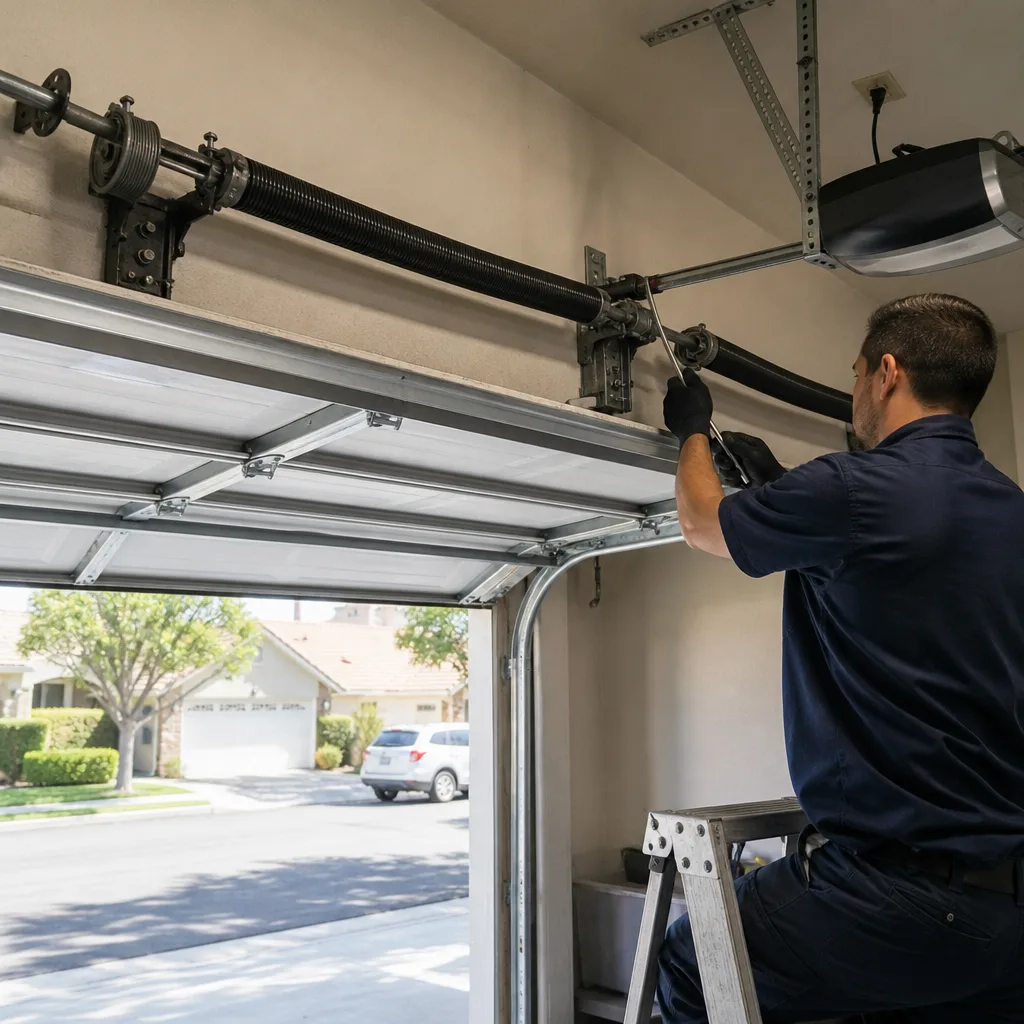
- Spring containment: Torsion springs must have containment cables routed through the spring’s interior. This is a safety requirement in the California Building Code and one that Fullerton inspectors enforce consistently.
- Door balance: The inspector manually lifts the door to confirm it stays in place mid-travel. An unbalanced door is a failure.
The critical point: an inspector is not checking whether the door looks nice. They’re checking whether the installation is structurally sound and meets the manufacturer’s installation instructions – because the CBC incorporates manufacturer specs by reference. If you install a Chamberlain opener with a Raynor door, both manufacturer manuals govern the inspection.
Retroactively Addressing Unpermitted Garage Door Work Before Listing
If the previous owner installed a garage door without a permit, or you did it yourself years ago and now you’re preparing to sell the house in Fullerton, you have options. The process to resolve unpermitted work generally falls into three paths:
- Self-disclosure and retroactive permit: Apply for a permit now for the existing work. The city reviews the application as if the work hasn’t happened yet, but the inspection covers the current installation. If it’s code-compliant, the inspector signs off and the project is legalized. This is the cleanest path if the work was done correctly.
- Correction and permit: If the existing work fails inspection – wrong fasteners, missing containment cables, non-compliant opener – you fix the deficiencies and reinspect. Most garage door issues are correctable without replacing the whole door.
- Disclosure to buyer: If you choose not to permit, California law requires you to disclose unpermitted work on the seller’s disclosure forms. The buyer can then decide to accept it or require a retrofit. In practice, we’ve seen Fullerton buyers demand a price reduction or a closing credit for unpermitted garage doors, and we’ve seen escrow held up while the retrofit permit goes through.
The retroactive permit process in Fullerton typically takes one to three weeks from application to final sign-off, depending on whether plan check is required. It’s faster if the work is already compliant and you just need the inspection.
Permit Costs, Timeline, and the Inspection Process in Fullerton
Garage door permit costs in Fullerton run lower than many Orange County cities. Expect to pay somewhere in the $75 to $250 range for a simple like-for-like replacement permit, including the final inspection. Projects involving structural changes – modifying the header, enlarging the opening – are more expensive because they trigger plan check, and those costs scale with the complexity of the engineering review.
Timeline expectations for a straightforward garage door permit in Fullerton:
- Application to permit issuance: 1 to 3 business days for over-the-counter review; up to 2 weeks if plan check is required.
- Inspection scheduling: Next-day or same-week availability in most cases. Fullerton’s Building Division typically runs inspection routes daily.
- Re-inspection (if needed): Adds 1 to 2 business days to the timeline.
- Total elapsed time, simple replacement: Usually 1 to 2 weeks from start to closed permit.
One note on scope: if your project includes garage door installation in Fullerton with structural changes, the permit timeline extends. The city won’t issue a permit for work that starts before the permit is in hand, and failing inspections can add weeks. That’s why getting the installation right – fasteners, spring containment, opener compliance – matters as much as getting the permit pulled.
Common Mistakes to Avoid
- Assuming a door replacement never needs a permit. If the frame is touched, the city considers it structural. Fullerton’s inspectors have seen every variation of this assumption, and it doesn’t go well at inspection time.
- Skipping the UL 325 compliance check on an old opener. A new door on a 25-year-old Genie opener without working photo eyes fails inspection. The door and opener must comply as a system.
- Using nails instead of lag bolts for the frame. This is the most common DIY failure we correct in Fullerton, and the inspector catches it every time. Nailed frames pull loose under cyclic loading.
- Mounting photo-eye sensors above 6 inches. A simple fix, but the code is unambiguous. Fullerton inspectors measure.
- Installing a door that doesn’t match the fire separation rating. Attached garages need doors that maintain the wall’s fire rating. Hollow-core doors fail immediately.
- Assuming the previous owner took care of permits. Before buying or after moving in, verify the garage door’s permit status. We’ve seen unpermitted doors from 20-year-old sales still causing problems at resale.
- Not budgeting for inspection fixes. If the door was installed wrong, bringing it into compliance costs money. Budget for it before you list the house.
When to Call a Professional
A garage door is under spring tension, and the largest moving component in a house. The containment cables, torsion springs, and opener force settings are not the place for guesswork. If you’re facing any of these situations, a professional is the right call: the door is heavy and unbalanced, the springs show signs of wear or the containment cable is missing, the opener predates the early 2000s and hasn’t been checked for UL 325 compliance, or you’re preparing for an inspection and want certainty on the first pass. For guidance, see our troubleshooting guide to common garage door problems. Insurance carriers also scrutinize garage door accidents that follow unlicensed repairs, and that’s a risk not worth taking.
In Fullerton, Westport Garage Door Repair offers free estimates for code-compliance checks, retrofit corrections, and permit preparation support. Call (877) 265-9301 and we’ll tell you exactly what your door needs before the inspector gets there.
Frequently Asked Questions
A garage door permit in Fullerton typically costs between $75 and $250 for a standard replacement with frame and no structural changes. Structural modifications that require plan check will cost more. Call (877) 265-9301 for a free assessment of what your specific project will require.
You can replace a garage door without a permit in California only when the frame remains untouched and the work qualifies as a minor repair – single panel, springs, rollers, or tracks. Replacing the door and frame together, changing the opening size, or adding a new door where none existed requires a permit. Fullerton’s Building Division enforces this threshold.
A Fullerton garage door inspector checks fastener type and spacing, header contact, weatherstripping and threshold seal, UL 325 opener compliance, torsion spring containment cables, door balance, and fire separation rating. The inspection typically takes 15 to 30 minutes.
Most California cities, including Fullerton, do not require a standalone permit for a garage door opener replacement. However, the opener must be UL 325 compliant, and if it’s installed on an unpermitted door, the whole assembly may fail inspection. New LiftMaster and Chamberlain openers are UL 325 compliant out of the box.
California law requires disclosure of unpermitted work. The buyer can demand a price reduction, require a retroactive permit before closing, or back out of the sale. In Fullerton, we’ve seen this hold up escrow. The cleanest path is to obtain a retroactive permit before listing, and Westport can assess whether your existing installation will pass.
A simple garage door permit in Fullerton takes 1 to 3 business days for issuance and about a week to schedule and pass inspection. Structural projects involving plan check take longer, typically 2 to 3 weeks total. The city schedules inspections daily, so the bottleneck is usually the plan check, not the inspection itself.
The Bottom Line
California garage door code requirements are more specific than most Fullerton homeowners realize. The permit threshold between like-for-like replacement and structural change is narrow, UL 325 compliance for openers is enforced strictly, and the fire separation requirements in attached garages leave no room for interpretation. Unpermitted work has a way of surfacing at the worst possible moment – during a home sale, when the buyer’s inspector is standing in your garage measuring photo-eye height. The fix is simple: know what your door needs, pull the permit when it’s required, and get the installation right the first time. If you’re uncertain, a specialist who knows your door and the Fullerton inspection process beats guessing. Reach out to Westport Garage Door Repair home or check our garage door repair in Fullerton page – we’ll tell you what your door needs before the inspector does.
Written by the team at Westport Garage Door Repair, serving Fullerton since 2012. Browse our more guides & resources.
See the difference
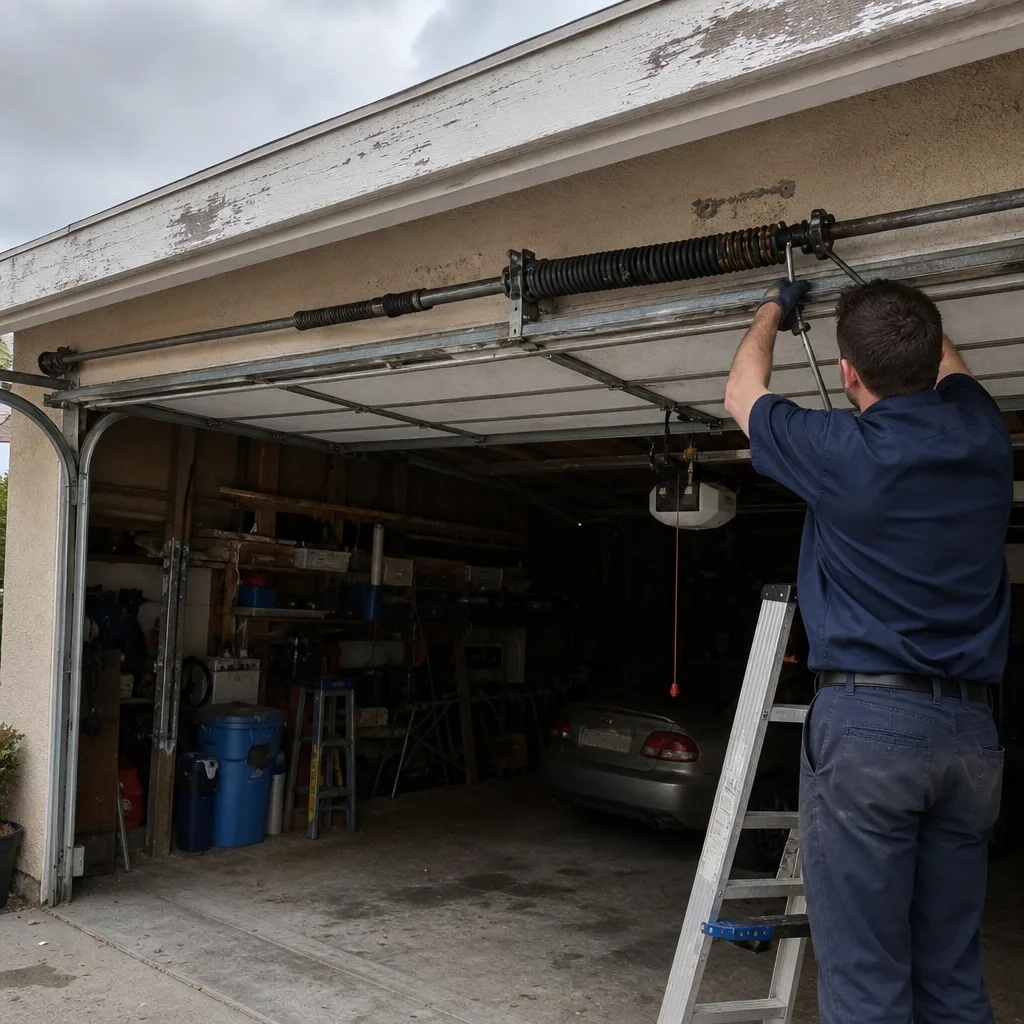 Before
 After
 Before
 After
 Before
 After