
Last updated November 2, 2026
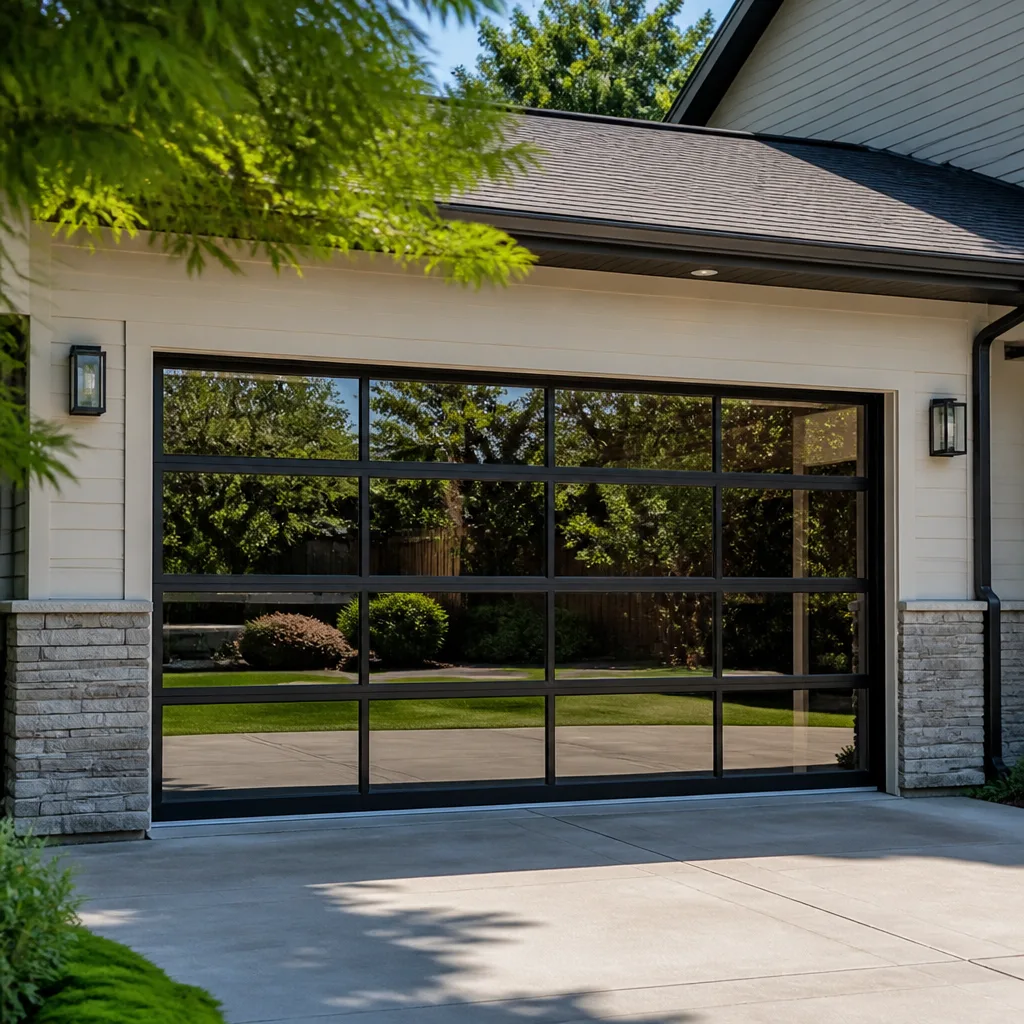 Full-view glass
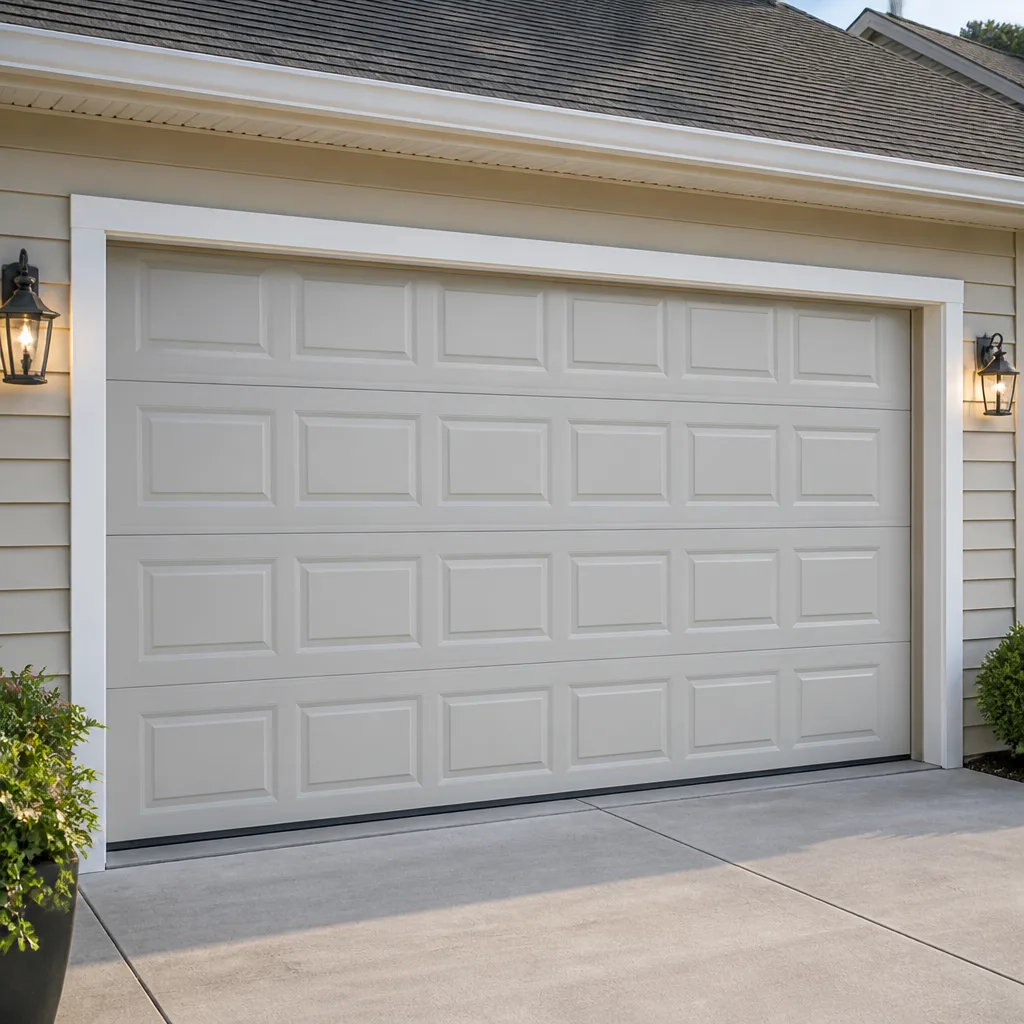 Raised-panel steel
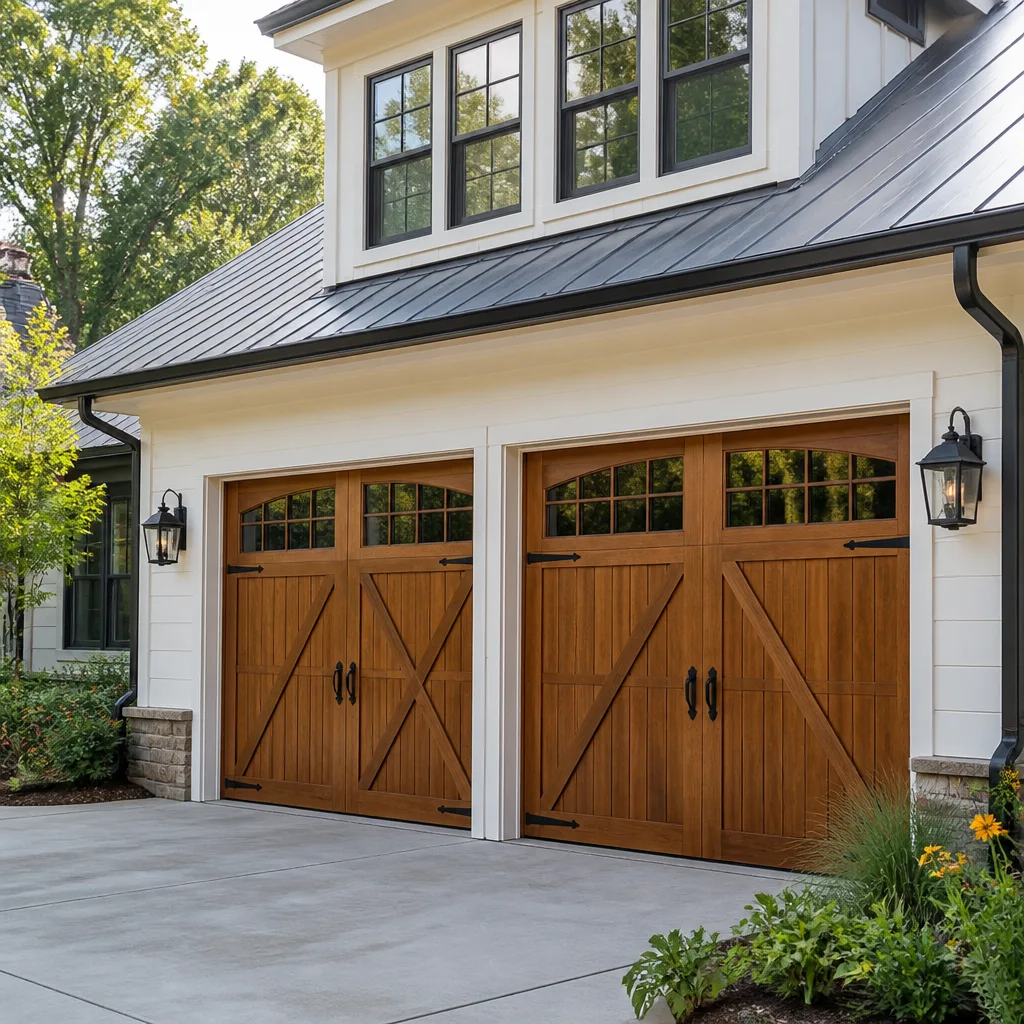 Carriage house
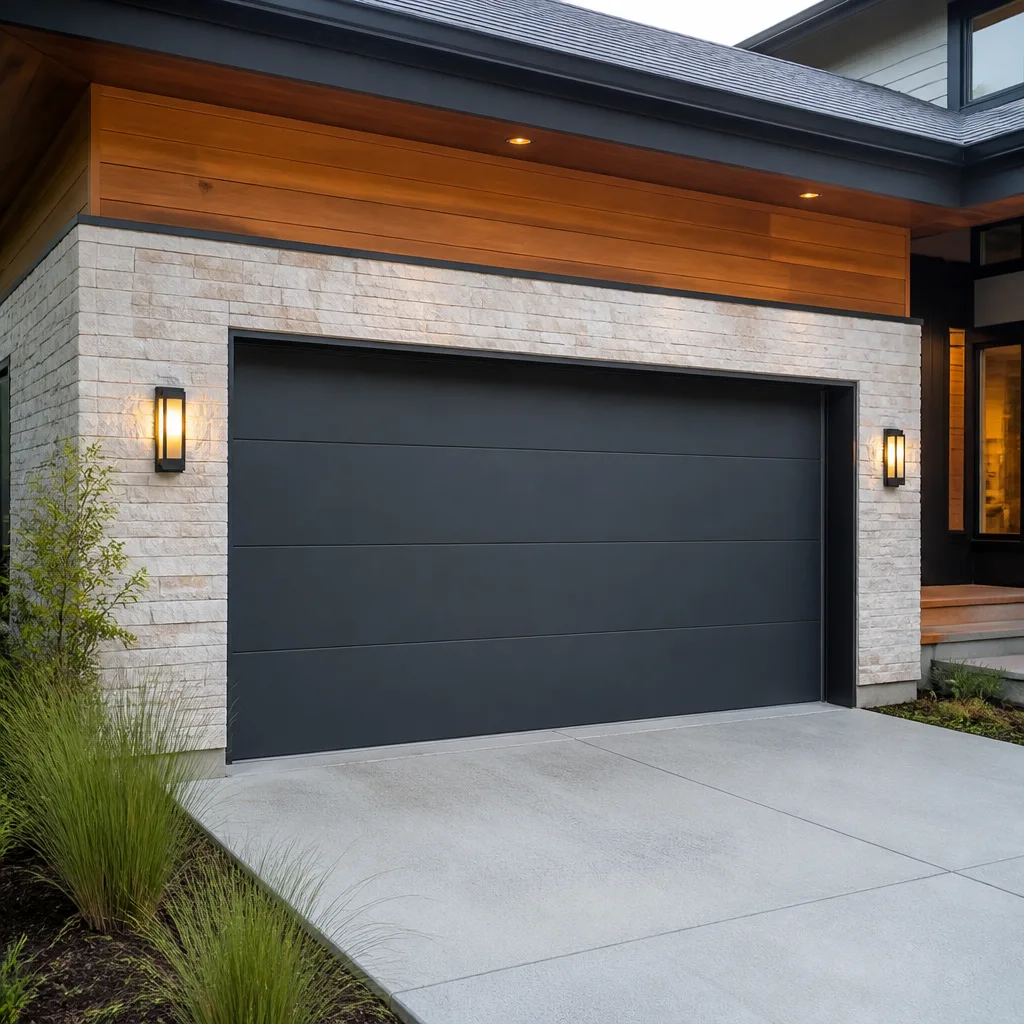 Modern flush
 LiftMaster openers
 Chamberlain openers
Full 25-point door and opener safety check with every visit - springs, cables, rollers, tracks, and your LiftMaster or Chamberlain opener included
You get a price before we start. It does not change when the truck arrives.
Get your free estimateGarage Door Warning Signs: A Fullerton Homeowner’s Reference Guide
The grinding noise your garage door made this morning is not “just how it sounds.” It’s a mechanical symptom with a specific source, and diagnosing it early costs a fraction of what ignoring it will. Most garage door failures in Fullerton follow a predictable sequence: a small sound, a slight visual change, a subtle behavioral shift. Homeowners dismiss these because nobody ever showed them what a healthy door actually sounds and feels like. This guide changes that. You’ll learn to read the seven most common warning signs, understand which component is talking to you, and know when to watch versus when to call. For how to hire a garage door contractor in Fullerton: a step-by-step guide when that time comes, see our companion resource. Because by the time a door fails completely, the repair bill has usually tripled.
Quick Answer
Garage door warning signs fall into three categories: sounds (grinding, popping, squealing), visual asymmetry (crooked hang, uneven gaps, sagging sections), and opener behavior (reversing, slowing, straining). Most early-stage failures announce themselves through one of these channels weeks or months before the door actually stops working. A scraping sound typically points to a worn roller or misaligned track, a popping sound to a spring under stress, and a door that hangs crooked to a cable or spring imbalance. Catching these early in Fullerton usually means a $150-$300 repair instead of an $800+ replacement.
Styles & brands we work with
- Raised-panel steel
- Carriage house
- Modern flush
- Full-view glass
- LiftMaster openers
- Chamberlain openers
Table of Contents
- The Sound-Based Diagnostic Index: What Your Door Is Telling You
- Visual Asymmetry: When a Crooked Door Is a Five-Alarm Signal
- Opener Behavior Clues: Why Your Opener Might Not Be the Problem
- The 10-Second Manual Lift Test: Reading Your Spring Tension
- Watch-and-Monitor vs. Service-Now: A Triage Guide
- Why Fullerton’s Climate Accelerates Certain Failures
- Brand-Specific Notes: What We See on LiftMaster, Genie, and Clopay Doors
- The Cost of Ignoring: What Each Warning Sign Becomes
The Sound-Based Diagnostic Index: What Your Door Is Telling You
Garage doors speak a mechanical language. Each sound maps to a specific component under stress, and learning the vocabulary takes about five minutes. In our experience across Fullerton, most homeowners can correctly identify which part is failing just by describing the noise over the phone. Here’s what each sound means.
Scraping or Metal-on-Metal Contact
A scraping sound that follows the door’s travel path almost always means a roller is worn, a track is misaligned, or a hinge has loosened. The sound is constant, not intermittent, and it rises and falls with the door’s speed. On older Fullerton homes with original hardware from the 1980s and 1990s, we frequently see rollers that have lost their ball bearings entirely, leaving the metal wheel to ride directly on the stem. Left alone, a scraping roller scores the track, and now you’re replacing both.
Grinding (Deep, Rough, Almost a Growl)
Grinding is different from scraping. Scraping is surface contact. Grinding is internal, deeper, almost a growl. It usually points to the opener’s gear assembly or a drive system that’s chewing itself up. On Genie and older Craftsman screw-drive openers, grinding often means the screw drive is binding or the main gear has stripped a tooth or two. On Chamberlain and LiftMaster chain-drive systems, it can mean the chain is loose and slipping across the sprocket. Grinding never resolves itself. It always escalates.
Popping or Snapping (Especially During Travel)
A popping sound during operation is the garage door equivalent of a warning shot. It typically comes from torsion springs that are beginning to fatigue, coil bind, or shift on the shaft. As a spring cycles through tens of thousands of lift-and-close operations, the steel develops microscopic fractures. Those fractures make small popping noises as the spring unwinds and rewinds. A single pop might be a spring settling. Recurring pops are a countdown. We’ve seen springs in Fullerton fail within two weeks of the first audible pop, and we’ve never seen one fix itself.
Squealing or High-Pitched Whine
A squeal is a friction sound, and it’s usually the friendliest problem on this list. Dry rollers, dry hinges, or a dry belt drive will squeal until you address the friction. A silicone-based lubricant applied to rollers and hinges (not the track) often quiets this in one pass. But don’t reach for WD-40. It’s a solvent, not a lubricant, and it’ll strip the grease out of your rollers and make them fail faster. The exception to the “squeal is friendly” rule: if the squeal comes from the opener motor itself while running, that’s a bearing on its way out, and it won’t respond to spray lubricant.
Visual Asymmetry: When a Crooked Door Is a Five-Alarm Signal
A garage door should hang perfectly level when closed and remain level through every inch of travel. When it doesn’t, the door is broadcasting a specific, diagnosable problem. Visual asymmetry is one of the most reliable pre-failure indicators a Fullerton homeowner can spot, and it requires zero mechanical knowledge. Just eyes.
The Uneven Hang
Walk across the street from your house and look at your closed garage door. The bottom edge should be parallel to the ground, and the gap under the door should be identical on both sides. If one side rests an inch lower than the other, or one corner is visibly higher, you have a spring or cable imbalance. Torsion spring systems are under hundreds of pounds of tension, and when one spring loses a few pounds of torque relative to its partner, the door tilts. This is not cosmetic. A door that hangs crooked is putting lateral stress on its hinges, tracks, and rollers, accelerating wear across the whole system. It’s also a sign that the spring is no longer supporting its share of the door’s weight.
The Gap at One Corner
A gap between the bottom of the door and the garage floor on one side but not the other usually indicates either a cable that’s slipped a spool or a spring that’s weakened asymmetrically. On a healthy door, both cables carry equal tension. When one cable stretches or slips, its side of the door sags. Fullerton homeowners who park in attached garages with bedrooms above them may also notice the gap because of light intrusion under the door at night. If you can kick a flashlight under one corner of a closed door but not the other, your system is out of balance.
Sagging Sections or Visible Panel Separation
Look at the joints between door panels while the door is halfway up. On a door in good condition, panels stay parallel with tight, even seams. On a door with compromised springs or failing hinges, panels can separate slightly at the seams, especially near the top or bottom. A door that sags mid-section is transferring weight to points the panels were never designed to carry. We see this most often on older Fullerton ranch homes with original 16-foot doors and single-car garage widths, where the door itself is heavier and springs have been cycling for two decades.
Opener Behavior Clues: Why Your Opener Might Not Be the Problem
Here’s a distinction most Fullerton homeowners never get because nobody tells them: your opener is a dumb motor that follows orders. It doesn’t decide anything. When an opener behaves strangely, the cause is usually mechanical resistance in the door itself, not a failure inside the opener’s logic board. The opener is the symptom carrier, not always the disease.
Unexpected Reversal
Modern openers, especially LiftMaster and Chamberlain units with MyQ, are equipped with force sensors. When resistance exceeds a preset threshold, the opener assumes it has hit an obstruction and reverses. Most of the time, there is no obstruction. There’s a door fighting its own hardware. A spring that’s losing tension, a roller grinding in its track, or a cable starting to bind will force the opener to work harder. The opener reads that extra effort as “something is in the way” and reverses. If your door reverses when nothing is under it, the problem is beneath the surface, not in front of the sensor. Check for excessive door weight first.
Slower Than Usual Operation
A garage door that used to open in 12 seconds now takes 20. The opener’s motor speed is fixed; the variable is how hard it has to work. Slack in a chain, tension loss in a spring, or friction from un-lubricated rollers will all slow the door’s travel even though the motor spins at the same RPM. We’ve diagnosed more spring failures from “the door is slow” than from “the door won’t open.” A slow door is a door consuming extra energy to do a job it used to do effortlessly.
Audible Straining That Didn’t Exist Before
Listen to the opener during operation. A healthy opener runs with a steady, even hum. A struggling opener’s pitch drops and it sounds labored, almost like a car engine pulling a heavy trailer up a hill. That sound is the motor working against mechanical resistance. On Clopay and Amarr doors, which tend toward heavier-gauge steel, a weakening spring will make the opener strain audibly months before the door visibly sags. The strain sound is the earliest warning in the entire door-family, and it’s the one most homeowners write off as “it’s just getting old.”
The 10-Second Manual Lift Test: Reading Your Spring Tension
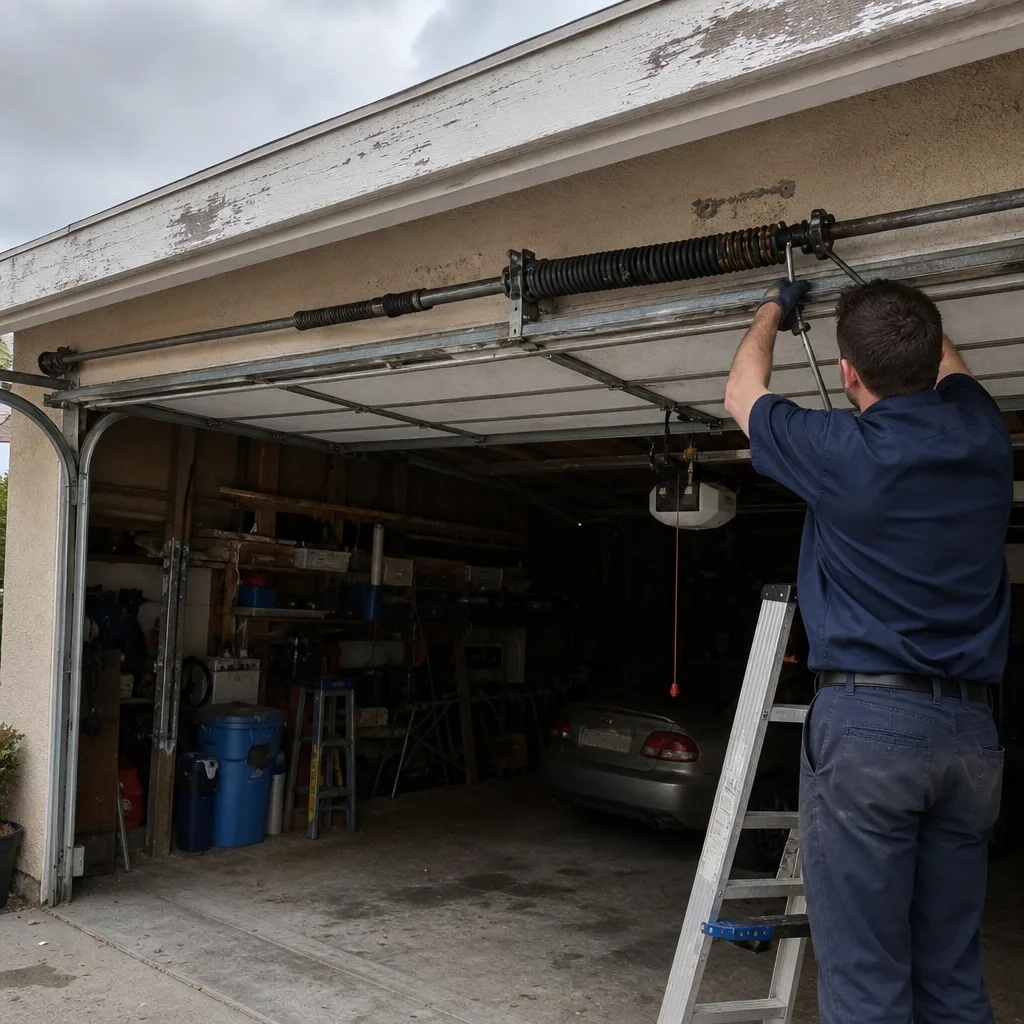
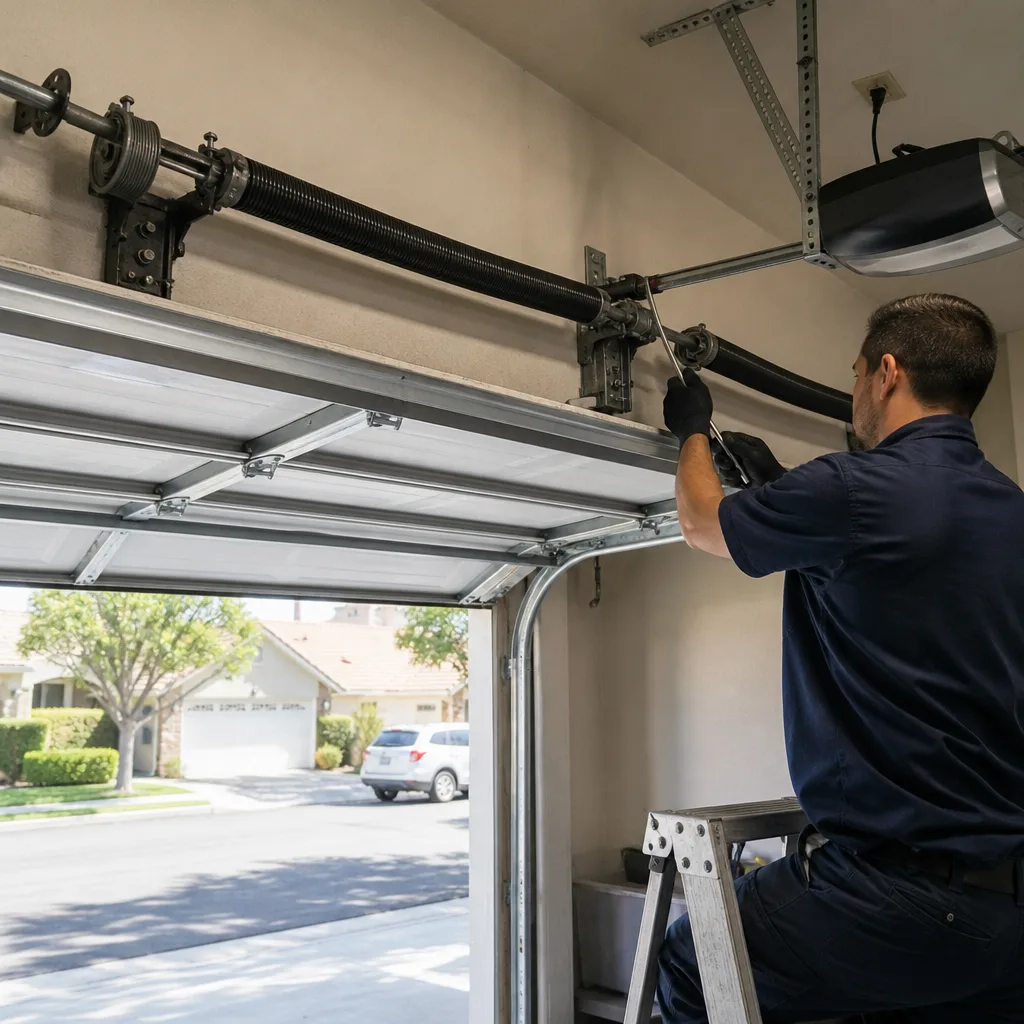
Here’s a simple test that tells you more about your door’s health than any visual inspection. It takes ten seconds and requires nothing but the emergency release cord. But before we walk through it, a safety caveat: garage door springs are under enormous tension, and this test reveals whether they’re failing. Do the test. Do not attempt to adjust, repair, or replace springs yourself. A torsion spring releasing its stored energy can cause serious injury or worse. This test is diagnostic only.
Here’s how to read your spring tension:
- Close the door fully. Do the test from the closed position, never open.
- Pull the red emergency release cord. This disconnects the door from the opener carriage.
- Lift the door manually from the bottom handle. A healthy door, with functional springs, should lift smoothly with roughly 8-15 pounds of effort and stay where you put it halfway up. It should not shoot up, and it should not want to slam down.
- Stop lifting at chest height and let go. A correctly balanced door will stay put or drift very slowly. It should not drop.
- Lower it back down by hand. It should close smoothly and touch down gently, not bang.
- Reattach the door to the opener. Pull the release cord again and let the carriage re-engage, or run the opener until it clicks back in.
The warning signs here are unmistakable. If the door feels heavy, like it weighs 40 or 50 pounds instead of 10, your springs are shot. If it wants to crash to the floor when you let go halfway, same conclusion. If it lifts quickly and feels almost weightless, a spring may be over-tensioned or the wrong spring was installed. All three results mean the springs are not doing their job. The door is supposed to be nearly neutral in your hand. If it isn’t, call before the opener burns itself out carrying the load.
Watch-and-Monitor vs. Service-Now: A Triage Guide
Not every warning sign is an emergency. In fact, acting like all of them are is how Fullerton homeowners waste money on service calls for doors that still have months of life. But some signs genuinely demand same-week response. Here’s the triage framework we use to counsel homeowners over the phone.
Watch-and-Monitor (Schedule Within 2-4 Weeks)
- Occasional squeal from rollers or hinges. Lubricate and see if it resolves. If the squeal persists after lubrication, schedule service.
- Slow operation with no other symptoms. A door that’s a few seconds slower but still opens and closes reliably can usually wait a couple weeks.
- Minor gaps under the door. A quarter-inch gap on one corner is worth addressing, but not before breakfast. Monitor it for a week to see if it worsens.
- Single pop sound. If you heard one pop and nothing has changed since, note the date and monitor. Recurring pops escalate the timeline immediately.
- Faint grinding at startup that disappears. This can be a cold-weather quirk or a drive system warming up. Watch it for a few days.
Service Now (Call Within 24-48 Hours)
- Visible cable damage, fraying, or a cable hanging loose. A door hanging from one cable is a loaded weapon.
- Door will not stay up when half open. This is spring failure, and the door is a falling hazard.
- Recurring pops during operation. The spring is telling you it’s on borrowed time.
- Door hangs visibly crooked or has a large side gap. Active cable or spring imbalance. Every cycle accelerates the damage.
- Opener reverses every time, even after clearing the sensor path. The force sensor is protecting the motor from a mechanical problem that’s getting worse.
- Any sound that you would describe as a “bang” or “snap” while the door is in motion. This is a component giving way, not wearing down.
When in doubt, err toward service-now. The average cost difference between a caught-early repair and a post-failure replacement in Fullerton runs $400 to $700, and the spread is wider on premium doors like Clopay and Amarr than on builder-grade units.
Why Fullerton’s Climate Accelerates Certain Failures
Fullerton’s climate profile is specific: hot, dry summers routinely crossing 95 degrees, mild winters, and the occasional Santa Ana wind event that coats everything in fine dust. That combination affects garage door hardware in ways homeowners in coastal Orange County don’t experience.
First, heat cycling. A dark-painted garage door facing west in Fullerton can reach 140+ degrees on an August afternoon. That surface temperature radiates into the door’s internal hardware. Steel rollers and steel tracks expand at different rates, creating friction points that don’t exist at 75 degrees. That’s why squeals and scrapes often worsen in summer and disappear in winter. The problem is still there. It’s just temperature-activated.
Second, dust and grit. Santa Ana winds deposit a fine, abrasive dust into every unsealed bearing surface. That grit works its way into roller bearings, hinge pins, and the opener’s drive system. Over a period of wind events, that grit acts like sandpaper inside components that were designed to run clean. Fullerton homeowners with homes near open space corridors or newer construction areas see this more acutely.
Third, dry air. Southern California’s low humidity is kind to steel in one way (less rust) and cruel in another (lubricants dry out faster). Grease that would stay viable for two years in a humid climate may degrade in 12-18 months in Fullerton’s arid environment. That’s why we recommend lubricating your rollers and hinges at least twice a year here, and more often if your door faces the direct afternoon sun. For a complete schedule, see our seasonal garage door care for Fullerton: year-round homeowner’s guide.
Brand-Specific Notes: What We See on LiftMaster, Genie, and Clopay Doors
We’re a garage door company, not a generalist. Westport Garage Door Repair home services garage doors and openers exclusively, and that single-trade focus means we’ve seen enough of each major brand to know its patterns. Here’s what that looks like in practice across three of the eight brands we work on every day.
LiftMaster Openers
LiftMaster units are generally tough, and the most common failure we see in Fullerton is not a bad motor but a bad capacitor. A failing capacitor often produces a click or a hum at startup but no movement. Homeowners hear that click and assume the opener is dead. Many times, the opener itself is fine and the fix is a capacitor swap, not a whole-unit replacement. LiftMaster’s MyQ-enabled models also occasionally show app-connectivity issues that have nothing to do with door mechanics. We separate electronics problems from mechanical problems, which matters because the fix is different for each.
Genie Openers and Legacy Doors
Genie is one of the most-established names in American garages, and Fullerton has thousands of them still in service. The weakness we see most is in older Genie screw-drive units: the screw drive’s plastic bushings wear down, producing a grinding noise that worsens over months. That grinding is a specific, diagnosable sound, and hearing it means the screw drive is chewing through its own support structure. The fix is a screw drive rebuild. Continuing to run it means the motor burns out trying to turn a bound screw, at which point you’re buying a whole new opener instead of a rebuild kit.
Clopay Doors
Clopay builds some of the best doors in the industry, and their heavier gauge steel panels hold up beautifully in Fullerton’s sun. See our choosing the right garage door brand: a buyer’s guide for Fullerton for how Clopay compares to other options. The pattern we see on Clopay doors is not panel failure but spring misapplication. Clopay doors run heavier than most comparably-sized builder doors, which means the springs have to be calibrated to the actual panel weight, not a generic “two-car door” estimate. When a previous technician installed springs rated for a lighter door, the springs fatigue prematurely. That premature fatigue shows up exactly as described in the sound index above: popping, then sagging, then failure. If your Clopay door sags or pops within five years of a spring replacement, we’d bet on the springs being under-rated for the panel weight.
The Cost of Ignoring: What Each Warning Sign Becomes
Every garage door warning sign is a bill that hasn’t come due yet. The longer you wait, the bigger the number on the invoice. Here’s a structured breakdown of what each ignored sign typically becomes in Fullerton, based on the repair patterns we see. These are ranges for the Fullerton market, not national averages.
- Ignored squeal from dry rollers: Worn roller bearings seize, the roller flat-spots, the flat spot scores the track. What was a $25 lubrication call becomes a $160-$280 roller and track repair set.
- Ignored grinding from the opener: Drive system failure cascades to the motor. What was a $150 gear replacement becomes a $350-$600 opener replacement.
- Ignored popping springs: The spring fails while the door is up. The door slams down with all of its weight. Repair cost is the spring replacement plus damage to panels, hinges, or the opener. Call it $500-$1,200 where a spring-only replacement would have run $180-$340.
- Ignored crooked door: The asymmetry grinds down one side of the track over weeks or months. Track replacement gets added to the spring repair you should have done first.
- Ignored slow operation: The opener works harder every cycle. A burnout takes the motor with it. The door that used to be a $200 fix becomes a $500 opener swap.
The pattern here is consistent: early intervention costs a fraction of post-failure repair. The door is telling you something. The question is whether you’re listening before or after the invoice arrives.
Common Mistakes to Avoid
- Lubricating the track. Garage door tracks are meant to be dry. Lubricating them attracts dust (of which Fullerton has plenty during Santa Ana season) and creates sludge that makes rollers work harder.
- Using WD-40 as a garage door lubricant. WD-40 is a solvent and will strip the grease from your rollers. Use a silicone or lithium-based garage door-specific lubricant.
- Watching a worsening sound for months hoping it’ll settle. It won’t. A sound that’s getting louder or more frequent is a component degrading on schedule. The only thing waiting accomplishes is a larger repair.
- Assuming a reversing door is a sensor alignment problem. Nine times out of ten, the sensors are fine and the door is too heavy. We’ve seen Fullerton homeowners replace sensors, remotes, and even whole openers before discovering the spring was the problem all along.
- Doing a spring replacement yourself. Torsion springs store enough energy to seriously injure or kill. This is not a YouTube project. We cannot state this strongly enough.
- Ignoring a door that’s always been a little slow. “A little slow” isn’t a personality trait. It’s a measurement of how much friction is in your system. If it’s slow, something is wrong, even if it’s been slow since you bought the house.
- Painting over a sagging or separating panel without addressing the cause. The panel is a symptom. The spring or hinge is the disease. Paint won’t fix a spring.
See the difference
 Before
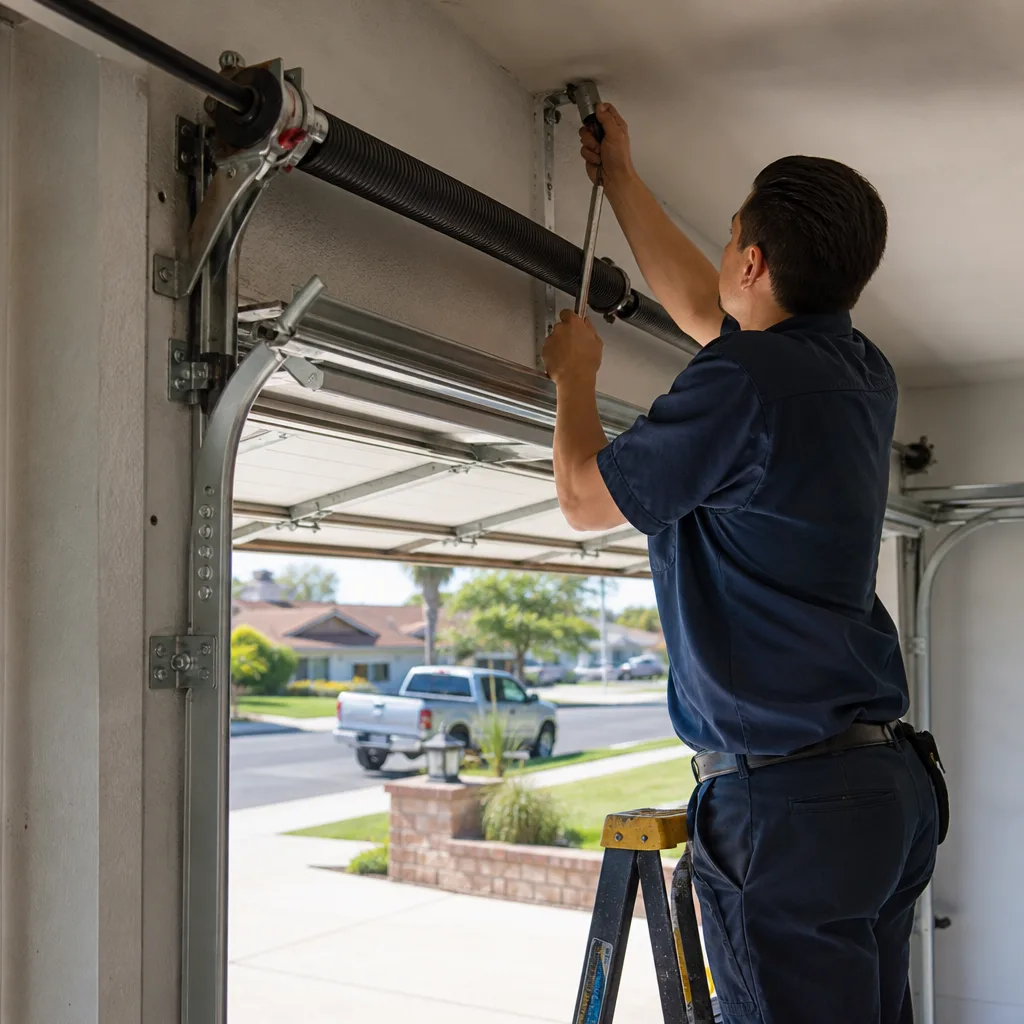 After
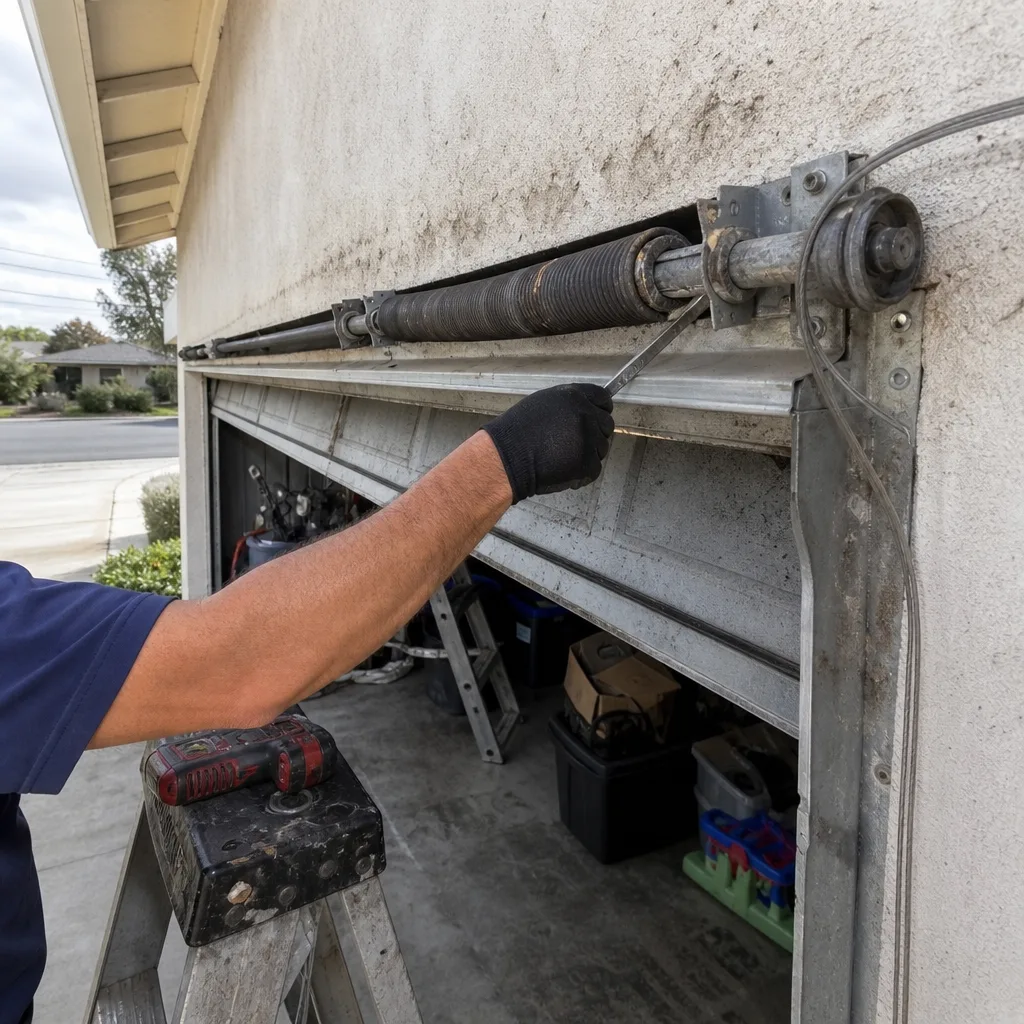 Before
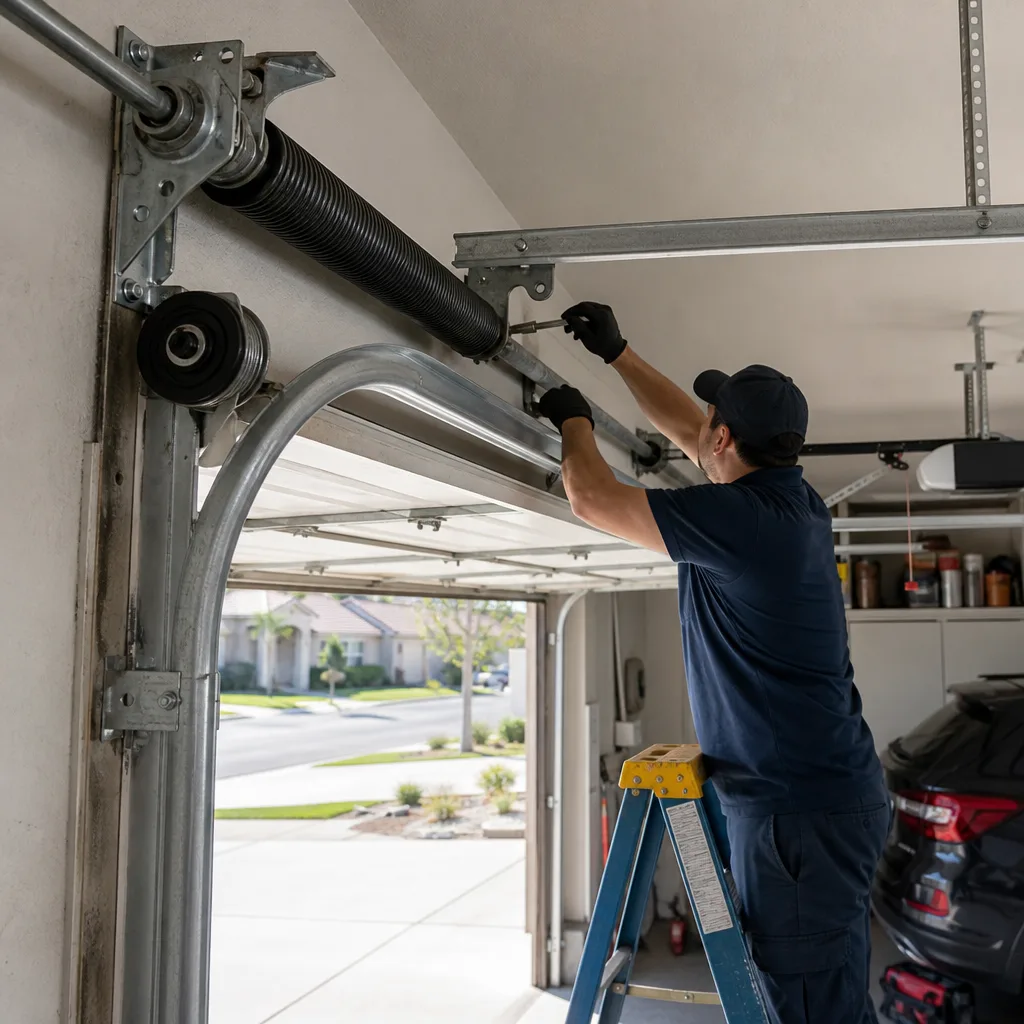 After
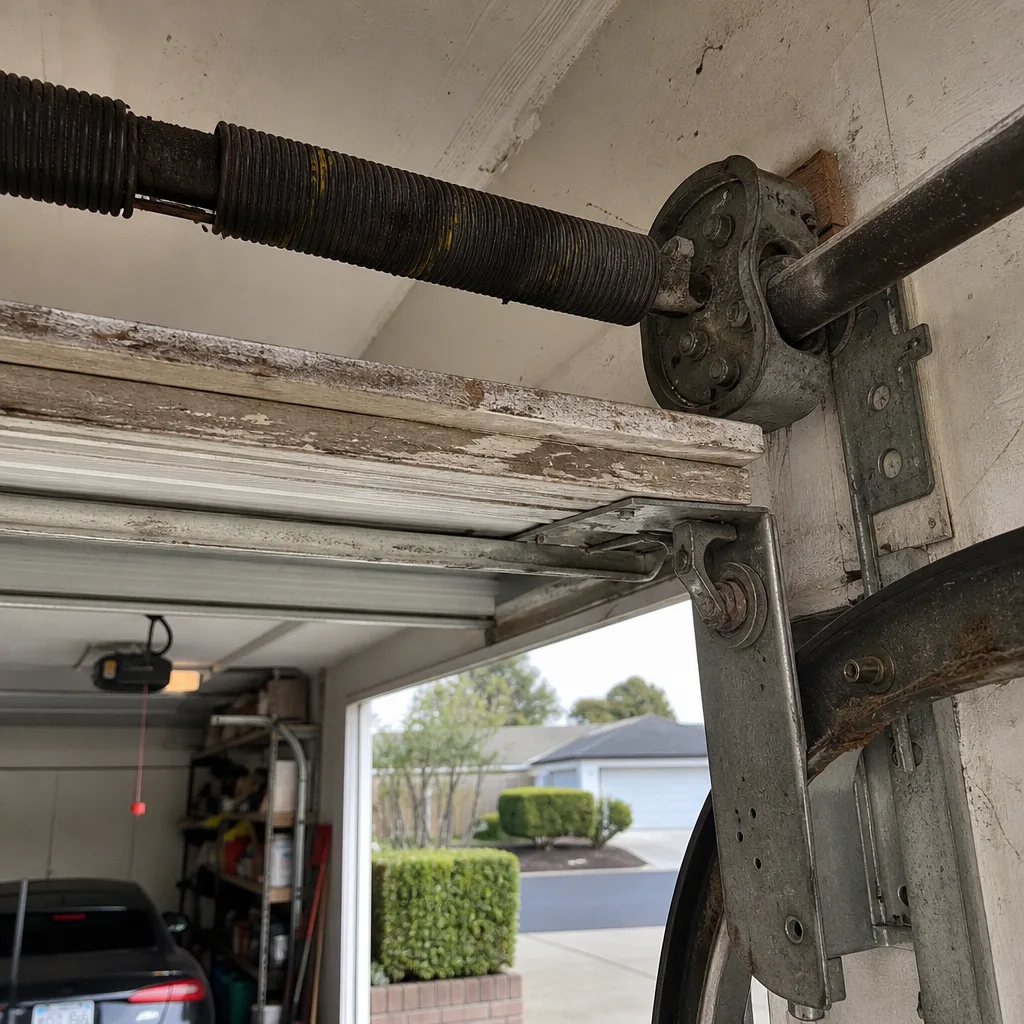 Before
 After
When to Call a Professional
Call a professional when you hear recurring pops, when your door hangs crooked or won’t stay up, when your opener reverses repeatedly, or when you see a frayed cable. These are not diagnostic puzzles for a Saturday afternoon. They’re mechanical failures in progress. A specialist who works on garage doors every day, across Fullerton, can identify the failing component in minutes and replace it before the cascade. The Garage Door Opener Repair in Fullerton side of the house covers everything from failing capacitors to MyQ connectivity. And if the door has reached the point of no return, Garage Door Installation in Fullerton walks you through replacement options. Westport Garage Door Repair offers free estimates in Fullerton. Call (877) 265-9301 to schedule one.
Frequently Asked Questions
Your spring is going bad if the door feels heavy when you lift it manually, if you hear popping sounds during operation, or if the door won’t stay in place when half open. The manual lift test described above gives you a definitive answer in ten seconds. Call (877) 265-9301 if any of these symptoms are present. Estimates are free.
A loud bang during operation usually means a spring is shifting, a cable is slipping, or a component just sustained impact. Treat this as service-now. A bang is not a wear-and-tear sound; it’s a small failure that will become a large one if the door keeps running.
Spring replacement in Fullerton typically runs $180 to $340 for a single spring and $250 to $450 for a pair, including labor. The exact number depends on door weight, spring type, and brand (Clopay doors often need heavier springs than builder-grade units). Call (877) 265-9301 for a firm quote. We’ll quote the price before any work starts.
It depends on the noise. Squealing from dry rollers can usually wait a couple weeks. Grinding, popping, or banging should not wait. If the sound is new, loud, or worsening by the day, stop using the door and call. A door that fails mid-cycle becomes a falling object, and that’s a risk no one should take.
Your door reverses because the opener’s force sensor detects more resistance than it should. That resistance comes from a door that’s too heavy, usually because of failing springs. The sensor and the opener are doing their jobs. The problem is the door fighting against its own hardware.
Twice a year in Fullerton, more often if your door faces direct west or south sun. The dry climate degrades lubricant faster than coastal humidity does. Use a silicone or lithium spray on rollers and hinges only. Keep the track dry.
The Bottom Line
A garage door rarely fails without warning. It fails after weeks or months of noise, asymmetry, and behavioral changes that most homeowners consciously or unconsciously dismiss as “normal.” None of it is normal. A healthy door is nearly silent, level, and balanced in your hand. If yours isn’t, you now know how to identify which component is telling you it’s failing, how urgently to act, and what the repair will cost if you wait. Fullerton’s climate makes lubrication and spring care an annual rhythm, not a one-time fix. Listen to the door. It’s already telling you what it needs.
Written by the team at Westport Garage Door Repair, serving Fullerton since 2012.