
Last updated November 2, 2026
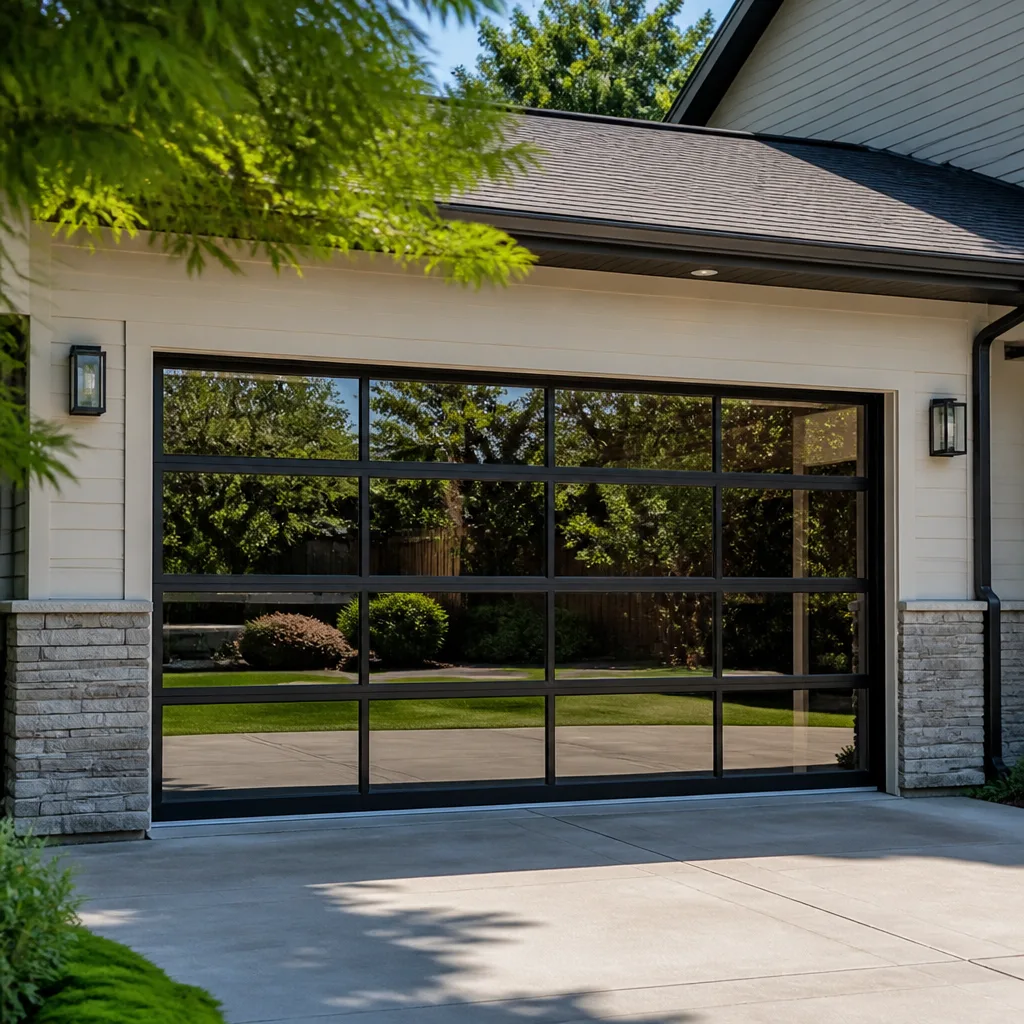 Full-view glass
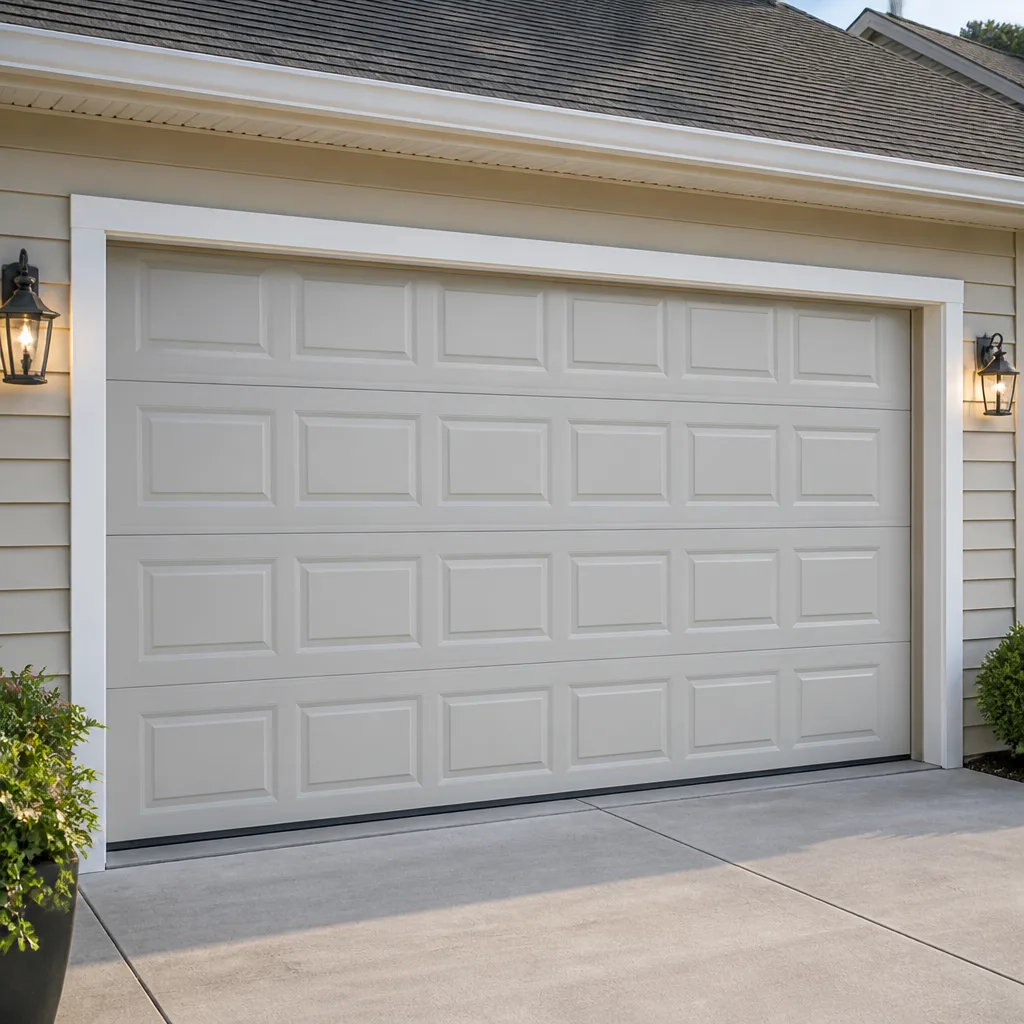 Raised-panel steel
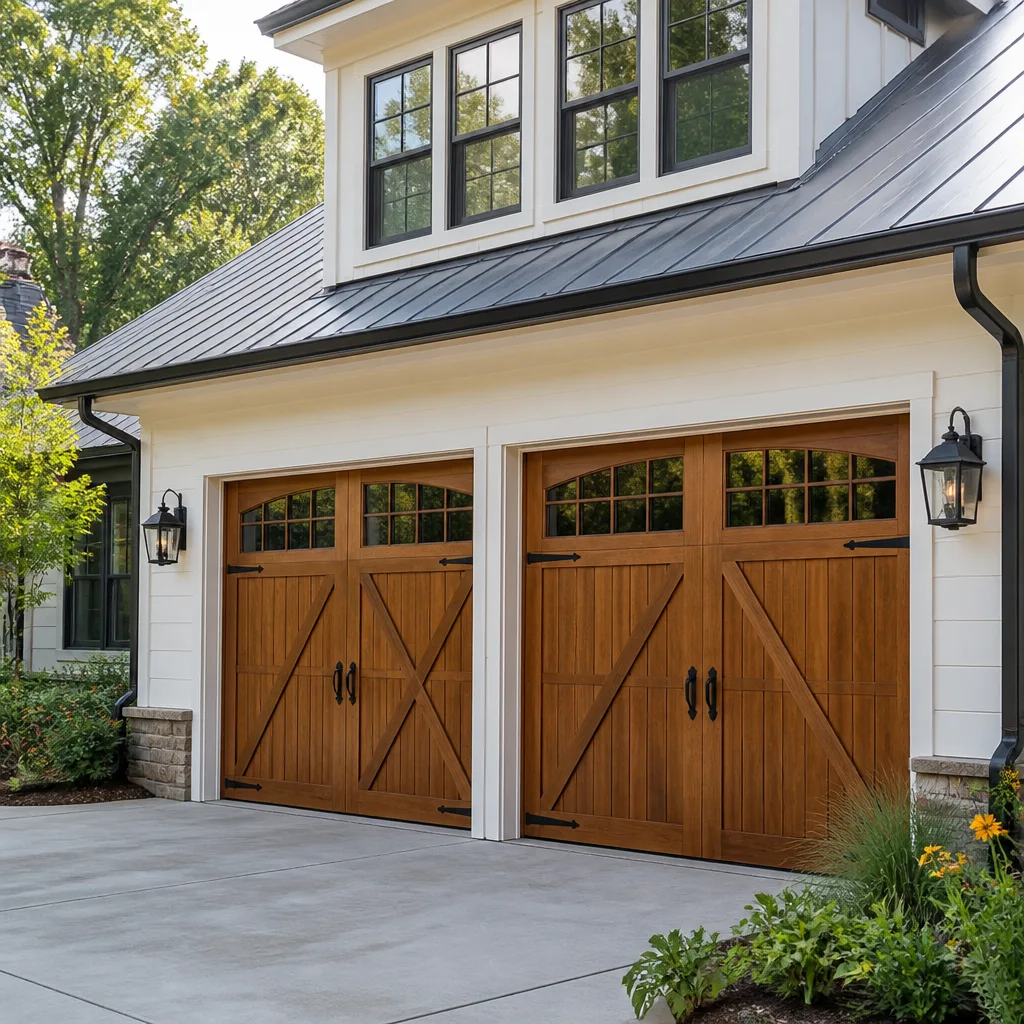 Carriage house
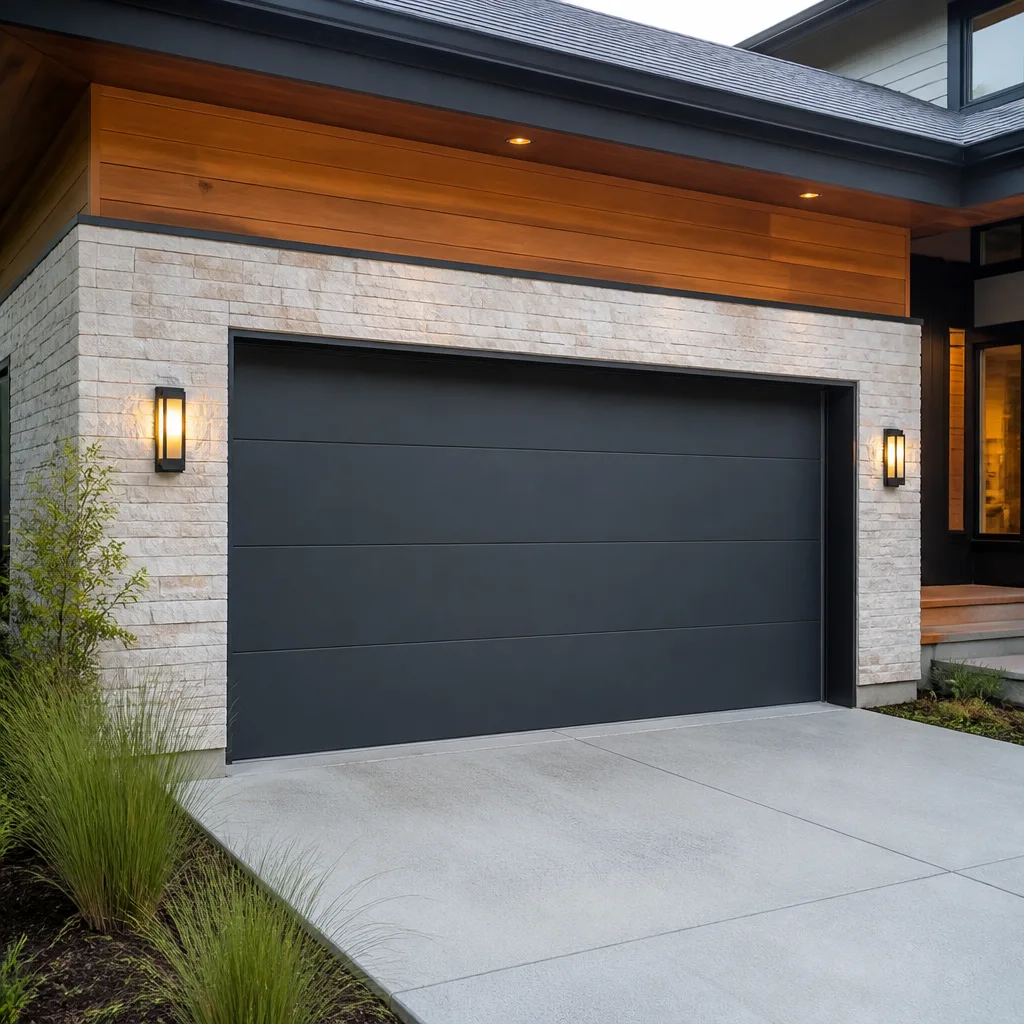 Modern flush
 LiftMaster openers
 Chamberlain openers
Full 25-point door and opener safety check with every visit - springs, cables, rollers, tracks, and your LiftMaster or Chamberlain opener included
You get a price before we start. It does not change when the truck arrives.
Get your free estimateGarage Door Emergency Preparedness Guide for Fullerton Homes
Here’s something most Fullerton homeowners never consider until it’s too late: your garage door is the largest moving object in your home, and in an emergency, it is either your fastest exit or your most stubborn obstacle. During the 2020 Silverado Fire evacuation orders, Orange County residents reported being slowed by automatic garage doors they didn’t know how to manually disengage. Some stood in their garages pulling at release cords that wouldn’t budge because the door was under tension. In this guide, we’ll walk through exactly what every Fullerton household needs to know before the next red-flag wind warning, power outage, or evacuation order arrives. You’ll learn the manual release procedure for common opener brands, how to secure a door stuck open during Santa Ana winds, which battery backups actually hold up, and how to build a five-point reference card that any adult in your home can use in the dark.
Quick Answer
A garage door emergency in Fullerton typically falls into three categories: a door that won’t open during an evacuation, a door that won’t close during high winds or a security threat, and a power outage that disables an automatic opener. Every adult in the home should know where the manual release cord is, how to disengage the opener when the door is closed, how to lift and lock the door manually, and which of those operations require two people or professional help. Run this as a household drill twice a year, the same way you test smoke alarms, and post a five-line reference card on the wall beside the opener button. For a complete breakdown of what to check and when, see our Garage Door Repair Maintenance Checklist for Fullerton Homeowners.
Styles & brands we work with
- Raised-panel steel
- Carriage house
- Modern flush
- Full-view glass
- LiftMaster openers
- Chamberlain openers
Table of Contents
- How to Manually Disengage Your Garage Door Opener
- The Mid-Travel Problem: Why You Never Pull the Cord When the Door Is Moving
- Battery Backup Openers: What Holds Up in an Extended Outage
- Securing a Door Stuck Open During a Santa Ana Wind Event
- The Balance Check: The One Maintenance Task That Determines Manual Operation
- Building a Household Reference Card: Five Things Every Adult Should Know
- The Evacuation Scenario: Getting Out Fast When the Power’s Down
- The Grid Outage Scenario: When the Door Won’t Respond at All
How to Manually Disengage Your Garage Door Opener
Every automatic garage door opener, regardless of brand, has a manual release mechanism. On Chamberlain and Genie models found in most Fullerton homes, it’s a red cord hanging from the opener rail above your head. Pulling that cord disconnects the door from the opener’s motorized carriage, allowing the door to move freely by hand. But the exact feel and location varies by brand, and pulling it under the wrong conditions can create a dangerous situation. Here’s the procedure we recommend you memorize, in order:
- Identify the cord. On Chamberlain openers, the red cord hangs from a plastic release lever on the carriage. On Genie models, the cord is typically positioned slightly forward on the rail. On newer LiftMaster models, the cord may be shorter and black with a red handle. Know where yours is before you need it.
- When the door is closed, pull the cord straight downward in one firm motion. You’ll hear a click. The carriage is now disengaged from the chain or belt drive.
- Lift the door by hand. A properly balanced door will lift with about 20 to 30 pounds of effort. It should not feel heavy. If it does, something in the spring system has failed, and you should stop lifting immediately.
- Raise the door fully until it locks into the open position at the top of the track. Most doors have a natural resting point there.
- To re-engage, pull the cord again while the opener is running, or run the opener until the carriage meets the release lever and clicks back into place. Chamberlain and LiftMaster models re-engage automatically on the next cycle. Genie models require a firm pull on the cord while the carriage is moving.
This is the core skill behind garage door emergency preparedness for California homeowners. But it’s only half of the picture. The other half is knowing when not to pull that cord, because pulling it at the wrong moment is how garage doors end up on top of cars or people.
The Mid-Travel Problem: Why You Never Pull the Cord When the Door Is Moving
This is the mistake we hear about most often after a power failure. The door is halfway up when the power cuts, so someone grabs the red cord and yanks. What happens next depends on the spring system, and it’s rarely good. When a door is mid-travel, the springs are under partial tension. Disengaging the opener at that moment releases control of the door while the torsion system is still trying to balance the load. The door can slam down if a spring is weak, or rocket upward if the springs are over-tightened. In either direction, it’s uncontrolled weight moving fast.
The rule is simple: pull the release cord only when the door is fully closed or fully open. If the door is stuck mid-travel during an outage, leave it there. Do not attempt to disengage it. Do not try to push it to one position or the other by hand. A door frozen mid-cycle with tension in the springs is a situation for a technician with the right training and tools. In Fullerton, where homes built between the 1950s and 1980s often have had multiple opener and spring replacements over the decades, mismatched components can make a mid-travel failure especially unpredictable.
If you’re mid-evacuation and the door is halfway down, your fastest exit is almost always a different door. Use a side garage door or the front door. The ten seconds you spend wrestling with a jammed garage door are ten seconds you don’t have.
Battery Backup Openers: What Holds Up in an Extended Outage
California has required battery backup on newly installed garage door openers since 2019, and most homes built or remodeled in Fullerton since then have openers with some form of backup power. But not all battery backups are equal, and knowing which type you have changes what you should expect during an outage.
LiftMaster and Chamberlain MyQ openers with factory-installed battery backup are the most common systems we see in Fullerton garages, and they perform well in testing. A fully charged liftMaster backup battery will cycle a properly balanced door 20 to 30 times before depleting. That’s enough for several days of conservative use. The catch is that the battery degrades over roughly three to five years, and many homeowners don’t know their backup hasn’t worked in months until the power goes out.
Genie’s battery backup systems on newer models hold up comparably, but we’ve seen a noticeable difference on heavy doors. Solid wood doors, oversized two-car doors, or doors with glass panel inserts put more strain on the battery, and cycle counts drop fast. If you have a Clopay or Amarr insulated steel door, you’ll get far more backup cycles than someone with a solid cedar door on the same Genie unit.
Here’s the practical takeaway: test your battery backup twice a year. Unplug the opener or flip its circuit breaker, then run the door through one full open-close cycle on battery power alone. If the door struggles, slows, or stops, the battery needs replacement. It’s the single most overlooked item in garage door emergency preparedness, and it’s the one that turns a 48-hour outage into an automotive jail sentence. For step-by-step help with common failures, see our Garage Door Repair Troubleshooting: Common Problems and How to Fix Them.
Securing a Door Stuck Open During a Santa Ana Wind Event
Fullerton sits inland enough that Santa Ana winds hit differently than they do in coastal Orange County cities. Wind gusts through the Fullerton Hills and into the Coyote Hills can rattle garage doors hard, and for homes with west-facing or north-facing garage doors, a stuck-open door during a wind event turns the garage into a wind tunnel. What would be an annoyance on a calm day becomes a security and structural problem when gusts are hitting 40 to 60 mph.
If your door is stuck open and the wind is coming up, here’s the sequence we recommend:
- Assess why it’s open. If the opener failed or power is out, the door can usually be pulled down manually once disengaged. If the door is jammed on a bent track or a broken spring cable, it won’t move smoothly, and you should not force it.
- Disengage the opener if the door is fully open and the problem is opener-related. Pull the release cord and begin lowering the door by hand. Work from the inside, stepping backward as the door descends. Never stand directly under the door while lowering.
- If the door is jammed open and won’t budge, don’t fight it. Instead, move vehicles out if possible and remove lightweight items from the garage that could blow or be damaged. If the door faces into the wind, close the interior door between the garage and the house to prevent pressure differences inside the home.
- Hardware failures that make stuck-open doors wind-vulnerable include frayed lift cables, worn rollers, and hinged panels that have come loose from the track. We see this most often on older Fullerton homes where the door hardware dates to the original construction and the cable pulleys have never been replaced.
During any wind event, a secure garage door is a pressure barrier. Attached garages share a wall with the home’s living space, and a wide-open garage door changes how wind pressure loads that wall. The longer the door stays open, the more stress the garage ceiling and the shared wall carry.
If you’re facing a door that won’t stay down during high winds, call a specialist rather than improvising with ropes or weights. Cables under tension and a door that wants to move are not things to experiment with. Garage Door Repair in Fullerton is something we handle year-round, and wind-damaged doors are a regular part of our fall season.
The Balance Check: The One Maintenance Task That Determines Manual Operation
Every garage door emergency plan assumes you’ll be able to lift the door by hand if the opener fails. That assumption is only true if the door is correctly balanced. A balanced door weighs itself out through the torsion springs, so lifting it manually takes minimal effort. An unbalanced door is either dead weight or a loaded cannon, and in an emergency, neither one is workable with one adult and a flashlight.
Here’s the balance check we teach Fullerton homeowners, and it takes 60 seconds:
- Close the door. Disconnect the opener by pulling the red release cord.
- Lift the door halfway and let go. A properly balanced door will stay at roughly the halfway point without drifting more than a couple of inches. It should feel nearly weightless in your hands.
- If the door slams down when you let go, the springs are failing. The door is too heavy for the spring system, and manual operation during an emergency will be dangerous. One person cannot safely hold a 150-pound door while the other person shoves a car through the opening.
- If the door climbs or stays above halfway, the springs are over-tensioned. This is less common but equally problematic. An over-tensioned door can fly up when disengaged and injure whoever is pulling the release cord.
- Run this check twice a year. Pair it with testing your smoke alarms. It’s the same rhythm, and both keep you alive when systems fail.
The springs on a typical Fullerton garage door cycle between 10,000 and 20,000 openings. If your household opens the door four times a day, that’s seven to fourteen years of spring life. Most garage door springs fail between year five and year eight because temperature swings in the Fullerton-Orange County basin put extra stress on the coiled steel. That’s not a design flaw; it’s the reality of inland Southern California climate.
If your door fails the balance check, schedule a service call while the door is still operating normally. Waiting until the spring breaks means waiting until the door is stuck, which is exactly the opposite of emergency preparedness. For a professional replacement or tune-up, call Westport Garage Door Repair at (877) 265-9301 and we’ll get the door back in working order before it becomes an emergency. Also make sure you’re up to date on Garage Door Permits, Codes & Inspections in CA: What You Need to Know.
Building a Household Reference Card: Five Things Every Adult Should Know
We recommend that every Fullerton household post a laminated card beside the garage door opener button. It should take the form of five lines that any adult in the home can read under stress, in the dark, while half-asleep. Here’s what goes on it:
- 1. Where the release cord is. “The red cord hangs from the rail above the center of the garage. Stand just behind the car and reach overhead.”
- 2. What the release cord does. “Pulling it disconnects the door from the opener. Pull only when the door is fully open or fully closed. Pulling it while the door is moving can cause the door to crash.”
- 3. How to manually lift the door. “After pulling the cord, grip the bottom handle. Lift straight up using your legs. The door should feel light. If it feels heavy, stop and use a different exit.”
- 4. The circuit breaker location. “The garage door opener breaker is in the main panel, position __. If the opener is unresponsive, check this breaker first.”
- 5. What to do in each emergency type. “Power outage: pull cord, lift manually. Evacuation: pull cord, lift, exit. Door stuck mid-travel: do NOT pull the cord. Exit through another door and call a technician.”
This card should be written in your own words, in the language your household speaks, and large enough to read without glasses. We’ve walked into Fullerton garages where this card has been posted for years, and the homeowners swear by it because it removes the thinking from a high-stress moment. You don’t want to remember the procedure. You want to read it and do it.
The fifth line is the one that most people leave off, and it’s the one that saves the most time. When the door is stuck in the middle of its travel, no amount of pulling on the release cord will help you. Knowing that in advance means you move straight to the front door or side door instead of losing precious minutes.
The Evacuation Scenario: Getting Out Fast When the Power’s Down
Evacuation orders in Orange County don’t always arrive with hours of notice. The 2020 Silverado Fire moved fast enough that mandatory evacuation zones expanded overnight. Fullerton hasn’t faced direct wildfire evacuation in recent memory, but earthquake-preparedness drills and emergency mapping consistently rank Fullerton among cities where residents should have a rapid-exit plan. The garage door is part of that plan, whether you store your car in the garage or not.
Here’s the scenario: the power is out, an evacuation order is on your phone, and your car is in the garage. The opener won’t respond because there’s no grid power and the battery backup is either absent or dead. What do you do?
- Pull the manual release cord. It takes two seconds once you know where it is. You’ve already run this drill, so your hands know the motion.
- Lift the door by hand. If the door is balanced, this is the work of a few seconds. Lift until it rests in the open position.
- Start the car. Back out slowly. The door, once lifted manually, should stay open on its own. If it starts to close behind you, the springs are weak and this is the last time you’ll trust that door with your car under it.
- Leave the door open or close it. If you’re evacuating due to fire, close the garage door if you can do so safely, to create a seal that slows fire movement toward the house. If the door won’t close smoothly, leave it open. An open door won’t stop a fire, but a jammed door won’t slow it either, and your priority is exiting.
The cars themselves should never be parked with less than a foot of clearance from the garage door. We’ve seen Fullerton homeowners position their vehicles inches from the door, and when an evacuation happens, the door’s travel arc intersects with the car’s position. You lose seconds repositioning the car, and in an emergency, seconds matter.
The Grid Outage Scenario: When the Door Won’t Respond at All
Unlike earthquake-prone areas of California, Fullerton doesn’t routinely plan for multi-day outages. But heavy rain events, wind-driven tree failures, and rolling blackout conditions all create overnight outages, and every garage door opener with no battery backup becomes a dead switch until the power returns. If your car is inside the garage, you’re not going anywhere.
This is where the disconnect procedure in the first section of this guide pays off. But there are two distinct outage situations to think through:
Short outage, door closed. If you need to get the car out, pull the release cord, lift manually, back out, then lower the door by hand and slide the manual lock (if your door has one) into place. On most Fullerton garage doors built after 1990, there’s a sliding lock bar on the inside of the door that’s rarely used. This is the one time it matters.
Extended outage, door open. If the outage lasts more than 24 hours and the door is open, we recommend closing it manually and keeping the car on the street if possible. A garage door left open for days in a Fullerton neighborhood invites exactly the kind of opportunistic theft that property crime maps show peaks during outages. Lower the door by hand and lock it. When power returns, run the opener through one cycle to re-engage the carriage, then test the safety reverse and auto-reverse sensors before trusting it with daily use.
For homes with LiftMaster or Chamberlain battery backup, neither of these scenarios applies in the first 24 to 48 hours. The door operates normally on backup power. But homes with Genie belt-drive units on heavy Clopay doors, or any opener more than five years old with a first-generation backup battery, should expect fewer cycles than the marketing materials promise. Test yours before the outage, not during it.
If your door remains unresponsive after power returns, the issue may be a fried logic board rather than a mechanical failure. Circuit boards on older openers take surge damage more readily than most homeowners realize, which is why a whole-house surge protector is a reasonable investment for Fullerton homes with automatic garage doors.
Common Mistakes to Avoid
- Pulling the release cord while the door is moving. This is the most dangerous mistake in the entire guide. Disengaging a moving door releases uncontrolled weight. On a door with aging springs, you can lose a finger or worse. Always start and end with the door at rest.
- Assuming the battery backup works without testing it. Backup batteries have a three-to-five-year life span, and many Fullerton residents have never tested theirs. A dead battery is no different than no battery.
- Attempting to force a jammed door down to secure the home. If the door won’t move, the track, cables, or springs are compromised. Forcing it adds a mechanical failure to whatever you’re already dealing with.
- Leaving the garage door open during a Santa Ana wind event. Open garage doors on attached garages create pressure loading on the home’s shared walls. A door that can be closed should be closed.
- Skipping the balance check because the door “feels fine” in normal use. An opener’s motor can mask early spring fatigue. The balance check is the only test that isolates the springs, and the springs are what determine manual operation in an emergency.
- Not locating the release cord before darkness hits. You should be able to find your release cord blind. If you have to hunt for it during a power outage, the emergency plan is already failing.
- Treating the garage door as a non-emergency system. It is the largest moving component in the structure and the primary egress point for vehicles during an evacuation. A well-maintained door is a functional emergency exit. A neglected door is a barricade with a remote control.
See the difference
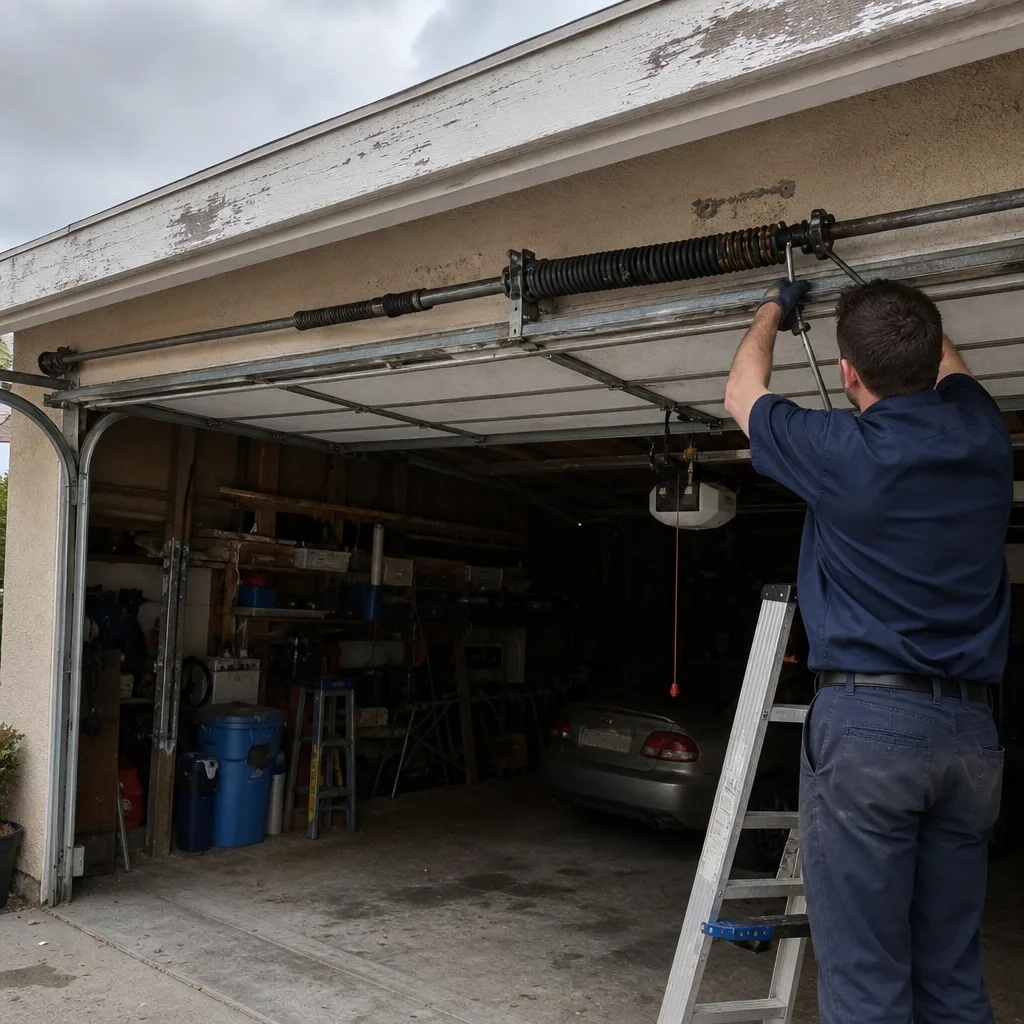 Before
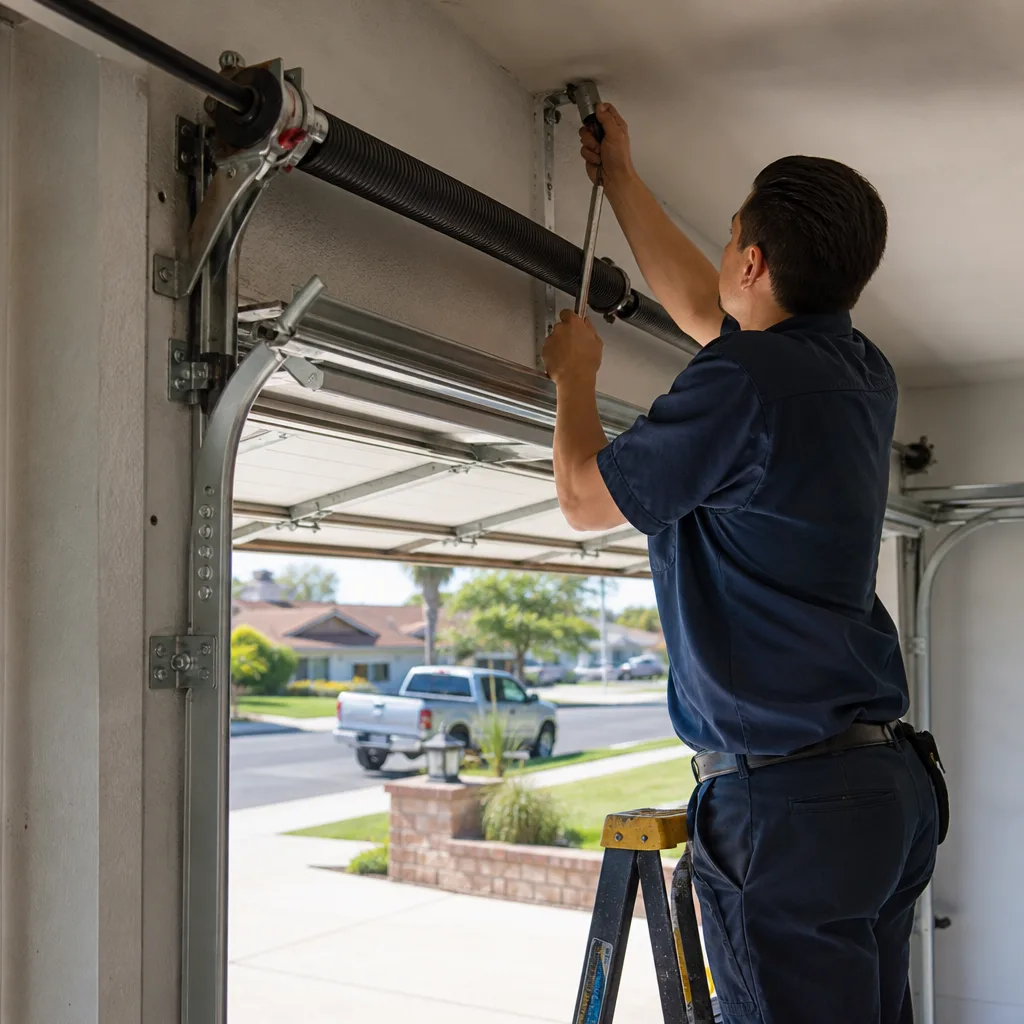 After
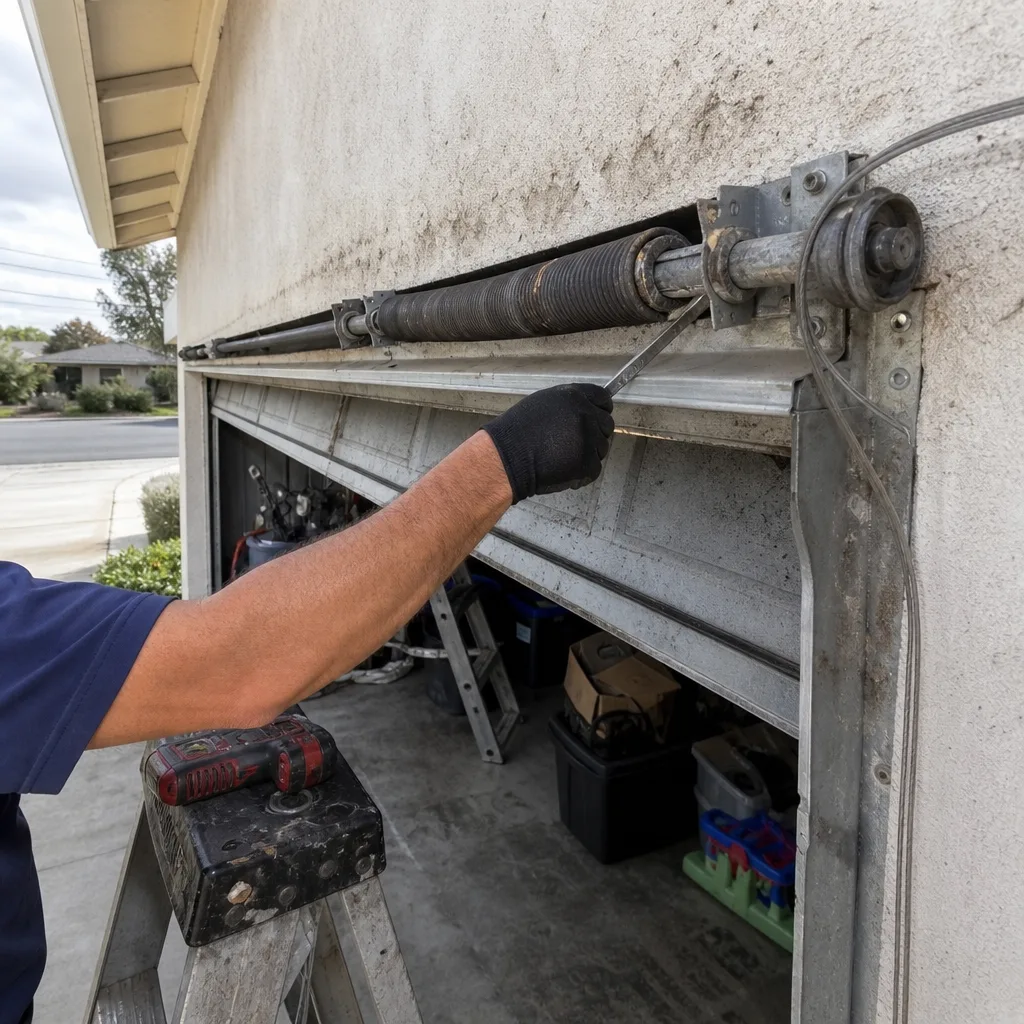 Before
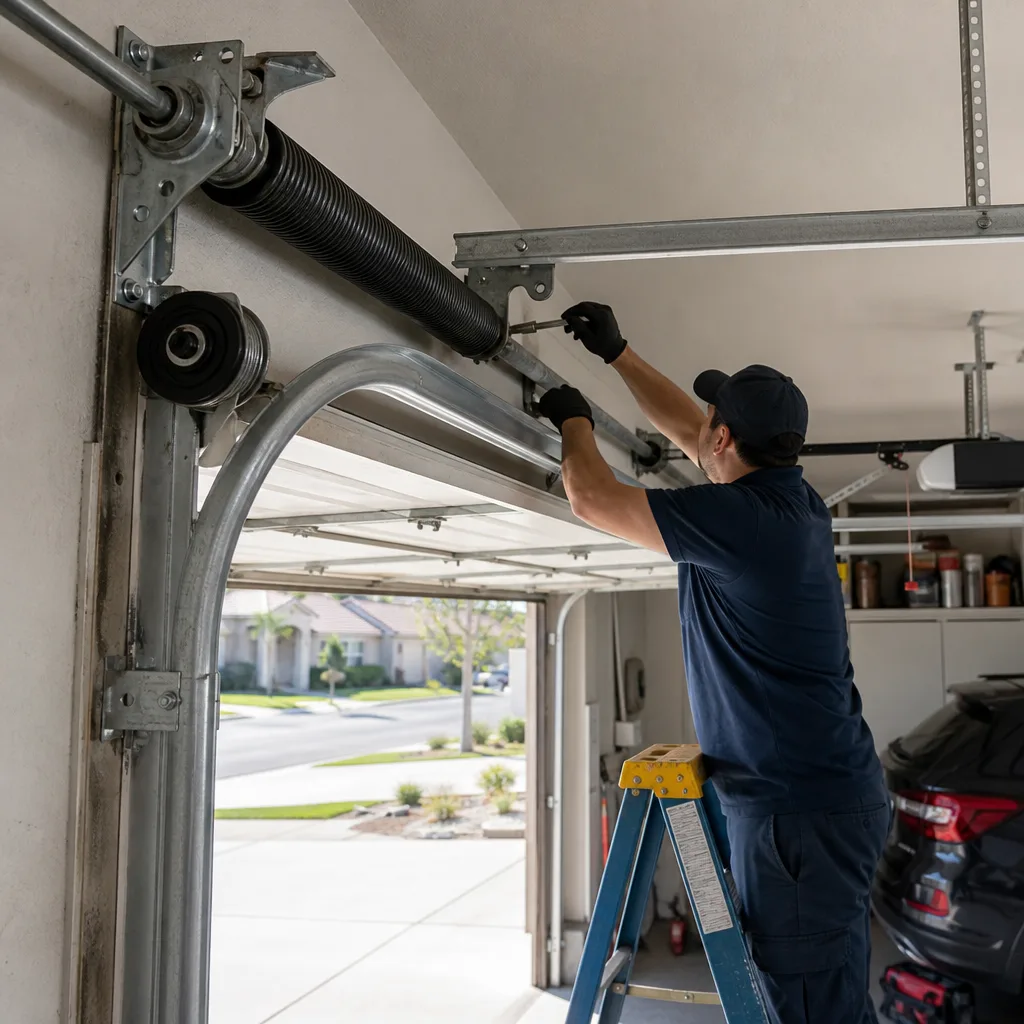 After
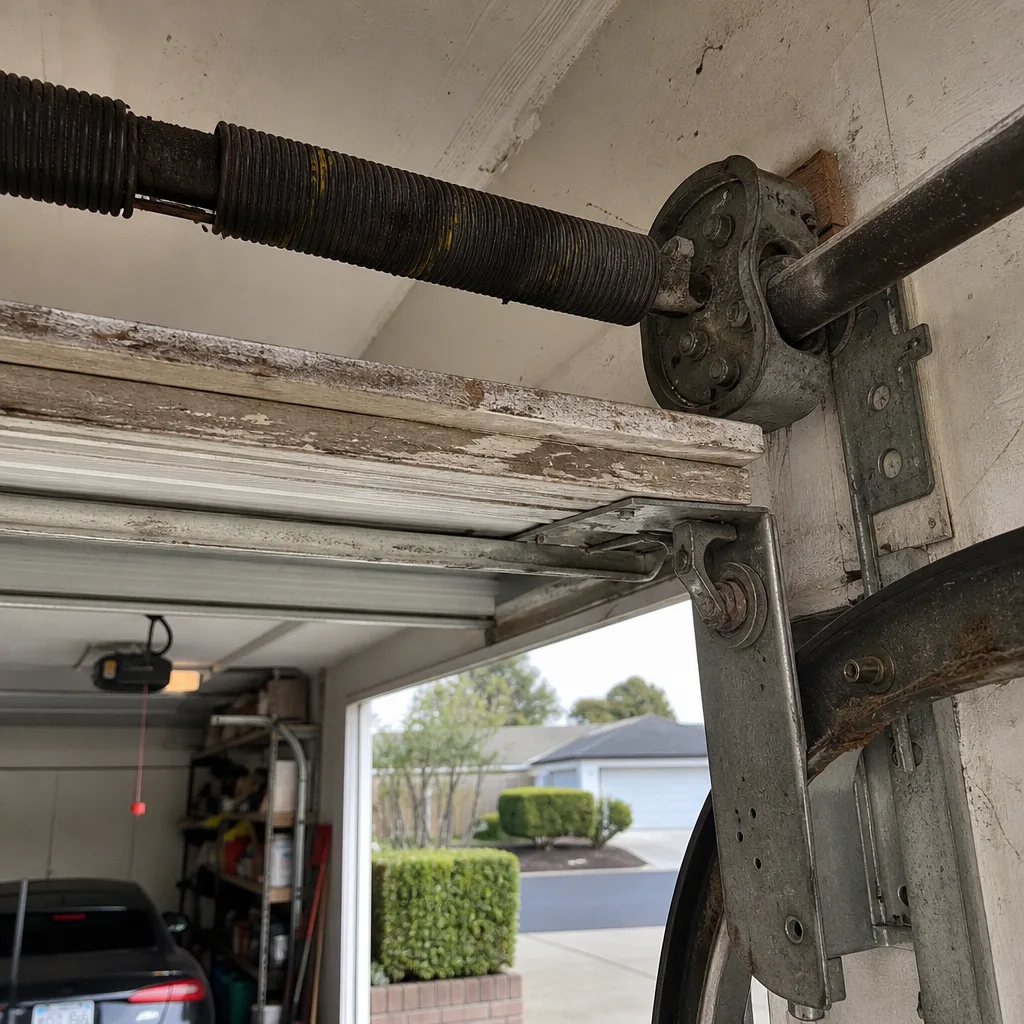 Before
 After
When to Call a Professional
Some garage door problems resolve with a pull of the release cord; others follow a pattern that a professional should evaluate. Call a technician when the door fails the balance check, when you see frayed lift cables or hear grinding from the rollers, when the opener’s safety reverse fails a two-by-four test, when the door is stuck mid-travel and won’t move in either direction, or when the springs look visibly worn or stretched. Any of these conditions undermines your emergency plan. A door you can’t manually operate during a power outage is a plan with no exit.
Westport Garage Door Repair offers free estimates in Fullerton. We work on LiftMaster, Chamberlain, Genie, Clopay, and Amarr systems, and we’ll test your emergency release, balance the door, and tell you honestly what’s needed. Call (877) 265-9301 to schedule an estimate or talk through a door concern before it becomes an emergency.
Frequently Asked Questions
You’ll need an emergency release kit, which is a keyed lock that threads a cable from the exterior of the garage door to the release lever on the opener carriage. Most Fullerton homes don’t have one installed, and you can’t improvise one during an outage. If you have a side door to the garage, use that. If not, installing an exterior release kit is a low-cost upgrade that makes manual operation possible when you can’t get inside.
Yes, if you disengage the opener manually. Pull the release cord when the door is fully closed, lift the door by hand, and drive through. When you return, pull the door closed by hand and slide the manual locking bar into place. If your opener has a working battery backup, the door operates normally, but operation count will be limited by the battery’s remaining capacity.
A door that stops mid-travel during an outage was mid-cycle when the power cut, and the opener lost the ability to complete the movement. Do not pull the release cord in this situation. The carriage is under tension and the springs are holding partial load. Exit through a different door and call a specialist once conditions allow.
Typical repair costs in Fullerton run from $150 to $450 for most mechanical issues, including spring replacement, cable repair, and roller or hinge replacement. Logic board or motor replacement pushes closer to $350 to $700 depending on the opener brand and model. We quote a firm price before any work starts, so you’ll know the number before we begin. Call (877) 265-9301 for an exact estimate.
LiftMaster and Chamberlain dominate the installed base in Fullerton, which tracks with state and national trends. Genie models are also well-represented, especially in homes built in the 1990s and early 2000s. On the door side, Clopay and Amarr steel insulated doors are the most common in the Fullerton market.
If your current opener lacks battery backup, yes, the upgrade is worth consideration. Battery backup openers cycle through outages without requiring anyone to touch the release cord, which removes the physical risk from the process. For a home with a heavy wood door or a two-car door, choose a model with a backup battery rated for 20 or more cycles. Call (877) 265-9301 and we’ll help you pick the right opener for your door weight and cycle frequency.
The Bottom Line
A garage door emergency in Fullerton isn’t a single failure; it’s the moment the door stops cooperating with whatever you need to do next. Whether that’s evacuating ahead of an order, closing against a wind event, or getting the car out during an outage, the outcome depends on decisions made weeks before. Run the manual disengage drill twice a year. Test the battery backup. Do the balance check. Post a five-line reference card beside the opener button and make sure every adult in the home can read it under stress. That’s the whole system. It takes one hour to set up and about 15 minutes twice a year to maintain. Explore our more guides & resources to keep your garage door reliable year-round. The alternative is standing in a dark garage, yanking on a release cord, and hoping it doesn’t make things worse.
If your door needs service or you want a professional inspection before the next outage, call Westport Garage Door Repair at (877) 265-9301 for a free estimate. We’ll check the balance, the cables, the opener, and the emergency release. We’ll tell you what’s safe, what’s not, and what your household needs to know. No upsells, no generalist guesswork. Garage doors are all we do.
Written by the team at Westport Garage Door Repair, serving Fullerton since 2012.