
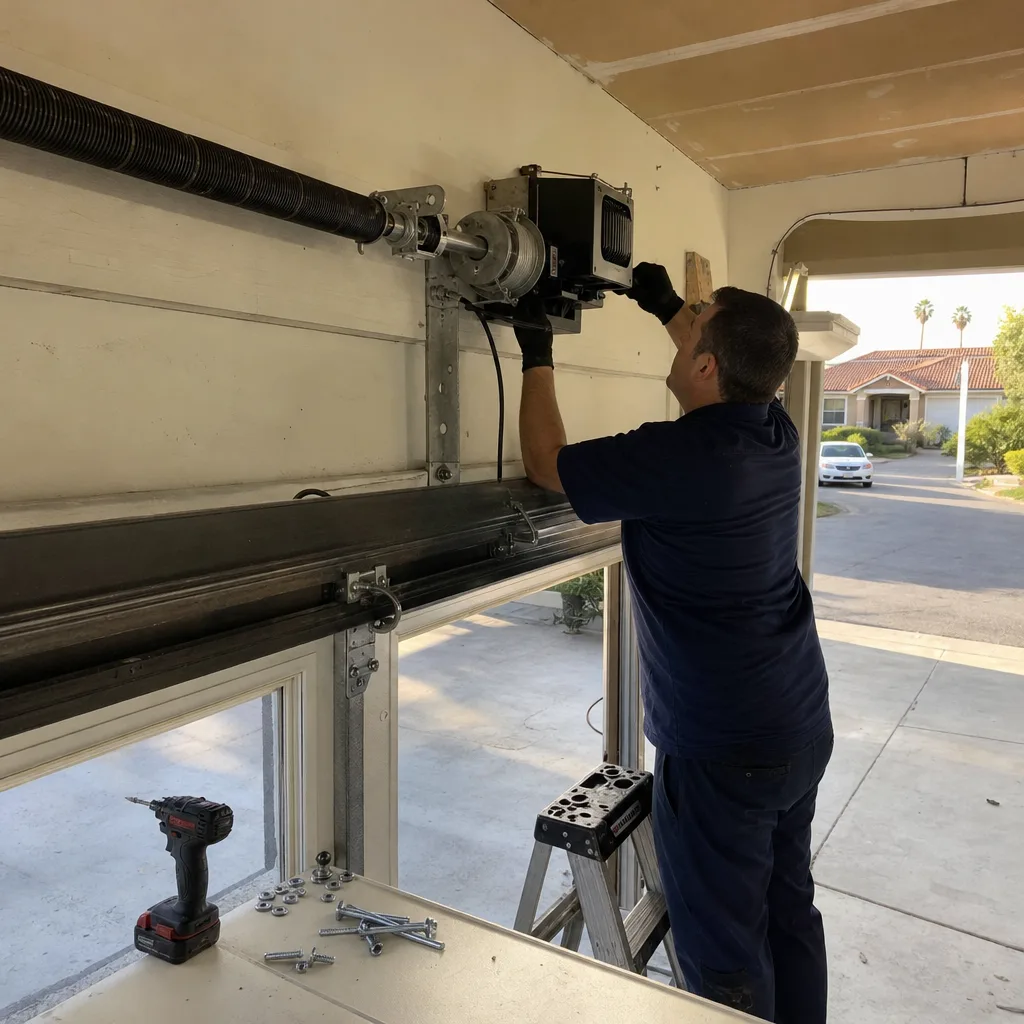
Last updated November 2, 2026
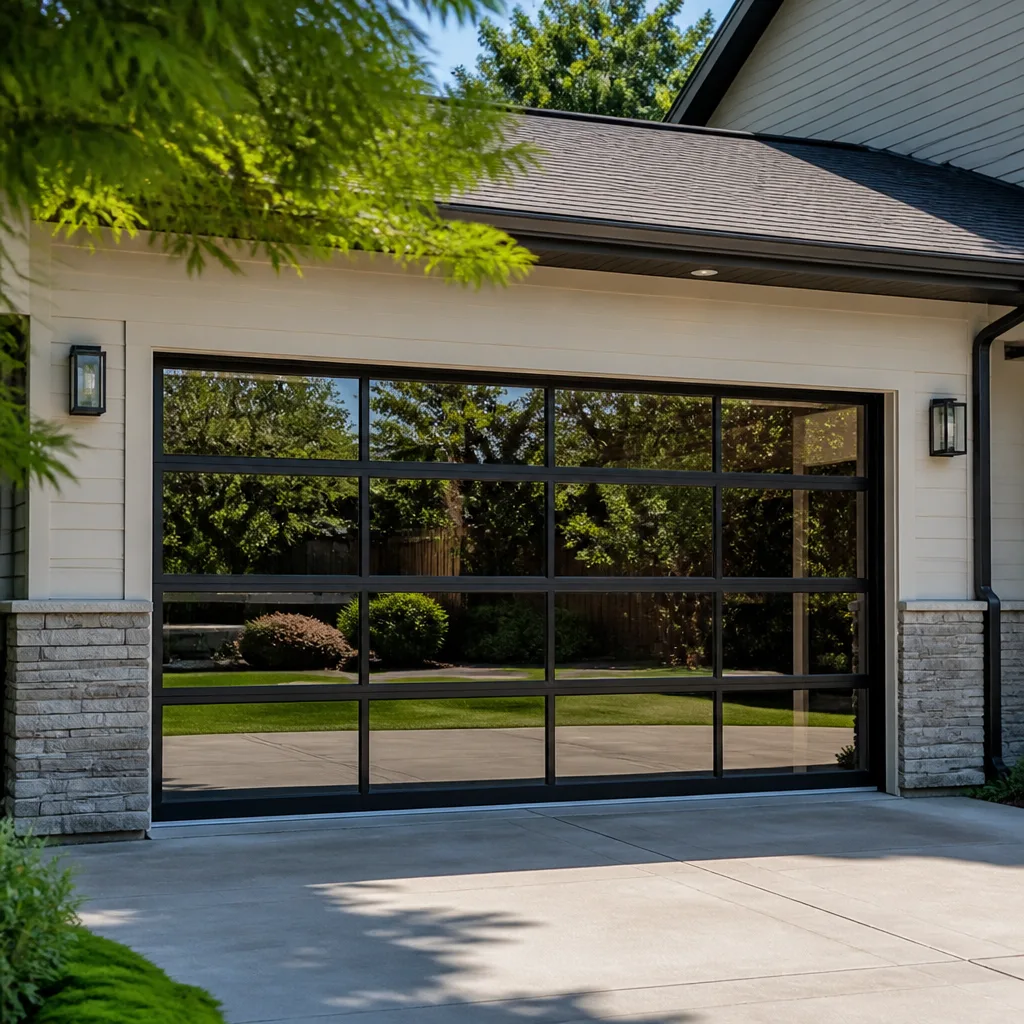 Full-view glass
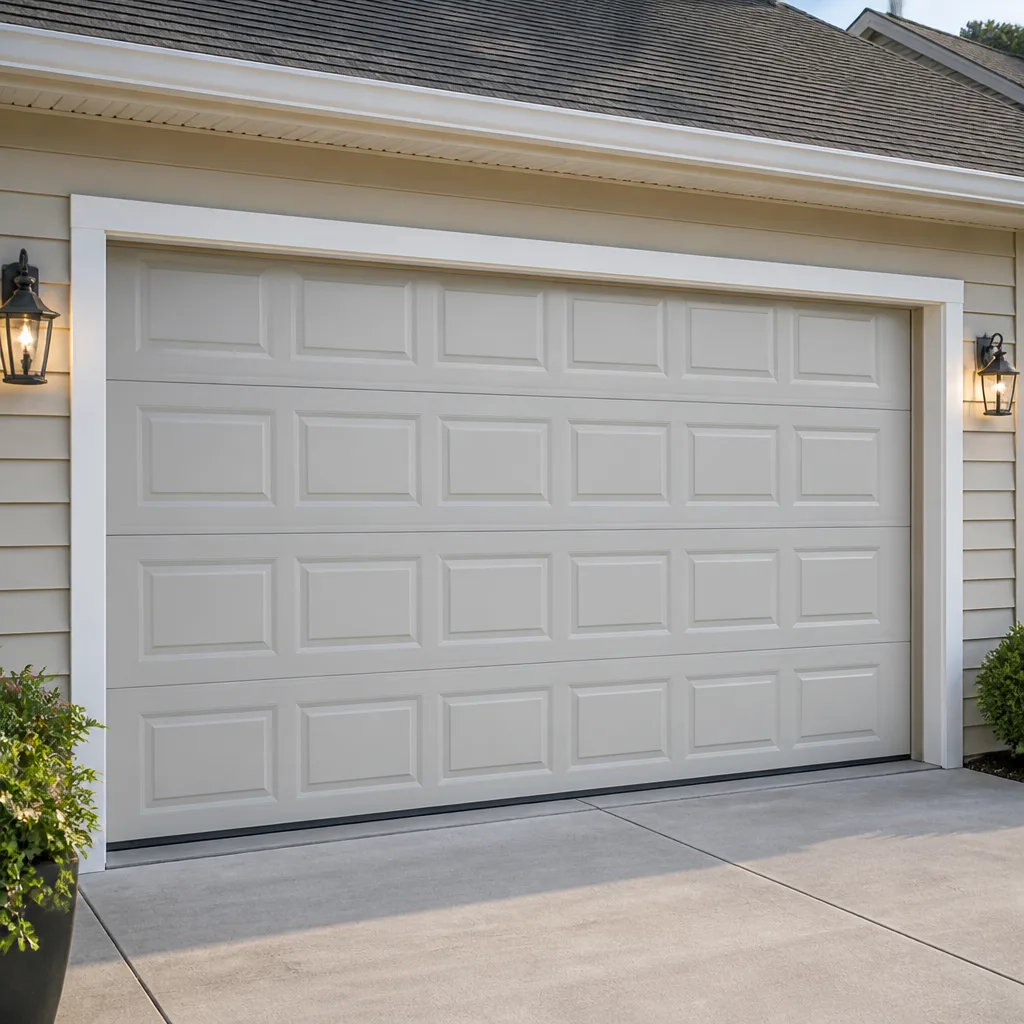 Raised-panel steel
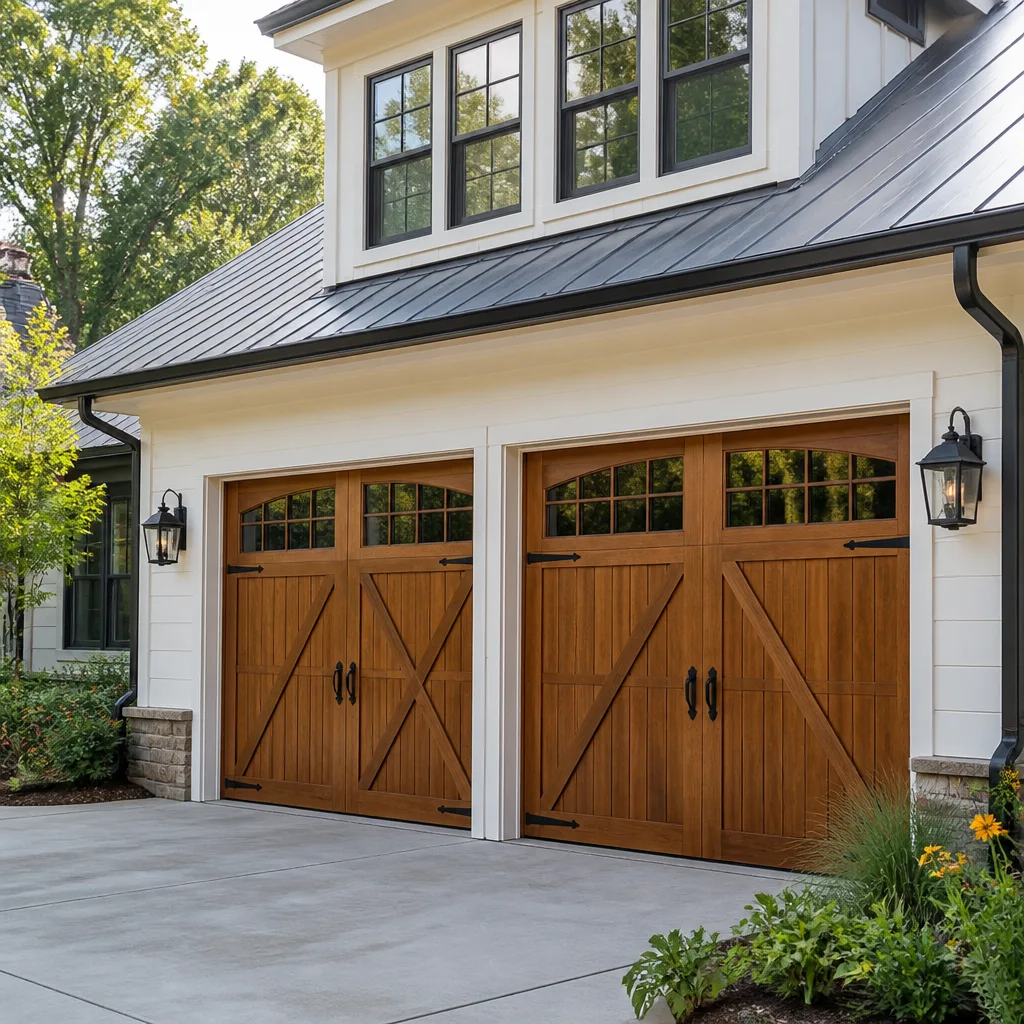 Carriage house
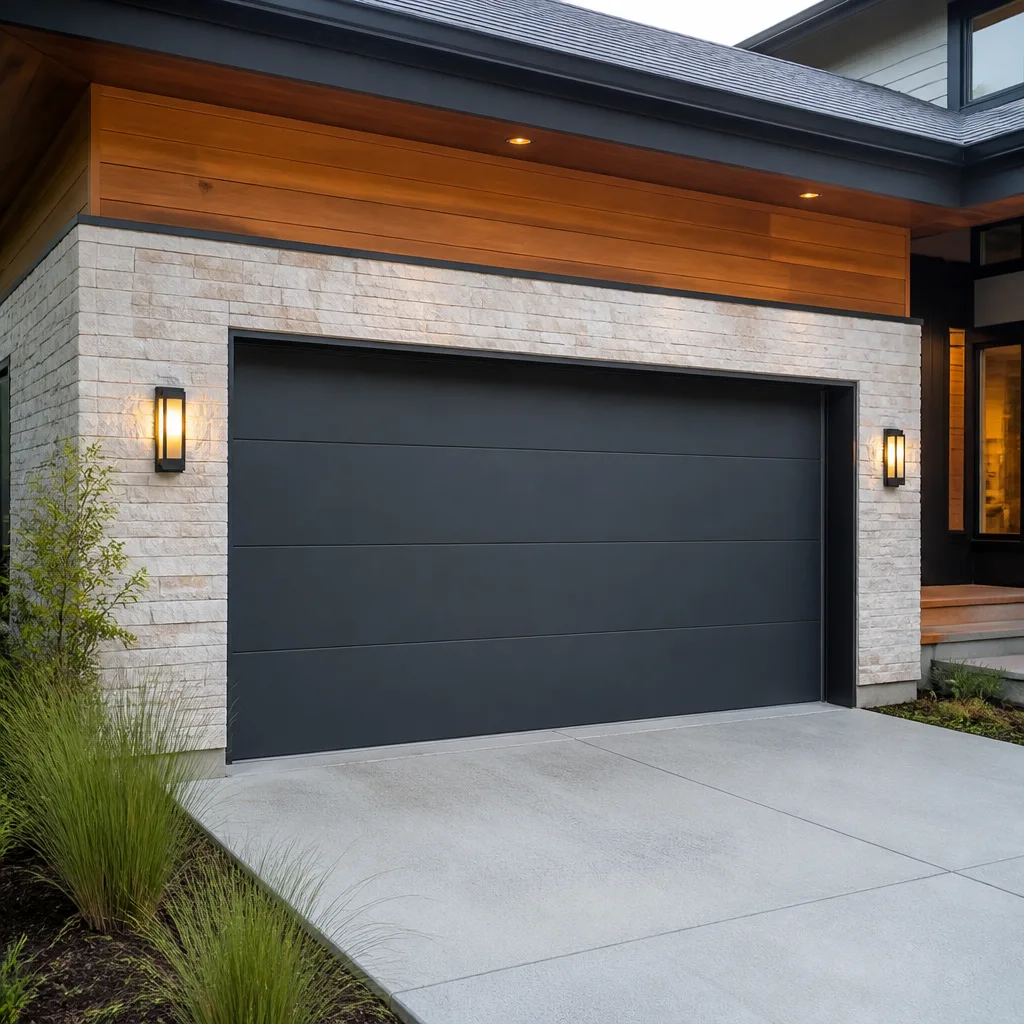 Modern flush
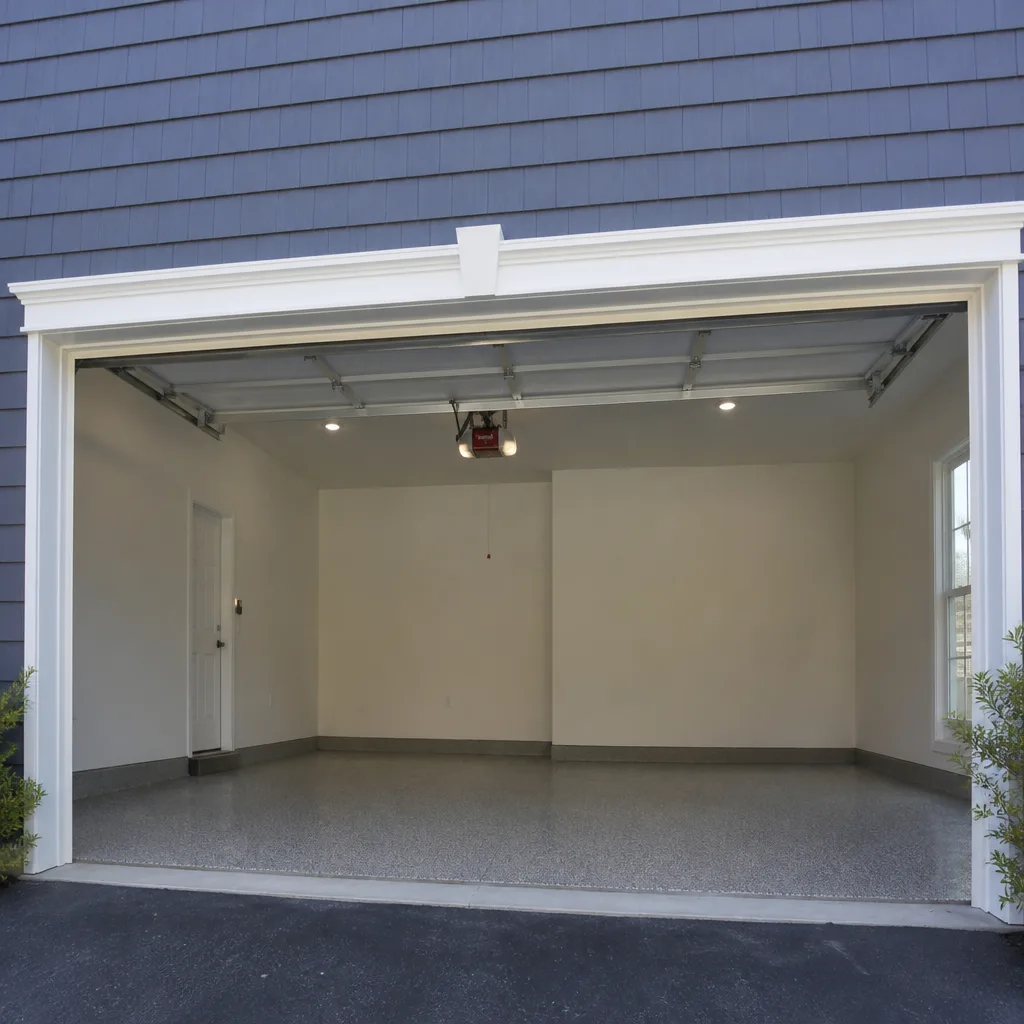 LiftMaster openers
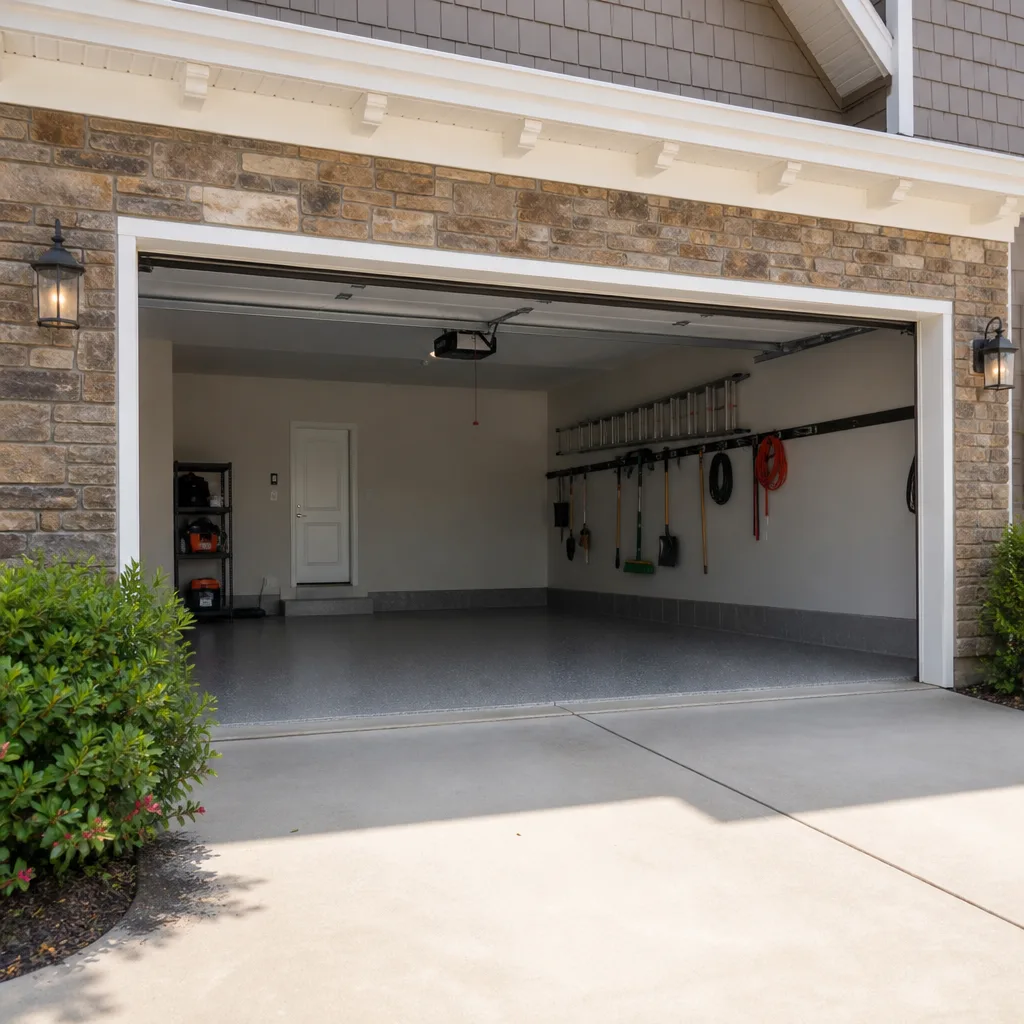 Chamberlain openers
Full 25-point door and opener safety check with every visit - springs, cables, rollers, tracks, and your LiftMaster or Chamberlain opener included
You get a price before we start. It does not change when the truck arrives.
Get your free estimateDIY vs Professional Garage Door: The Fullerton Homeowner’s Decision Guide
Here’s a number that should make every Fullerton homeowner pause: a typical torsion spring on a double garage door holds roughly 150 to 200 pounds of torque when wound, and when it snaps or slips during a DIY attempt, that energy releases in a fraction of a second. Emergency rooms treat thousands of garage-door-related injuries each year, and the majority involve torsion springs and cables, not the door panel itself. This guide isn’t about discouraging capable homeowners from picking up a wrench. It’s about drawing a clear, honest line between the jobs that are genuinely safe to do yourself and the ones that carry injury risk, warranty consequences, and hidden costs that most people don’t discover until it’s too late. We’ll walk through exactly where that line sits, task by task, so you can make the call with confidence, whether you live near downtown Fullerton, up in the Sunny Hills hills, or anywhere in between.
Quick Answer
The DIY-versus-professional question for garage doors isn’t a matter of mechanical skill. It’s a matter of stored energy and warranty fine print. Safe DIY tasks in Fullerton include lubrication, weatherstripping replacement, sensor alignment, and visual inspections. Professional-only work includes anything involving torsion springs, lift cables, or full panel replacement, where a mistake can cause serious injury or void a manufacturer warranty and cost more to fix than hiring a specialist in the first place. For a deeper look at what those professional repairs typically cost, see our Garage Door Cost Breakdown: The Fullerton Homeowner’s Reference for 2026.
Styles & brands we work with
- Raised-panel steel
- Carriage house
- Modern flush
- Full-view glass
- LiftMaster openers
- Chamberlain openers
Table of Contents
- The Energy Problem: Why Garage Doors Aren’t Like Other DIY Projects
- What’s Genuinely Safe to DIY: A Task-by-Task Breakdown
- What Requires a Professional: Springs, Cables, Structure
- The Warranty Reality Most Homeowners Miss
- The Real Cost When DIY Goes Wrong
- The Middle Path: DIY Diagnosis, Professional Repair
- California Liability and Insurance: What Happens If Someone Gets Hurt
- Common Mistakes to Avoid
The Energy Problem: Why Garage Doors Aren’t Like Other DIY Projects
A garage door looks simple from the outside, and that’s part of the problem. Most people see a set of panels on tracks, a couple of springs up top, an opener motor on the ceiling, and figure the whole system is about as complicated as a sliding patio door. It isn’t. The distinguishing feature of a garage door, the thing that separates it from nearly every other home repair project, is stored mechanical energy. A wound torsion spring doesn’t just sit there. It holds rotational force under constant tension, and that force is what lifts a 150 to 250 pound door with minimal effort from the opener motor. When you remove or release that spring improperly, you’re not dealing with a passive part. You’re dealing with the equivalent of a loaded industrial tool.
In Fullerton’s older neighborhoods, many homes still have doors installed in the 1980s and 1990s, and we regularly see springs on those systems that have been wound and unwound hundreds of times. Metal fatigue sets in. The spring looks intact but is closer to failure than it appears. That’s one reason professional experience matters, the visual cue of a tired spring isn’t obvious to a homeowner, but it is to a technician who works with these systems daily across brands like Wayne Dalton and Amarr.
What’s Genuinely Safe to DIY: A Task-by-Task Breakdown
Let’s be clear about the good news first: there are several garage door maintenance tasks that a capable Fullerton homeowner can absolutely handle without calling anyone. These tasks require basic hand tools, take under an hour, and carry virtually zero injury risk when done with common sense. They won’t void a warranty, and they’ll genuinely extend the life of your door.
1. Lubrication
Lubricating the moving parts of your garage door is the highest-value DIY task on this list, and it’s one of the most neglected. In Fullerton’s dry summers and occasional Santa Ana winds, dust and grit accumulate on hinges, rollers, and tracks faster than most people expect. A door that starts to sound gritty or moves with more resistance in July and August is crying out for lubrication. Use a dedicated garage door lubricant or white lithium grease, never WD-40. WD-40 is a solvent, not a lubricant, and it will strip existing lubrication off the parts and leave them dryer than before. Apply sparingly to hinges, roller stems, the torsion spring itself (a light coat prevents rust), and the opener chain or screw drive. Avoid the tracks entirely, lubricated tracks just collect dust and cause the rollers to slip.
2. Weatherstripping Replacement
The rubber strip along the bottom of your garage door cracks and hardens over time, especially with Fullerton’s heat and UV exposure. Replacing it is a 20 minute job with a mallet and a utility knife. Pull the old strip out of its channel, cut the new strip to width, and slide it in. This single task keeps leaves, dust, and the occasional critter out of your garage, and it helps regulate garage temperature when the summer sun is baking the back of the house. The same applies to the vinyl trim strips around the sides and top of the door opening, which pull loose over time and snap back into place with a rubber mallet.
3. Sensor Alignment
If your garage door starts closing and immediately reverses, or refuses to close at all, the first thing to check is the photo eye sensors near the bottom of the tracks on either side. These sensors have small indicator lights, and misalignment is the most common cause of opener refusal in homes throughout Fullerton. The fix is often as simple as gently bending the bracket back into position and watching for the indicator light to turn solid. If both lights are solid and the door still misbehaves, the problem may be in the opener logic board, and that’s a different conversation. This is a safe and easy check that should always come before a service call.
4. Visual and Auditory Inspection
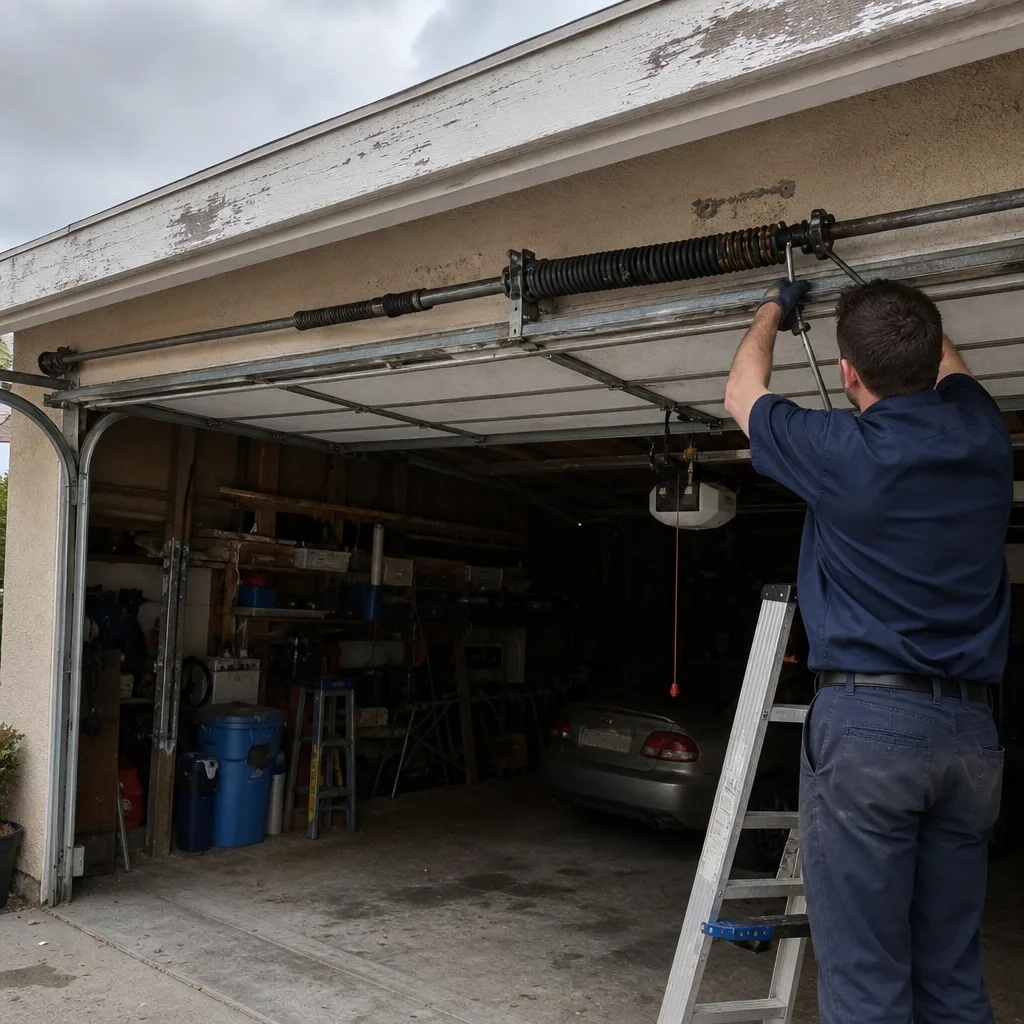
You can learn a lot about your garage door’s health just by watching and listening. Stand inside the garage with the door opening, watch the panels for smooth movement, listen for grinding, popping, or a change in pitch from the opener. Check the cables on either side for visible fraying. Look at the spring for a visible gap in the coil, which indicates a broken spring. None of these observations require touching anything under tension. They give you a baseline, and when you call a technician, you’ll be able to describe what you noticed, which helps the diagnosis. If you see frayed cables or a separated spring, stop using the door immediately and call for garage door repair in Fullerton.
What Requires a Professional: Springs, Cables, Structure
Now the line. There are three categories of work that should never be attempted by a homeowner, regardless of skill level, tool collection, or confidence. The reasons are consistent: stored energy, invisible wear, and the potential for catastrophic failure that turns a $300 repair into a $3,000 one.
Torsion Spring Replacement
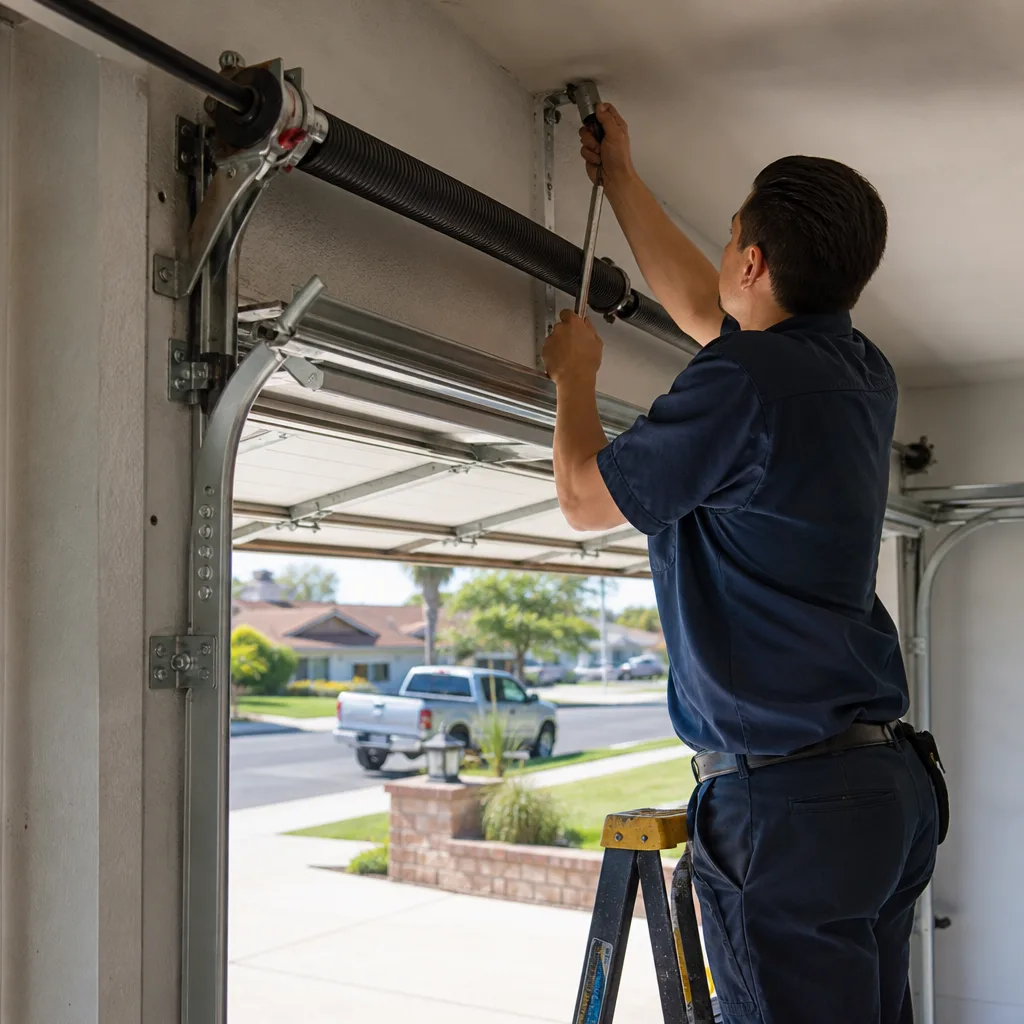
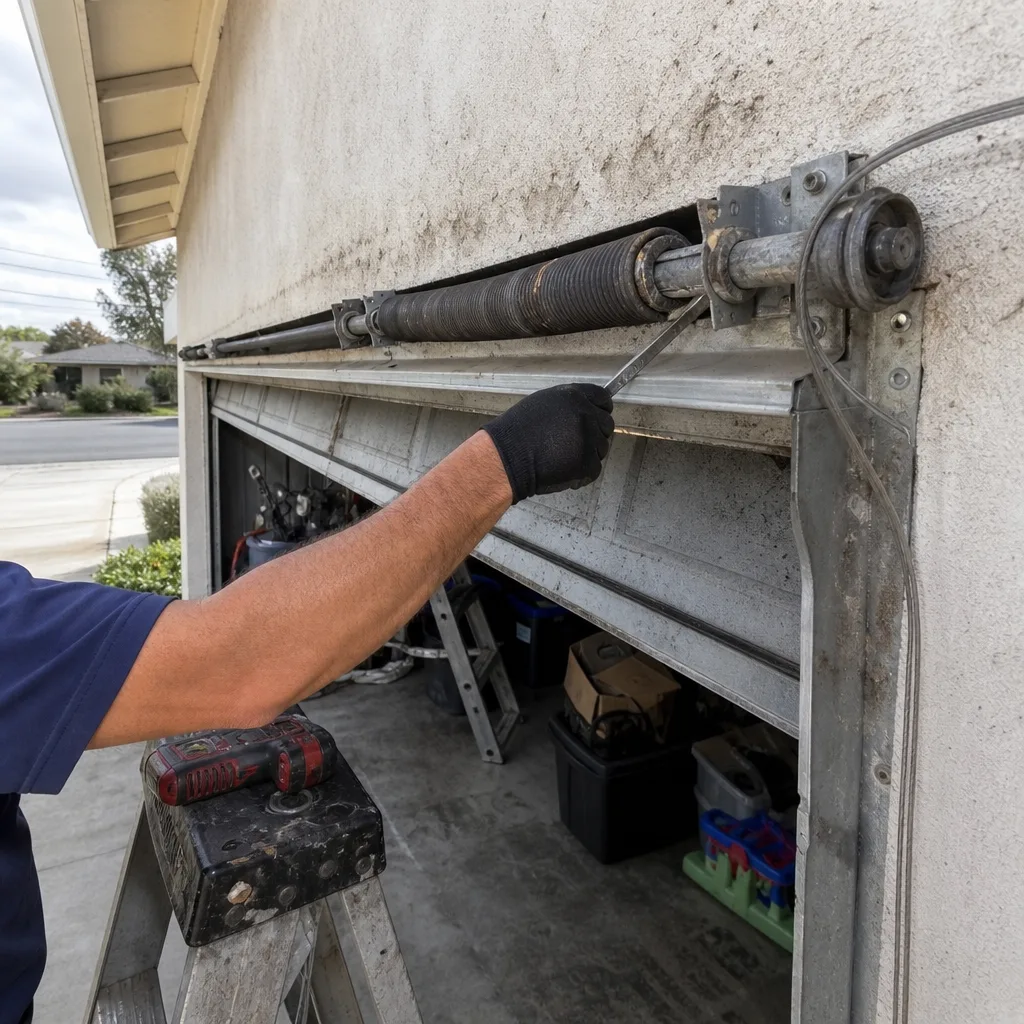
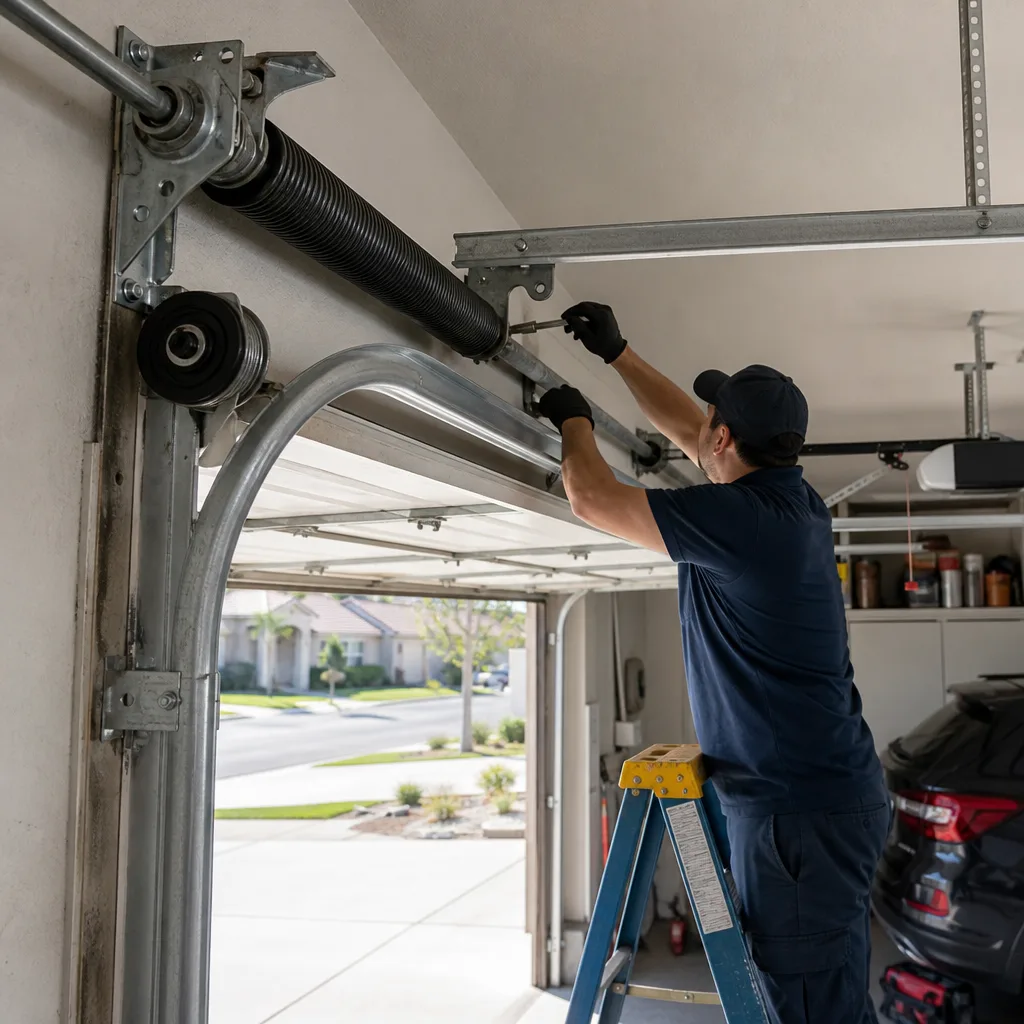
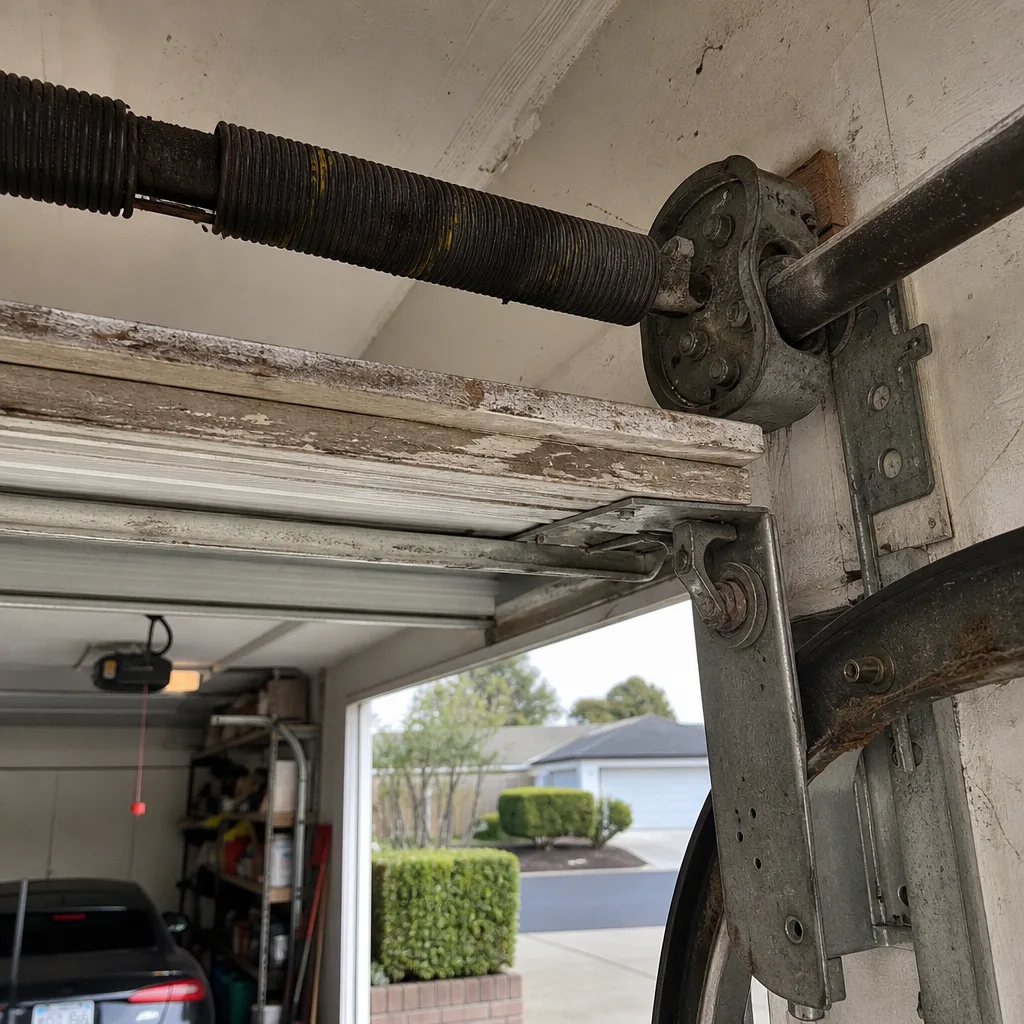
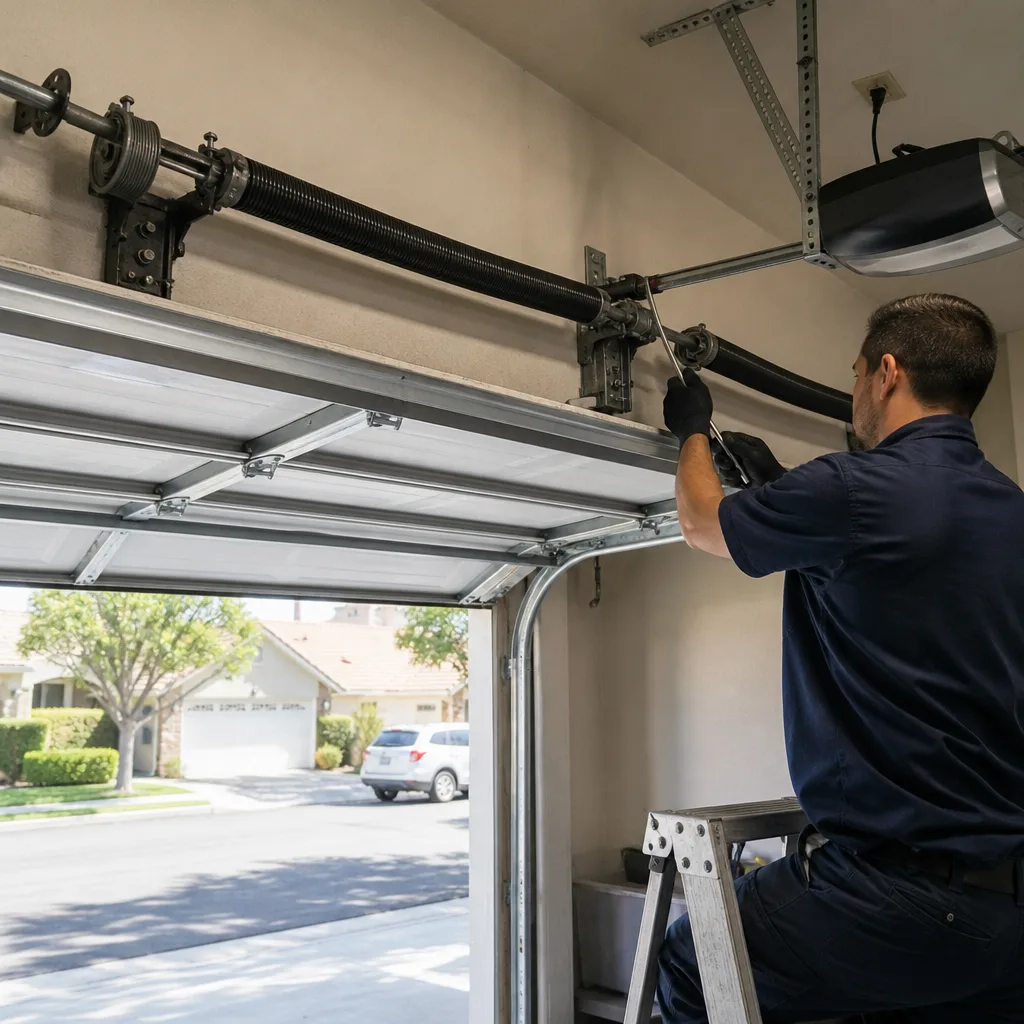
The torsion spring is the component mounted on a metal shaft above the center of the door, and it’s the single most dangerous part in a residential garage. To replace one, you have to unwind the old spring while it’s under full tension, which requires winding bars inserted into the spring cone and careful, controlled releases. A slip during this process doesn’t just sting. The winding bar becomes a projectile, moving faster than a person can react, and the most common injuries are broken bones in the hand and forearm, facial fractures, and permanent eye damage. We can’t make this clearer: this is not the project to learn from a YouTube video. Even seasoned technicians approach torsion springs with respect and proper tools, because the energy doesn’t care how competent you are. If your spring is broken, call for garage door repair in Fullerton.
Lift Cable Replacement
The cables that run along either side of the door and spool onto drums at the top are under the same load as the spring. They carry the door’s weight during operation, and when a cable snaps, the door can slam down with enough force to crush anything underneath. Replacing a cable requires releasing the spring tension safely, threading the new cable through a pulley system that must be routed precisely, and rewinding the spring to the correct number of turns. A cable installed with one wrong wrap will unspool unevenly, causing the door to rise crooked and bind in the tracks. This is a job where the second visit from a technician to correct a botched DIY attempt costs more than the original professional repair. If your cable is frayed or snapped, avoid using the door and contact us.
Structural Panel or Section Replacement
When a lower panel gets backed into in a Fullerton driveway (and we see it constantly on streets with angled driveways), the damage often looks like a single bent section that could just be unbolted and swapped. It isn’t that simple. Garage door panels are under tension from the spring system, and removing a section without supporting the sections above it can cause the entire door to come apart. Panels from different manufacturers or even different model years don’t fit the same, and a mismatched panel will sit visibly wrong and strain the hinges and rollers. We work across Clopay, Amarr, and Wayne Dalton doors specifically because panel compatibility is manufacturer-specific knowledge that a generalist can’t guess at. If you need a panel replaced, this is professional work.
The Warranty Reality Most Homeowners Miss
Here’s the section that most DIY-versus-professional guides skip entirely, and it’s the one that costs homeowners the most money in the long run. Garage door manufacturers attach warranty conditions to their products that go well beyond what most people read. And the fine print matters more here than it does on a dishwasher or water heater, because the warranty covers a system whose failure can damage vehicles, property, and people. For the regulatory side of this, see our guide to Garage Door Permits, Codes & Inspections in CA: What You Need to Know.
Most major manufacturers, including Amarr and Wayne Dalton, state plainly in their warranty documentation that the warranty is void if the door or opener is modified or repaired by unauthorized individuals, or if non-factory parts are installed. The reasoning is straightforward: an improperly installed spring or mismatched panel changes the load distribution on the door, which strains every other component, and the manufacturer refuses to be responsible for the resulting cascade failure. A homeowner who replaces their own torsion spring with a universal spring purchased online might save $80 over professional labor, only to discover that the door’s 10-year manufacturer warranty is now void. If the opener motor burns out six months later due to an unbalanced door, that’s a full retail replacement without coverage.
This isn’t a scare tactic. It’s a specific, documented consequence that most people only learn after the fact. The warranty card that came with your door or opener is worth reading, particularly the sections on “unauthorized service” and “modification.” In our experience working on doors throughout Fullerton, homeowners who keep their warranty intact through manufacturer-compliant repairs save substantially on subsequent repairs because parts and even full sections are covered under the original purchase agreement.
The Real Cost When DIY Goes Wrong
Let’s put numbers to the question. The appeal of DIY is usually financial, and the math is worth doing honestly. The real cost of a failed DIY attempt rests in three categories, and none of them show up in the online tutorial you watched.
First, the parts cost. A universal torsion spring from a big-box store runs $60 to $120, which looks like a great deal against $225 to $350 for professional replacement. What the box doesn’t tell you is that universal springs are sized by the door’s weight and expected cycle life, not by the original specification. Install one with the wrong wire gauge or coil count, and the door is unbalanced from day one. The opener works against extra resistance, the cables wear unevenly, and the motor fails years before it should have. The “savings” on the spring gets paid back, with interest, in premature opener replacement.
Second, the second-visit labor. This is the part no one budgets for. When a homeowner attempts a spring or cable repair, fails midway, and leaves the door in worse condition than it started, the technician who arrives has to deal with two problems: the original repair and the undone DIY work. Springs that were partially unwound have to be removed and reset. Cables that were routed incorrectly have to be re-threaded from scratch. And access to the repair area is often blocked by a door that’s now jammed or hanging. The correction visit typically costs 30% to 50% more than the original repair would have, because the technician is doing double the work. Homeowners in this situation often ask if the second visit could have been the first visit, and the answer is always yes.
Third, the cost of waiting. The most expensive DIY failure is the one that leaves the door inoperable at 9:00 PM or on a weekend. A door that won’t close is a security issue, and a door that’s jammed open with a car trapped inside is a schedule disruption that forces a same-day call. A homeowner who started a Saturday-morning spring project might end up paying for the same repair a professional would have completed on Thursday for a standard rate. If your door is currently down, Garage Door Repair in Fullerton is the place to start.
The Middle Path: DIY Diagnosis, Professional Repair
There’s a productive middle ground between doing everything yourself and outsourcing every minor task, and it’s the approach we recommend to savvier Fullerton homeowners. The insight is this: the diagnosis is usually cheaper to do yourself than to pay for, even when the repair itself is professional-only work. Knowing what’s wrong before you make the call means the technician arrives with the right parts, the right tools, and a clear understanding of the job, which means less time on-site and a lower total bill.
Here’s a step-by-step approach that keeps you involved without putting you at risk:
- Observe and document. Before you call anyone, run the door through a full cycle and watch carefully. Is the door off-balance when it moves? Is there a visible gap in the torsion spring? Do you hear grinding, popping, or a sudden change in opener pitch? Take a short video on your phone. We ask these exact questions when taking a service inquiry, and homeowners who already know the answers save themselves a diagnostic visit.
- Check the obvious, safe items first. Confirm that the opener is plugged in and the outlet is live. Clean the photo eye sensors with a dry cloth and check that the indicator lights are solid. Remove any visible obstruction from the track. You can do all of this without touching anything under tension, and it resolves a surprising percentage of issues in Fullerton homes.
- Identify the symptom by category. A door that opens but won’t close is usually sensor-related. A door that opens a few inches and stops is usually spring or cable related. A door that moves normally but makes noise is usually lubrication or roller wear. Knowing which category you’re in means the phone call takes two minutes instead of fifteen.
- Call with specifics. When you reach a technician, describe what you observed and ask directly: “Based on what I’m seeing, what do you think this is, and can you give me a rough price range?” A reputable company answers that question with a range and confirms final pricing before work begins. We quote every repair before any tool leaves the truck, and our Garage Door Opener Repair in Fullerton page covers what to expect for opener-specific issues.
This middle path works because it respects the boundary. You do the observation and basic safety checks that remove diagnosis time from the service call. We do the repair that requires training, tools, and respect for stored energy. The total bill drops because the technician isn’t spending billable time on discovery you already did.
California Liability and Insurance: What Happens If Someone Gets Hurt
This section isn’t fun to read, but it’s the part most DIY advocates skip. Garage doors are heavy, mechanical equipment, and the legal consequences of a failed repair extend beyond the repair itself. In California, homeowners have a duty of care to maintain their property in a condition that doesn’t create foreseeable injuries. A garage door with an improperly installed spring or cable is a foreseeable hazard.
If a guest, neighbor, or family member is injured by a garage door that was the subject of a DIY repair, and that repair is determined to be the cause or a contributing factor, the homeowner’s insurance carrier will ask a specific question: was the work performed by a licensed professional? If the answer is no, the insurer may deny the liability claim on the grounds that the homeowner assumed the risk by self-performing a repair that required professional competence. Homeowner’s policies generally cover sudden accidents, not the consequences of intentional, unpermitted modifications or repairs performed in violation of manufacturer specifications.
That word, intentional, is the trap door. Homeowners rarely think of a Saturday repair as intentional, but in the legal sense, deciding to replace a garage door spring yourself is an intentional action, and the liability it creates is distinct from an accidental failure of a manufacturer defect. The same logic applies to commercial properties. A landlord of a Fullerton rental property who self-installs a spring to save money is taking on liability that their property insurance may not cover.
The most practical takeaway is this: the parts you can safely DIY should not be parts that can injure someone if they fail. That’s the cleanest line and the one that protects you legally.
Common Mistakes to Avoid
- Using WD-40 as a garage door lubricant. WD-40 is designed to displace moisture and break up rust, not to lubricate moving parts under load. It strips away existing lubrication and leaves metal parts dry, which accelerates wear on roller stems and hinges. A can of white lithium grease costs about the same and actually does the job.
- Touching the red emergency release while the door is under load. The red cord hanging from the opener rail is there for a specific purpose: releasing the door from the opener carriage during a power outage. Pulling it while the door is partially open with a broken spring will release the door’s full weight with nothing to support it, and the door will crash to the ground. Always verify the spring is intact before pulling the release cord.
- Assuming a universal spring fits your door. Garage door springs are sized to the specific weight, height, and duty cycle of the door they support. A universal spring that fits the shaft doesn’t mean the wire gauge and coil count are correct for your panel weight. An incorrectly sized spring leaves the door unbalanced and kills the opener prematurely.
- Ignoring a noisy door until it fails. A garage door that starts popping, grinding, or squealing in its tracks is communicating something. The noise pattern often changes in the week or two before a spring or roller failure. Addressing the noise early costs a fraction of the emergency repair that follows.
- Delaying a broken spring repair to “shop around.” Once a spring breaks, the door’s remaining spring (if it has a two-spring system) is carrying the full load, which it wasn’t designed to do. The second spring typically fails within weeks. A broken spring also leaves the door potentially opening unbalanced, which wears the cables unevenly. Time isn’t your friend with a broken spring.
- Attempting a DIY repair on a Raynor or Amarr door with non-matching parts. Premium door manufacturers design their hardware to work as a matched system. Installing aftermarket parts that aren’t specified for the door or opener model changes the system’s balance and voids the warranty. You may not see the damage immediately, but it compounds with every cycle.
See the difference
 Before
 After
 Before
 After
 Before
 After
When to Call a Professional
You should call a professional if your garage door has a visible gap in the torsion spring, frayed or snapped lift cables, a panel that’s dented or displaced, or an opener that starts and immediately reverses despite clean, aligned sensors. You should also call if the door feels heavier than usual when operated manually, or if it makes a loud pop and then continues to work, because that pop is often the first stage of spring failure. Any of these conditions puts the door in an unsafe state, and continuing to operate it turns a repair into a replacement. Westport Garage Door Repair offers free estimates in Fullerton, call (877) 265-9301 and we’ll help you determine whether the door can be repaired or needs to be replaced. The assessment is straightforward, and the price is quoted and agreed before any work begins.
Frequently Asked Questions
No, it is not safe. Torsion springs are under 150 to 200 pounds of torque, and a slip during unwinding can turn the winding bar into a projectile that causes permanent hand, facial, or eye injuries. Even experienced professionals treat spring replacement with specific tools and controlled procedures. This is the single most dangerous task on a residential property.
In Fullerton, a single torsion spring replacement typically runs between $225 and $350 including parts and labor, while a two-spring replacement is usually $350 to $500. The final price depends on the door’s weight, the spring’s duty cycle, and whether the technician is also correcting balance and checking the cables. We always quote the full price before starting work, and the price you agree to is the price you pay. Call (877) 265-9301 for an exact quote.
Yes, weatherstripping replacement is a safe and straightforward DIY task. The bottom rubber seal slides out of a channel on the bottom of the door, and a new strip slides back in. The side and top vinyl trim strips snap out and snap back in. No tools beyond a mallet and utility knife are needed for most Fullerton homes.
Most manufacturer warranties, including those from Amarr, Wayne Dalton, and Raynor, are voided by repairs performed by unqualified individuals or with non-factory parts. The language is explicit in the warranty documentation under “unauthorized service” or “modification.” An improper spring or panel replacement changes load distribution on the door, and the manufacturer refuses responsibility for the resulting failures.
Yes. Fullerton’s dry summers and Santa Ana winds accelerate dust accumulation on moving parts, which increases wear on the rollers, hinges, and opener mechanisms. The region’s heat also hardens rubber weatherstripping and plastic components faster than coastal communities. Homeowners in Fullerton generally benefit from more frequent lubrication and visual inspections than the national average recommends.
No, it won’t. We quote the full price before any work begins, and the price applies as stated. If the technician discovers a related issue while working, we discuss it with you separately before proceeding. You will never receive an invoice that exceeds the agreed quote for the work you approved. If you’re getting repairs through Garage Door Installation in Fullerton, we follow the same upfront pricing policy.
The Bottom Line
The DIY-versus-professional decision on a garage door isn’t a test of your skill or a referendum on your willingness to learn. It’s a decision about which tasks carry consequences that extend beyond the repair itself. Lubricate your door, replace the weatherstripping, align the sensors, and do the visual inspection. Those tasks are safe, valuable, and genuinely yours to do. Leave the torsion springs, the lift cables, and the structural panel work to a technician who handles these systems daily across LiftMaster, Clopay, Amarr, and the other major brands. The money you save by doing the diagnostic groundwork yourself is real. The money you lose from a DIY spring attempt is typically measured in the five figures when you count the emergency visit, the corrected repair, and the voided warranty. In Fullerton, where garage doors get used daily and the heat takes its toll, the right line between DIY and professional work is worth getting right. For more guides & resources on keeping your garage door safe and functional, explore our blog.en DIY and professional is the line that keeps you safe and keeps your door balanced.
Written by the team at Westport Garage Door Repair, serving Fullerton since 2012.