
Last updated November 2, 2026
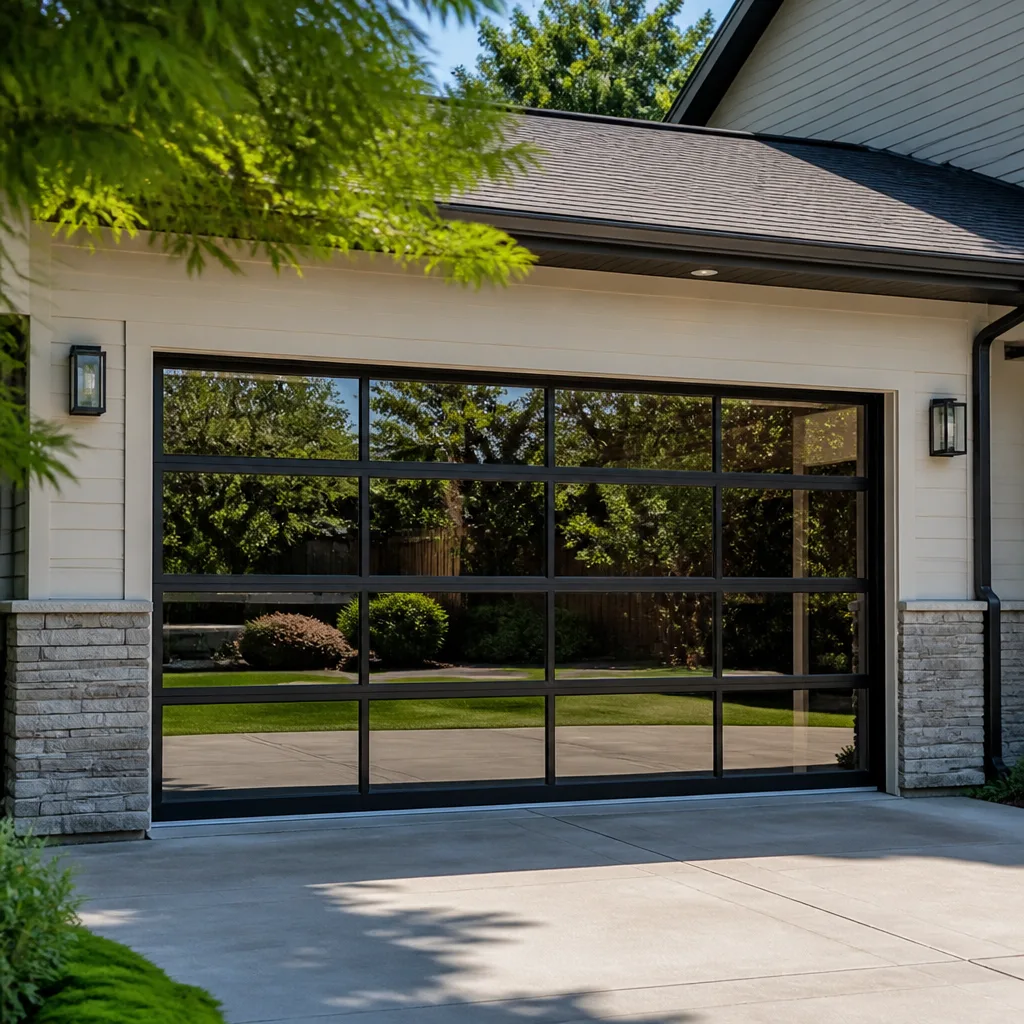 Full-view glass
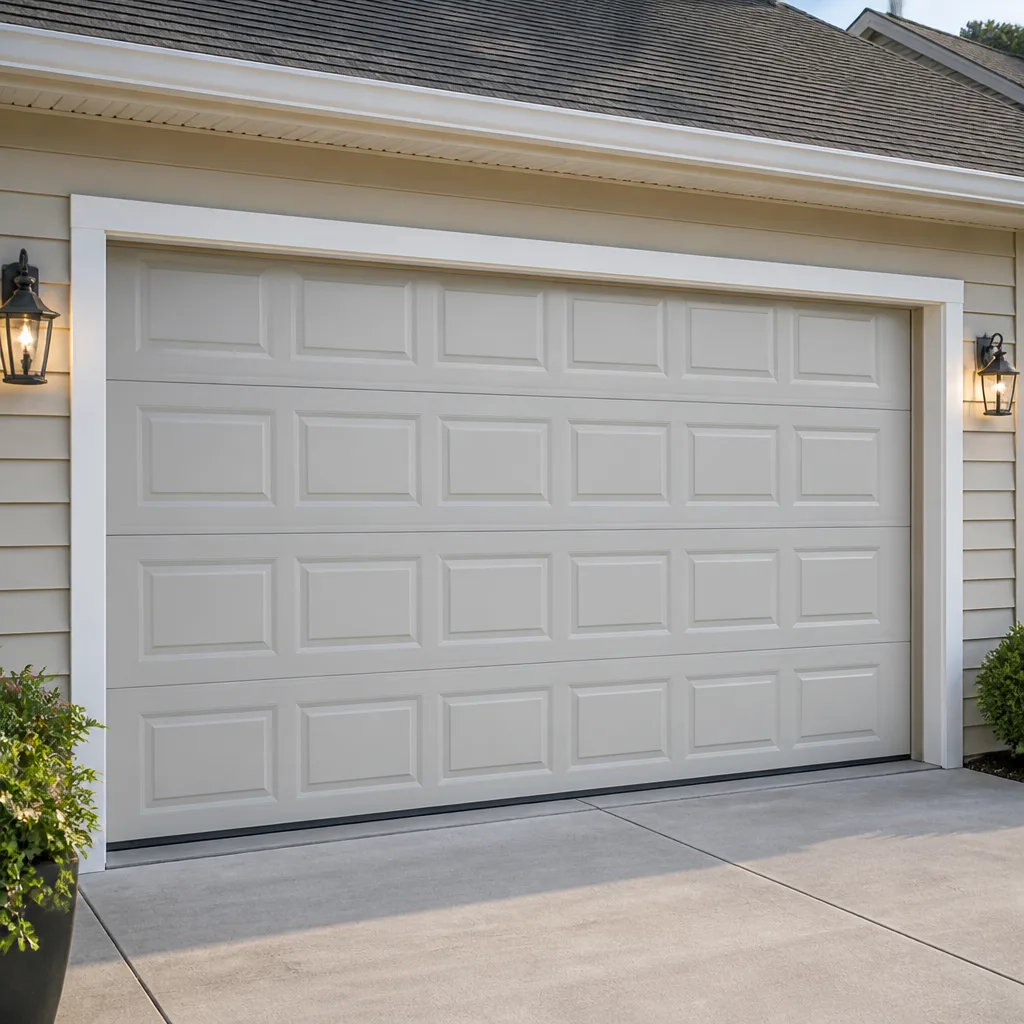 Raised-panel steel
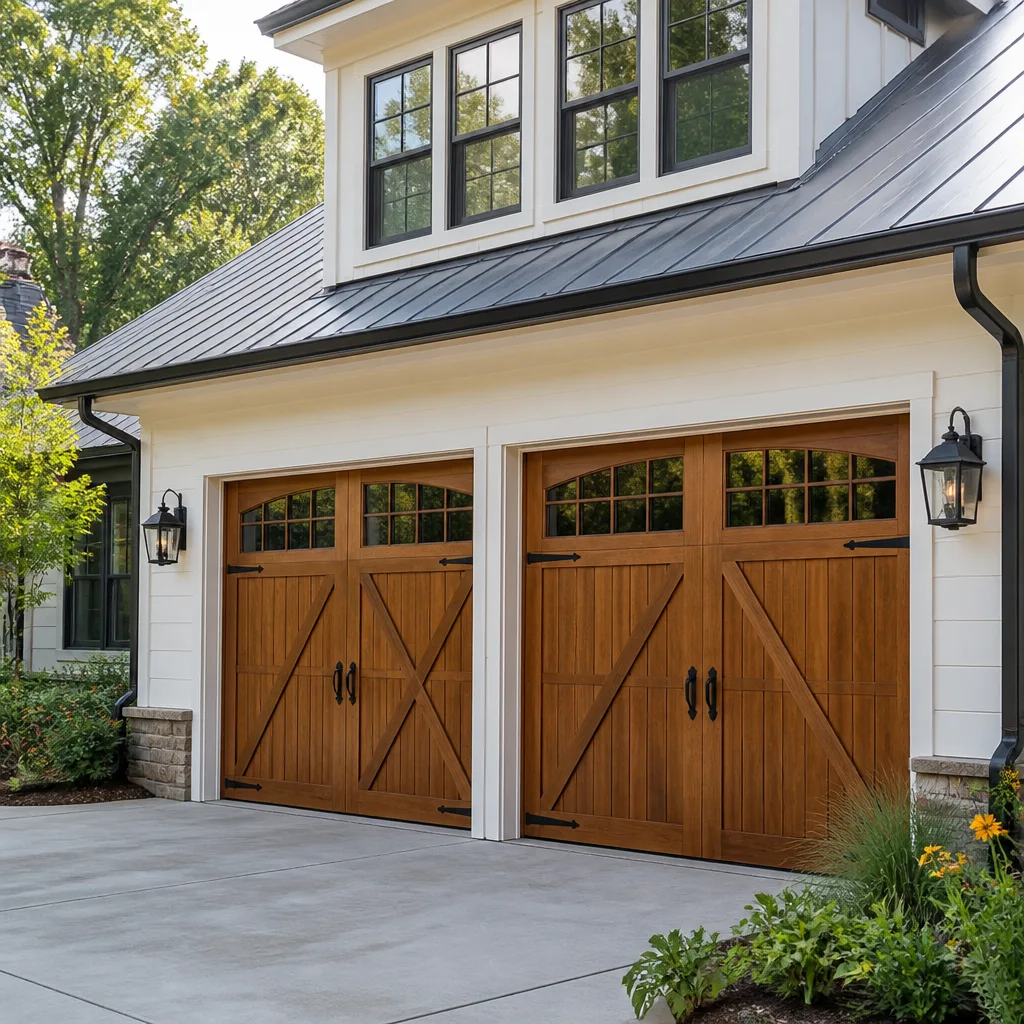 Carriage house
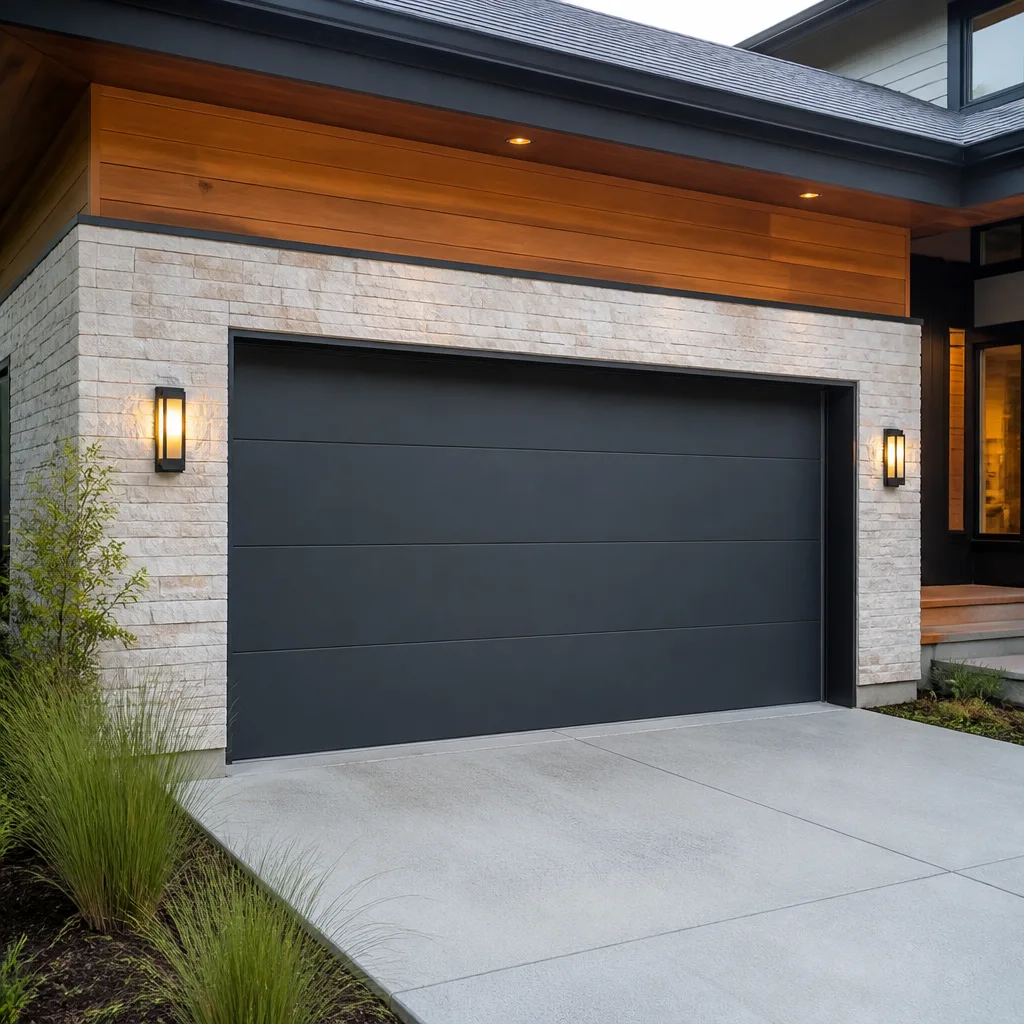 Modern flush
 LiftMaster openers
 Chamberlain openers
Full 25-point door and opener safety check with every visit - springs, cables, rollers, tracks, and your LiftMaster or Chamberlain opener included
You get a price before we start. It does not change when the truck arrives.
Get your free estimateGarage Door Repair Maintenance Checklist for Fullerton Homeowners
Here’s something most maintenance guides won’t tell you: the average garage door opens and closes about 1,500 times a year, and every single cycle puts stress on roughly a dozen moving parts. In Fullerton, where dry Santa Ana winds coat everything in fine dust from October through March, that wear accelerates. A door that would last 20 years in San Francisco can grind itself into an emergency repair in 12 here if nobody’s paying attention. This guide covers the specific checks that actually catch problems before they become breakdowns, what to lubricate and with what, how to test balance and force settings the way a technician would, and why the wrong product causes more damage than no lubrication at all.
Quick Answer
A complete garage door maintenance checklist for Fullerton homeowners includes monthly visual inspections of rollers, cables, and track alignment, quarterly lubrication of hinges and rollers with the correct product, semi-annual balance and force-resistance tests, and an annual professional inspection of springs and opener hardware. The three items most Fullerton homeowners overlook are cable fraying on the bottom roller brackets, dry lubricant degradation during Santa Ana wind season, and force settings that have drifted too high on the opener. Run through the full checklist below, then call (877) 265-9301 for a free estimate if anything looks off, or explore our Garage Door Repair services for professional help.
Styles & brands we work with
- Raised-panel steel
- Carriage house
- Modern flush
- Full-view glass
- LiftMaster openers
- Chamberlain openers
Table of Contents
- Lubrication: What to Use, Where to Put It, and Why WD-40 Is the Wrong Call
- Monthly Visual Inspection: The Ground-Up Sequence That Catches Problems Early
- The Balance Test Your Opener’s Safety Sensors Won’t Catch
- Force-Resistance Testing: Setting Limits the Right Way
- Fullerton’s Santa Ana Season and What It Does to Garage Door Hardware
- Maintenance Frequency: Monthly, Quarterly, and Annual Schedules
- What a Professional Inspection Covers That a Homeowner Checklist Can’t
- Opener-Specific Maintenance: From Genie to LiftMaster
Lubrication: What to Use, Where to Put It, and Why WD-40 Is the Wrong Call
Most maintenance checklists tell you to lubricate moving parts. That’s about as useful as telling someone to check the car. Garage door lubrication is specific work, and using the wrong product on the wrong component creates problems that didn’t exist before you opened the can. Here’s exactly what to use, where to apply it, and the reasoning behind each choice.
Rollers: Silicone Spray or Lithium Grease
Steel rollers with ball bearings need a silicone-based spray lubricant applied at the bearing, not the wheel surface. Spray directly into the bearing assembly where the roller spins on its shaft. If your door has nylon rollers from a manufacturer like Clopay or Amarr, the wheel itself doesn’t need lubrication at all, only the bearing. Plastic rollers without bearings are cheap builder-grade parts and should be replaced rather than lubricated, since no amount of product will make them roll smoothly once the inner bore wears oblong.
Hinges: White Lithium Grease
Hinges take a white lithium grease applied at each pivot point where the hinge leaves move against each other. Work the door up and down once after application to distribute the grease. In our experience with Wayne Dalton and Amarr doors in Fullerton, hinge pins collect fine dust quickly during windy months, so wipe the pivot area with a dry cloth before applying fresh grease. Grease on top of caked dust just makes grinding paste.
Springs: Garage Door Spring Lubricant Only
Torsion springs need a dedicated garage door spring lubricant, which is typically a foaming or penetrating lubricant that leaves a dry film. Extension springs, the older style that run along horizontal tracks, take the same product. Here’s the critical point about WD-40: it’s a solvent first and a lubricant second. It strips the protective coating and leaves springs with less lubrication than they had, not more. Worse, on torsion springs, WD-40 can cause surface rust to form faster after the solvent evaporates – the opposite of what you want in Fullerton’s dry, windy conditions where metal surfaces already lose moisture protection quickly.
Tracks: Nothing
The track itself should stay completely dry. Lubricating the track is the single most common DIY mistake we see on garage door tracks across Fullerton. The rollers ride inside the track, but their bearings do the work, not the track surface. Grease or oil in the track attracts dust, and in Fullerton’s Santa Ana season, that dust becomes a grinding compound that wears roller bearings faster. If your track looks dirty, wipe it clean. That’s it.
Monthly Visual Inspection: The Ground-Up Sequence That Catches Problems Early
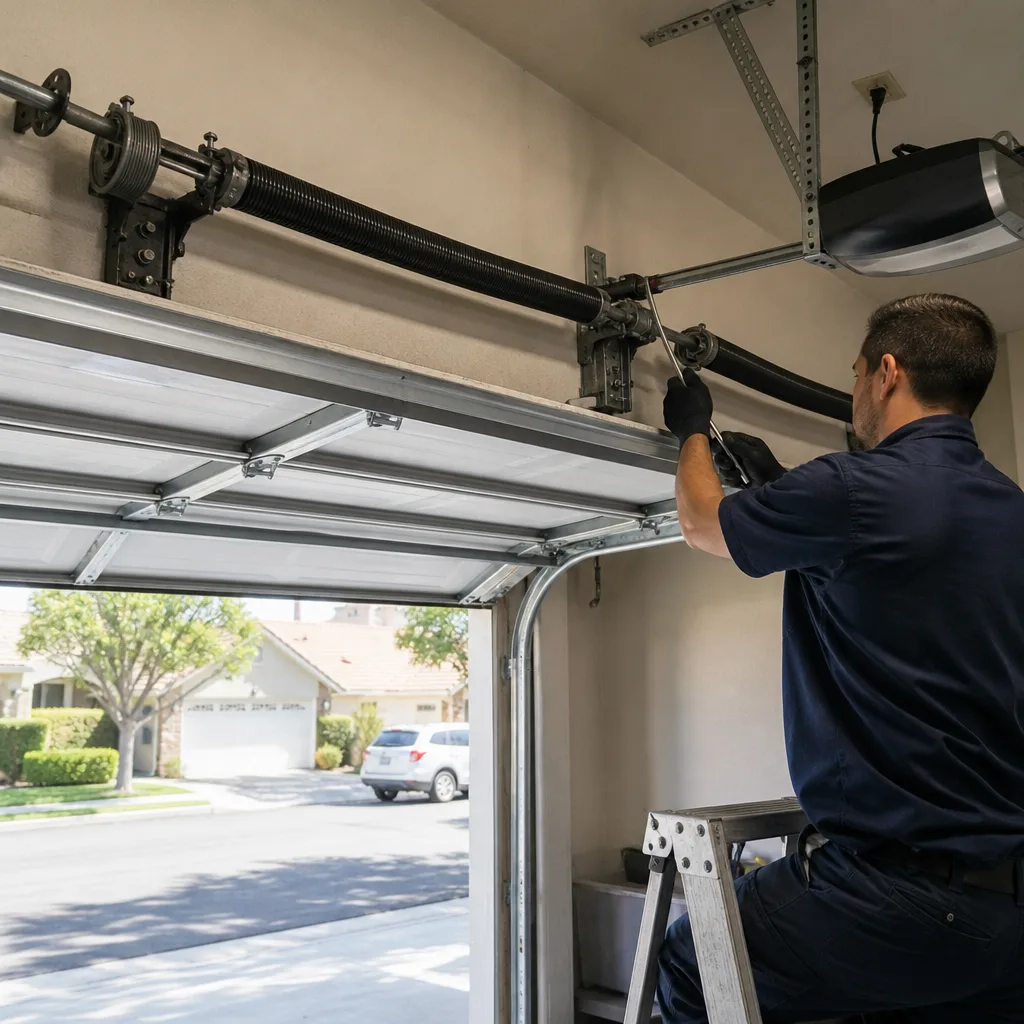
The difference between a $25 roller replacement and a $600 panel replacement is often a month of observation. Here’s a ground-up inspection sequence that takes about 10 minutes and catches the specific problems most often missed in Fullerton garages. For deeper guidance, see our Garage Door Repair Troubleshooting: Common Problems and How to Fix Them.
- Bottom roller brackets: Look at where the cable attaches to the bottom corner of the door at each side. Check for frayed cable strands, rust at the attachment point, and any sign that the bracket has bent or shifted. Cable failures almost always start here, and a failed cable on a torsion spring system turns a balanced door into a projectile.
- Rollers: With the door in the closed position, inspect each roller where it enters the track. Look for flat spots on the wheel, cracks in nylon rollers, or visible wobble when the door moves. A roller with a flat spot is already failing; replacing it now takes 20 minutes. Waiting until it seizes halfway up the track means a door stuck open and a service call.
- Hinges: Check each hinge leaf for cracks at the bend points, especially the center hinge and the top section hinges, which carry the most lateral stress as the door transitions through the curve of the track. On Clopay and Amarr doors, hinge cracking is rare but occurs after years of repeated stress if the door has ever been run with a broken spring.
- Cables: Follow each cable from the bottom bracket up to the drum at the top of the track. Look for any broken strand, kink, or shiny spot indicating rubbing against a track bolt or corner bracket. A cable with broken strands is a replacement, not a repair.
- Track alignment and fasteners: Run your hand along the vertical track sections. Any loose bolt means the track can shift under load. Look for gaps between track sections at the joints, and check the horizontal track for sagging by sighting along its length from the back of the garage.
- Weatherstripping: On the bottom of the door and around the frame. In Fullerton, dried-out weatherstripping lets dust, leaves, and the occasional lizard into the garage. It also signals that the door may need a new bottom seal, a 20-minute fix that improves both sealing and closing tolerance.
- Opener rail and chain or belt: For chain-driven openers, check for slack in the chain. For belt drives, look for cracks or fraying on the belt surface. Both chain and belt tension should be checked quarterly, but a monthly visual catches obvious issues early.
The Balance Test Your Opener’s Safety Sensors Won’t Catch
Your garage door opener has safety sensors that reverse the door when something blocks its path. What those sensors don’t monitor is whether the door itself is properly balanced. A severely unbalanced door puts the opener’s motor under constant strain, shortens opener life by years, and can slam shut when the spring finally fails completely. Here’s how to test balance the way a technician does.
Start with the door closed. Pull the emergency release cord, which disconnects the door from the opener carriage. The cord usually hangs from the center rail with a red handle. Once released, manually lift the door to about waist height and let go. A properly balanced door stays in place. It doesn’t drift up, and it doesn’t drop. If the door drifts upward, the spring has too much tension. If it drops, the spring is under-tensioned or weakening. Either condition means the spring needs adjustment, and that adjustment requires a professional, since torsion springs are under enough tension to cause serious injury if mishandled.
Repeat the test with the door halfway up and again two-thirds up. A door that’s balanced at one height but not another often has track alignment issues or inconsistent spring wear. In Fullerton, where older homes in the downtown Historic District often have original or aging door hardware, this test catches spring fatigue years before a visible break. Run it every six months. Record the result each time so you and any technician who visits have a baseline.
Force-Resistance Testing: Setting Limits the Right Way
Opener force settings control how much resistance the motor will push through before reversing. They’re set too high on the majority of doors we see in Fullerton, usually because a previous adjustment compensated for a stiff door rather than fixing the actual stiffness. The result is an opener that will keep pushing even when something is wrong, and that’s how fingers get pinched and panels get creased.
To test force-resistance, close the door and hold the bottom with both hands while the opener runs. You should feel the door stop and reverse with only moderate resistance. If your hands have to fight the door before it reverses, the force setting is too high. Check your opener’s manual for the adjustment procedure, which is typically two small dials or buttons on the back of the motor unit, one labeled up and one labeled down. Genie, LiftMaster, and Chamberlain units all have slightly different adjustment mechanisms, but the principle is identical: you want just enough force to close the door smoothly, and not one ounce more.
After adjusting, run the door through a full open and close cycle and repeat the resistance test. If you’re not comfortable working at the motor unit, or the door doesn’t reverse predictably after adjustment, this is a repair job, not a DIY project. The force-setting mechanism itself may be faulty. Our team at Garage Door Opener Repair in Fullerton recalibrates opener force settings regularly on service calls, and mis-set limits are one of the three most common issues we correct on older Genie and Craftsman openers.
Fullerton’s Santa Ana Season and What It Does to Garage Door Hardware
Fullerton’s climate is harder on garage door hardware than most homeowners realize. The combination of dry offshore winds, fine dust, and temperature swings creates conditions we see reflected in the repair patterns across the city. Santa Ana winds, which typically run from October through March, push fine particulate through every gap in a garage door’s outer seal. That dust lands on lubricated surfaces and in roller bearings, where it acts as an abrasive. It also accelerates corrosion on exposed metal components by stripping away any moisture barrier that lubricant provides.
The neighborhoods most affected are the ones closest to open areas and hillside exposure. Homes in the Coyote Hills area and along Bastanchury Road see more wind-driven dust than homes in the flat interior blocks. The practical upshot: if you live in Fullerton, your quarterly lubrication schedule matters more than it would in a coastal city. Springs that would go five years between services in a humid environment may need attention in three here.
There’s a second Fullerton-specific factor: temperature fluctuations between hot days and cool nights cause metal track sections to expand and contract. Over years, that thermal cycling loosens track bolts and shifts alignment. A seasonal check of every track fastener, done at the start of Santa Ana season in October and again after it ends in March, prevents the track shift that leads to roller binding and cable wear. For more on Fullerton’s specific conditions, see our Garage Door Repair in Fullerton page.
Maintenance Frequency: Monthly, Quarterly, and Annual Schedules
Maintenance works best when it’s structured. Here’s the full schedule we recommend for Fullerton homeowners, organized by how often each task should be done.
Monthly
- Visual inspection of rollers, hinges, cables, and track fasteners (the ground-up sequence above)
- Listen to the door during operation for new squeaks, grinding, or popping sounds
- Check weatherstripping for gaps or cracking
- Test the auto-reverse sensor: place a 2×4 or similar object in the door’s path and verify the door reverses before contact
Quarterly
- Lubricate rollers, hinges, and springs with the correct products
- Inspect and wipe down track sections; remove any debris from inside the track
- Check chain or belt tension on the opener
- Inspect opener mounting brackets and bolts where they attach to the ceiling or wall
Semi-Annually
- Run the balance test described above
- Run the force-resistance test described above
- Inspect torsion springs for visible rust, gaps in the coil, or surface cracking
- Test both opener remotes and the wall panel; replace batteries in remotes and keypad
Annually
- Full professional inspection covering springs, cables, panels, track, opener motor, and safety systems
- Tightening of all track, hinge, and bracket bolts
- Professional lubrication of all moving components, including bearings that aren’t easily accessible
- Opener diagnostic check, including force settings, travel limits, and safety reverse systems
- Assessment of overall door condition for planning future replacement before a failure forces one
What a Professional Inspection Covers That a Homeowner Checklist Can’t
Even the most diligent homeowner checklist has limits. Some components can’t be safely inspected or maintained without training and specialized tools, and some failure modes aren’t visible until damage has already begun. A professional inspection covers the following areas that are outside a DIY checklist.
Torsion spring integrity: Torsion springs sit under enormous tension, and the failure mode isn’t always an obvious break. Fatigue cracks start small and internal, invisible except under magnification. A professional can identify a spring nearing the end of its service life before it snaps, which matters because a snapped torsion spring often damages panels, tracks, or vehicles. Spring replacement is not a DIY job under any circumstances, and we don’t recommend even touching these components during a homeowner maintenance routine.
Cable drum condition: The cable drums at the top of the track wear unevenly in ways that aren’t visible until a cable starts winding incorrectly. A professional inspection includes removing the cable tension briefly to check the drum groove, which is genuinely dangerous work if you don’t know how to release and re-set spring tension properly.
Opener logic board diagnostics: Motor issues are easy to spot, but logic board failures on modern smart-home openers, including LiftMaster and Chamberlain MyQ systems, produce intermittent symptoms that look like sensor or remote problems. Diagnosing these requires specific test equipment and familiarity with the specific model’s failure patterns.
Panel stress analysis: Over time, panels flex under repeated cycles, especially on double-wide doors and doors from lighter-gauge builder-grade manufacturers. A professional can identify stress points that indicate which panels are likely to fail first, which helps you plan a whole-door replacement rather than paying for piecemeal panel fixes.
If you’re in Fullerton and want a professional inspection, we offer free estimates. Our team services all eight major garage door and opener brands, including Clopay, Amarr, Wayne Dalton, Genie, LiftMaster, Chamberlain, and Craftsman, so we’re already familiar with your hardware. For new door planning, see our Garage Door Installation in Fullerton page.
Opener-Specific Maintenance: From Genie to LiftMaster
Opener maintenance gets less attention than door maintenance, but opener failures are among the most common service calls we handle in Fullerton. Here’s what each major opener type needs, and what to watch for on each.
Chain-Drive Openers: Genie and Older Craftsman
Chain drives are the workhorses of garage door openers, and older Genie and Craftsman units still operate all over Fullerton. The maintenance focus on a chain drive is chain tension and sprocket wear. A loose chain causes the opener to run loudly and wear the sprocket unevenly. A too-tight chain strains the motor and causes premature failure. Check tension quarterly by pressing on the chain at its midpoint; it should deflect about a half inch. Sprocket teeth should be sharp and uniform. Rounded or uneven sprocket teeth mean the sprocket is due for replacement.
Belt-Drive Openers: LiftMaster, Chamberlain, and Raynor
Belt drives run quieter and need less frequent tension adjustment, but the belt itself is a wear item. Look for surface cracks, missing teeth on the underside of the belt, or signs of stretching. A belt that has stretched beyond adjustment means replacement, which is a straightforward professional job. Modern LiftMaster and Chamberlain units with MyQ smart-home integration also need occasional firmware updates, which are handled through the MyQ app rather than at the motor unit.
Screw-Drive Openers: Older Genie Models
Screw-drive openers are less common in Fullerton now but still present in older homes. These units need the screw lubricated with a specific screw-drive grease, not the same product you’d use on the door. Without proper lubrication, the screw and carriage wear each other out within a few years. If you have a screw-drive opener and you’re not sure what product to use, check the owner’s manual or call us, because using the wrong grease here accelerates wear dramatically.
Common Mistakes to Avoid
- Using WD-40 on springs: The solvent strips lubricant and leaves metal exposed, which accelerates rusting in Fullerton’s dry, windy conditions. Use a dedicated garage door spring lubricant.
- Lubricating the track: Tracks should stay clean and dry. Lubricant in the track attracts dust during Santa Ana season, which grinds roller bearings faster.
- Ignoring small noises: A new squeak or pop is never the door fixing itself. Noises always indicate a component wearing, and catching them early is the difference between a part replacement and a panel or spring replacement.
- Adjusting spring tension as a DIY job: Torsion springs are under enough tension to kill or seriously injure. Never touch the spring adjustment bolts yourself. This is a professional-only component.
- Compensating for a stiff door by raising opener force settings: Higher force settings mask underlying problems and make the door dangerous. Fix the stiffness, don’t crank the dial.
- Skipping the balance test because the auto-reverse sensors work: The sensors protect objects in the door’s path; they don’t protect the opener motor from an unbalanced door that’s slowly killing it.
- Waiting until a cable breaks to inspect cables: By the time a cable fails, the damage is done. Monthly visual checks catch fraying weeks or months before a failure would strand you with the door open, closed, or worse, half-open.
See the difference
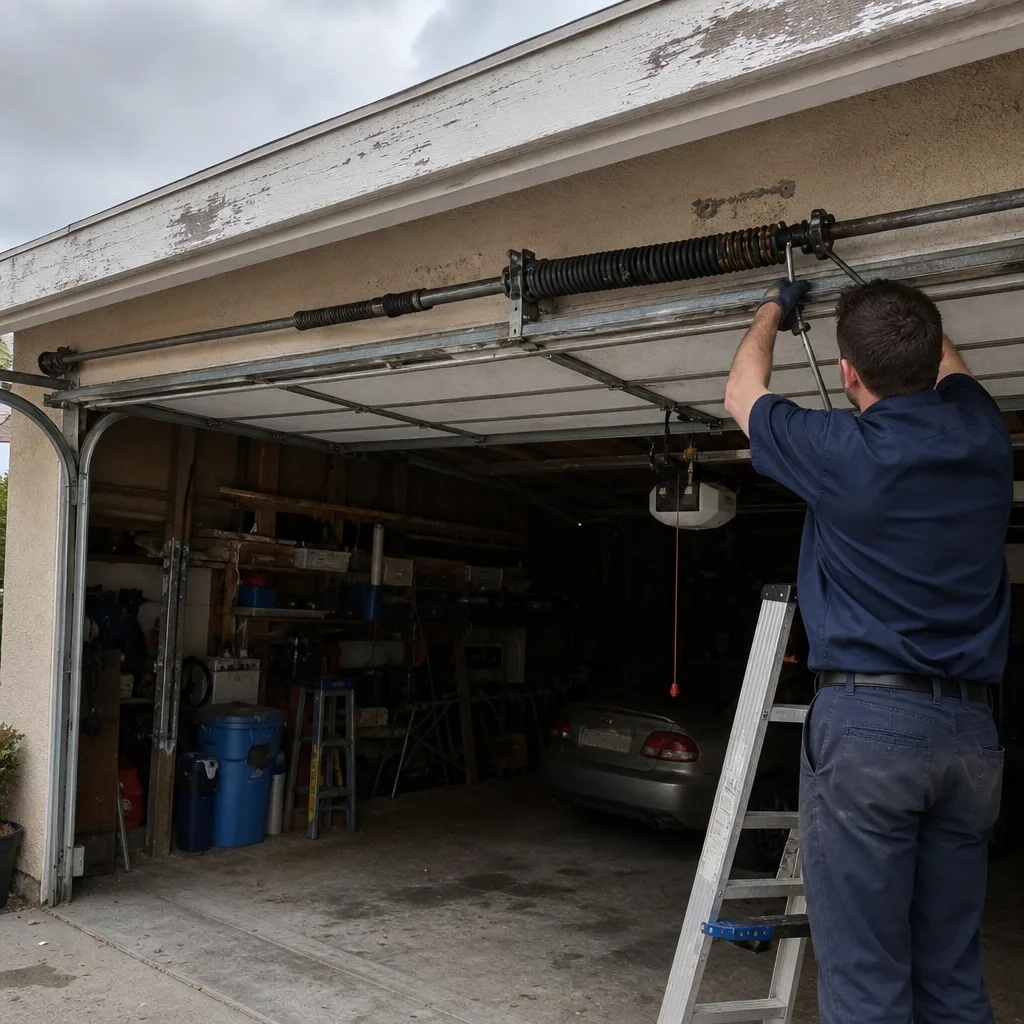 Before
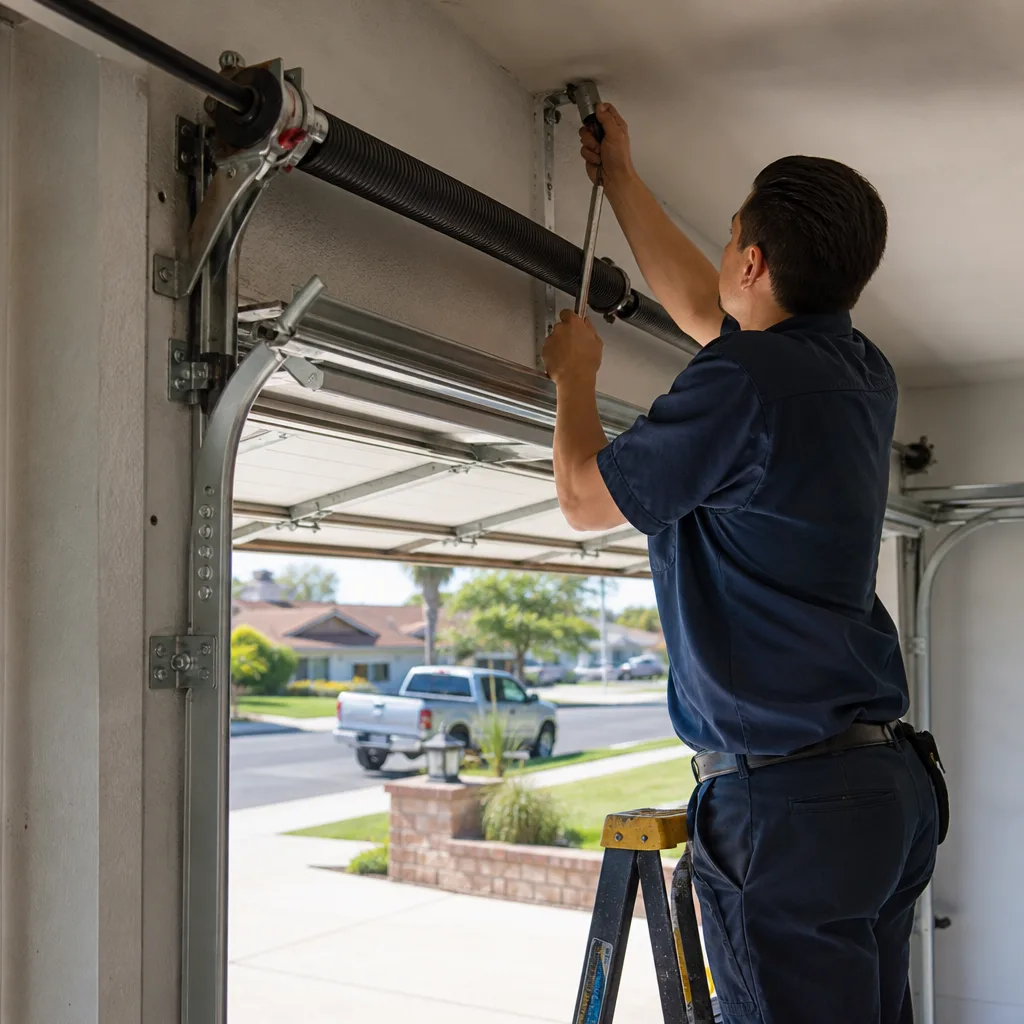 After
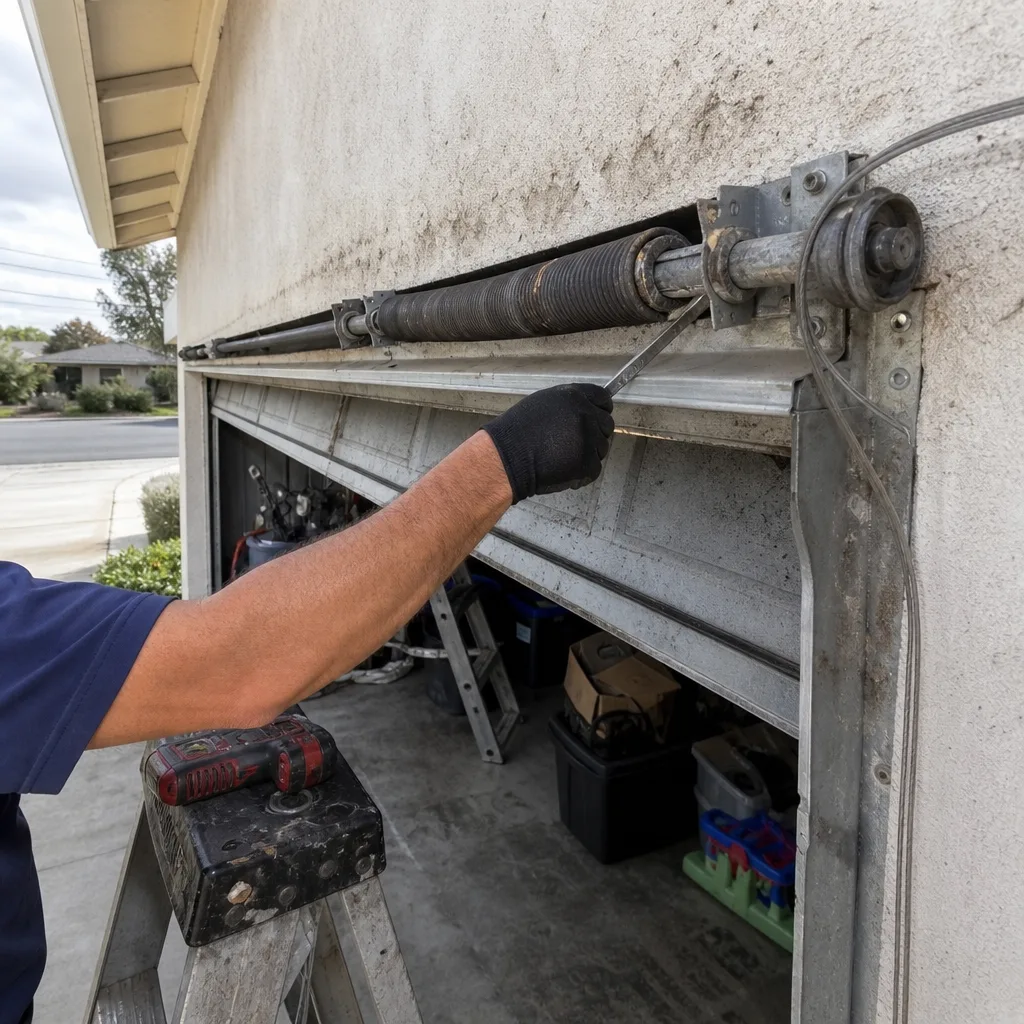 Before
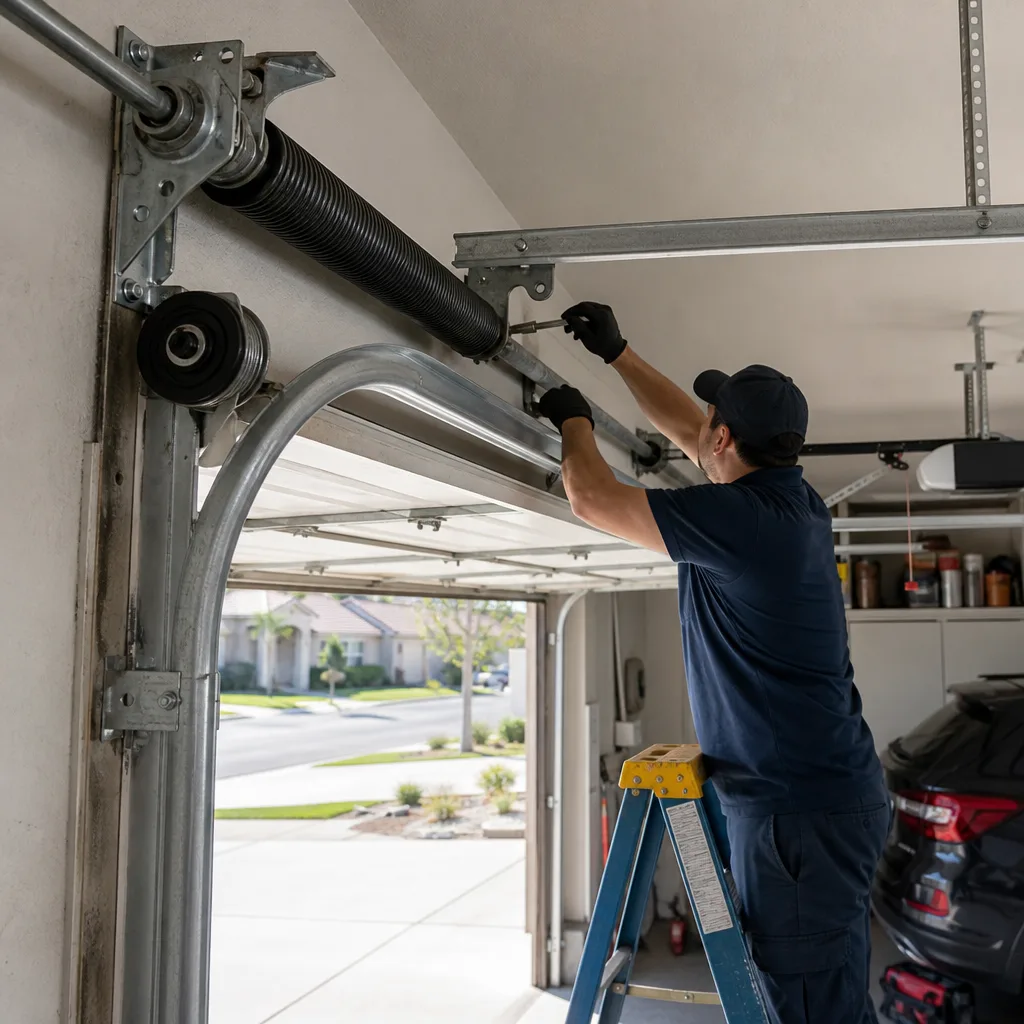 After
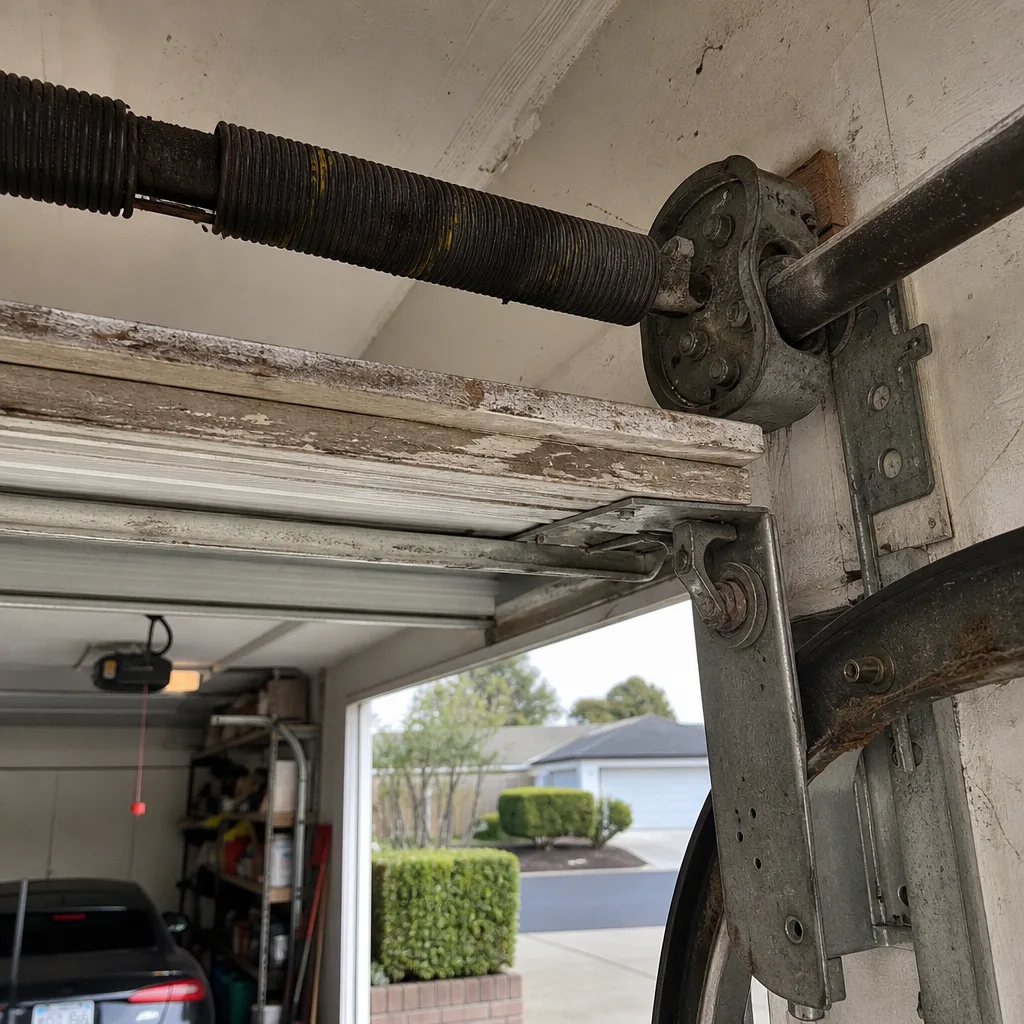 Before
 After
When to Call a Professional
Call a garage door specialist if your torsion spring is broken, if your door has come off its track, if a cable has snapped or is visibly frayed, or if your opener motor runs but the door doesn’t move. These are not conditions you can fix safely or effectively without training, and attempting to do so creates real risks. Also call if your door fails the balance test twice in a row, if the opener fails to reverse during force-resistance testing even after adjustment, or if you see any panel stress cracks, which signal structural weakness that will only get worse. Westport Garage Door Repair offers free estimates in Fullerton, call (877) 265-9301.
Frequently Asked Questions
Lubricate your garage door every three months in Fullerton. The dry Santa Ana season from October through March introduces fine dust that works into lubricated surfaces and degrades the lubrication faster than in more humid climates, so stick to a strict quarterly schedule.
A professional garage door tune-up or maintenance visit in Fullerton typically costs between $85 and $175 depending on what the visit includes, with more involved inspections or minor part replacements adding to that. Call (877) 265-9301 for a free estimate on your specific door.
You can safely perform monthly visual inspections, quarterly lubrication of rollers and hinges, and semi-annual balance and force-resistance tests yourself. Spring adjustment, cable replacement, and any work involving the torsion system should always be left to a professional.
During Santa Ana winds, fine dust penetrates the garage and lands on lubricated components, creating temporary grinding or squeaking until the dust works through or is cleaned away. It’s a signal that your lubrication film is too thin, your rollers are worn, or your track has shifted slightly out of alignment.
The most common garage door problem we see in Fullerton is spring fatigue accelerated by dry climate conditions, followed closely by roller bearing wear caused by dust ingress. Both are prevented by the maintenance schedule described in this guide.
A torsion spring in Fullerton’s climate typically lasts between 7 and 10 years with proper maintenance, compared to 10 to 15 years in more humid coastal climates. If your spring is older than 7 years, have it inspected annually as part of your professional maintenance visit.
The Bottom Line
Garage door maintenance in Fullerton comes down to three things: correct lubrication with the right products on the right components, monthly visual inspections that follow a systematic ground-up sequence, and semi-annual tests that catch balance and force-setting problems before they cause a breakdown. The climate here, especially during Santa Ana season, punishes neglected hardware faster than most homeowners expect. Follow the schedule in this guide, correct problems when they’re small, and call a specialist when the problem involves springs, cables, or anything that makes you hesitate. For additional help, check out our more guides & resources. A garage door that’s maintained properly will outlast one that’s repaired repeatedly, and the maintenance takes less time than a single emergency service call.
If you need help with your garage door in Fullerton, we’re a single-trade company, garage doors are all we do. We work on all eight major brands, including Clopay, Amarr, Wayne Dalton, Genie, LiftMaster, Chamberlain, Craftsman, and Raynor. See our Westport Garage Door Repair home page for more about how we work, and call (877) 265-9301 for a free estimate.
Written by the team at Westport Garage Door Repair, serving Fullerton since 2012.