
Last updated November 3, 2026
 Full-view glass
 Raised-panel steel
 Carriage house
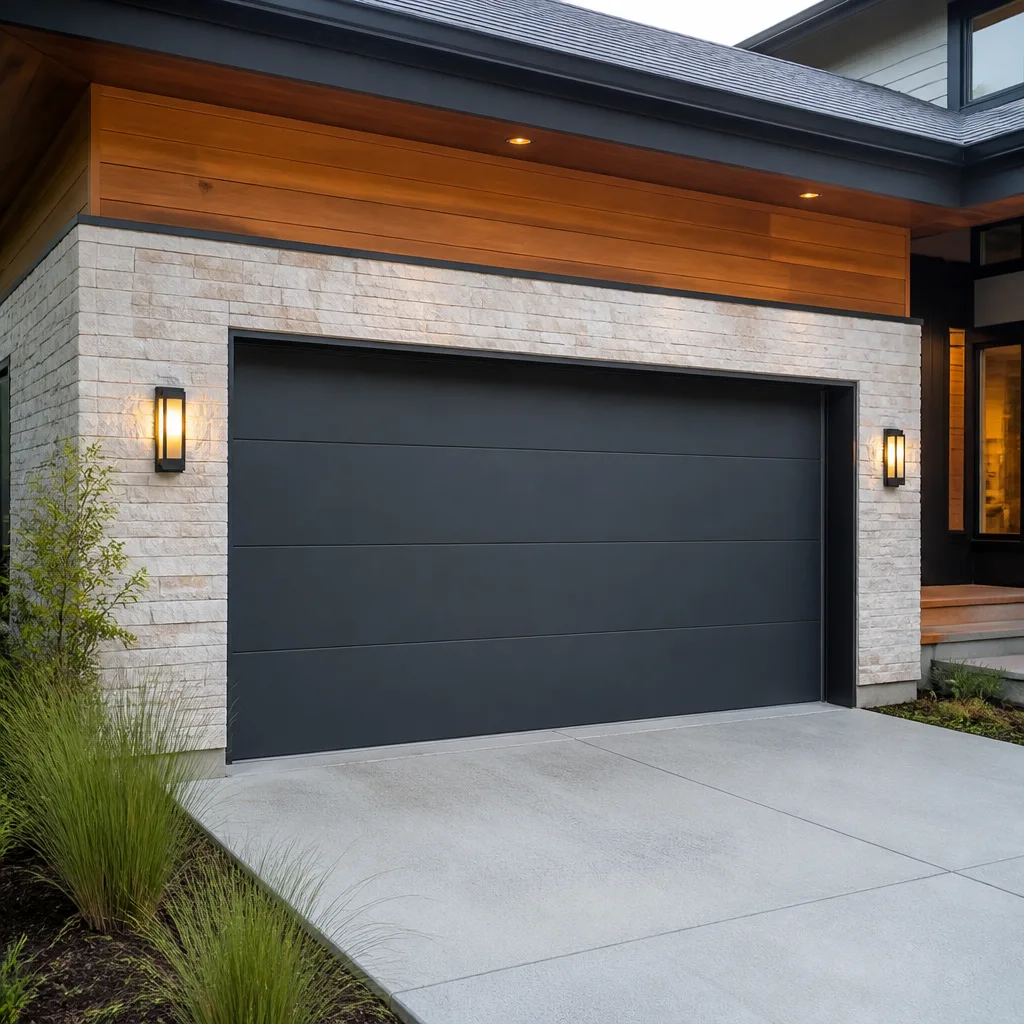 Modern flush
 LiftMaster openers
 Chamberlain openers
Full 25-point door and opener safety check with every visit - springs, cables, rollers, tracks, and your LiftMaster or Chamberlain opener included
You get a price before we start. It does not change when the truck arrives.
Get your free estimateSeasonal Garage Door Care for Fullerton: Year-Round Homeowner’s Guide
Every seasonal garage door guide online is written for the Midwest. If you’re in Fullerton and following advice about winterizing your door against ice, you’re maintaining for weather you don’t have while ignoring the conditions you do. Fullerton’s climate doesn’t produce freeze-thaw cycles that crack springs or snow loads that bow panels. What it does produce is sustained summer heat above 90°F, Santa Ana wind events that drive debris into tracks, and brief but intense rain that finds every gap in your bottom seal. This guide replaces the generic four-season template with a maintenance calendar built for Fullerton’s actual weather patterns, and it covers the specific failure points we see most often on doors throughout the city. For a broader overview, see our The Complete Garage Door Repair Guide for Fullerton Homeowners.
Styles & brands we work with
- Raised-panel steel
- Carriage house
- Modern flush
- Full-view glass
- LiftMaster openers
- Chamberlain openers
Quick Answer
Seasonal garage door care in Fullerton means adjusting your maintenance to four distinct conditions: summer heat that stresses torsion springs and opener motors, fall Santa Ana winds that pack tracks with debris, winter rain events that expose drainage and seal failures, and spring transition periods when hardware corrosion shows up after months of dry heat. A Fullerton homeowner needs about 90 minutes of maintenance per season, with the heaviest attention in October before wind season and April before temperatures spike.
Table of Contents
- Summer: Heat, Spring Tension, and Opener Thermal Limits
- Fall: Santa Ana Wind Season Preparation
- Winter: Rain, Drainage, and Bottom Seal Rot
- Spring: Post-Rain Inspection Before Temperatures Spike
- The 12-Month Fullerton Maintenance Calendar
- Common Mistakes to Avoid
- When to Call a Professional
- Frequently Asked Questions
Summer: Heat, Spring Tension, and Opener Thermal Limits
Fullerton summers routinely push past 90°F, and sustained heat does two things to a garage door system that cold weather never will. First, metal expands. Torsion springs, which are already under enormous tension, expand slightly in sustained heat and can lose a fraction of their calibrated torque. That fraction translates to a door that feels heavier, cycles slower, or hesitates at the midpoint of travel. Second, the air inside an uninsulated Fullerton garage can reach 110°F to 120°F by mid-afternoon, which pushes garage door opener motors toward their thermal limit faster than most homeowners realize.
In our experience servicing doors across Fullerton, the most common summer call is an opener that stops mid-cycle and refuses to restart for 20 to 30 minutes. That is the thermal overload protector doing its job. The motor got hot, the logic board shut it down to prevent winding burnout, and the homeowner assumes the opener died. Before you replace a LiftMaster or Chamberlain unit for what looks like a dead motor, check the following seasonal factors first. For detailed troubleshooting, see The Complete Garage Door Repair Guide for Fullerton Homeowners.
What to Check Each June in Fullerton
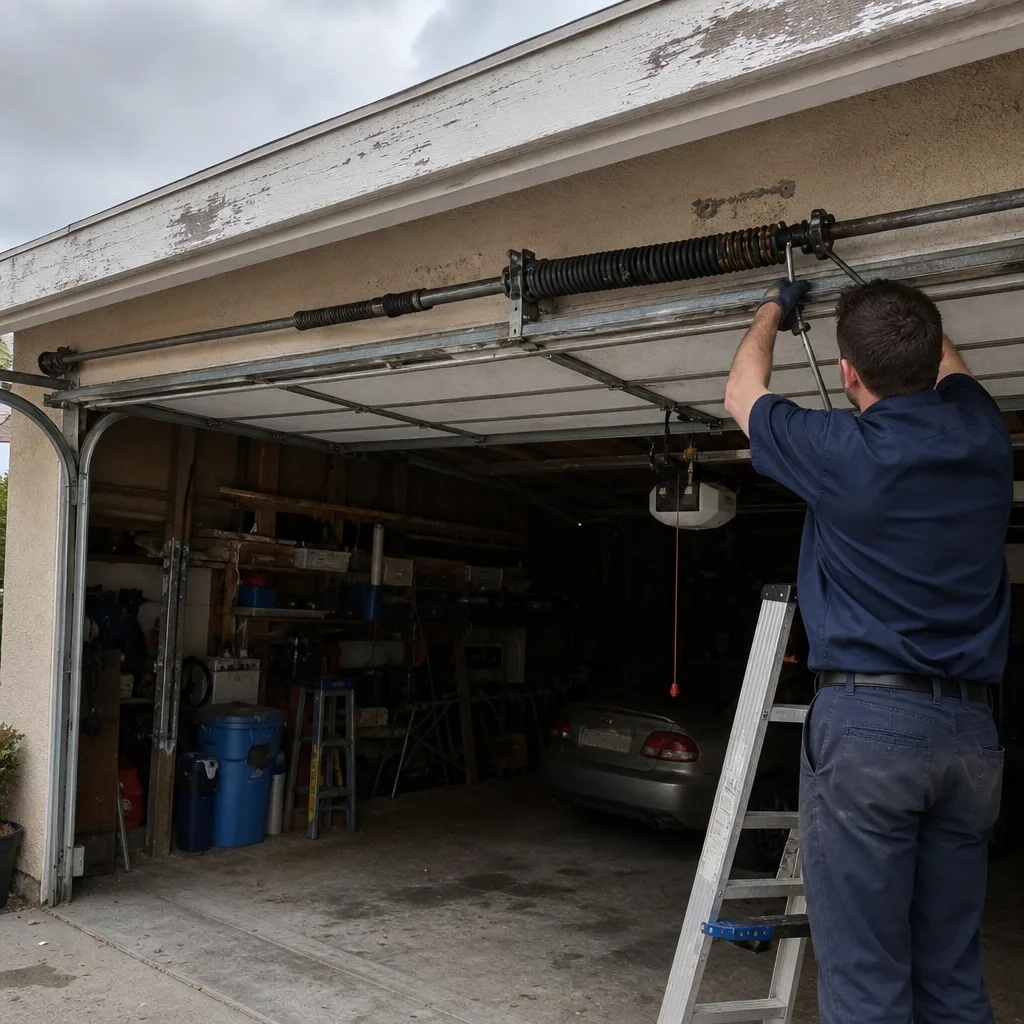
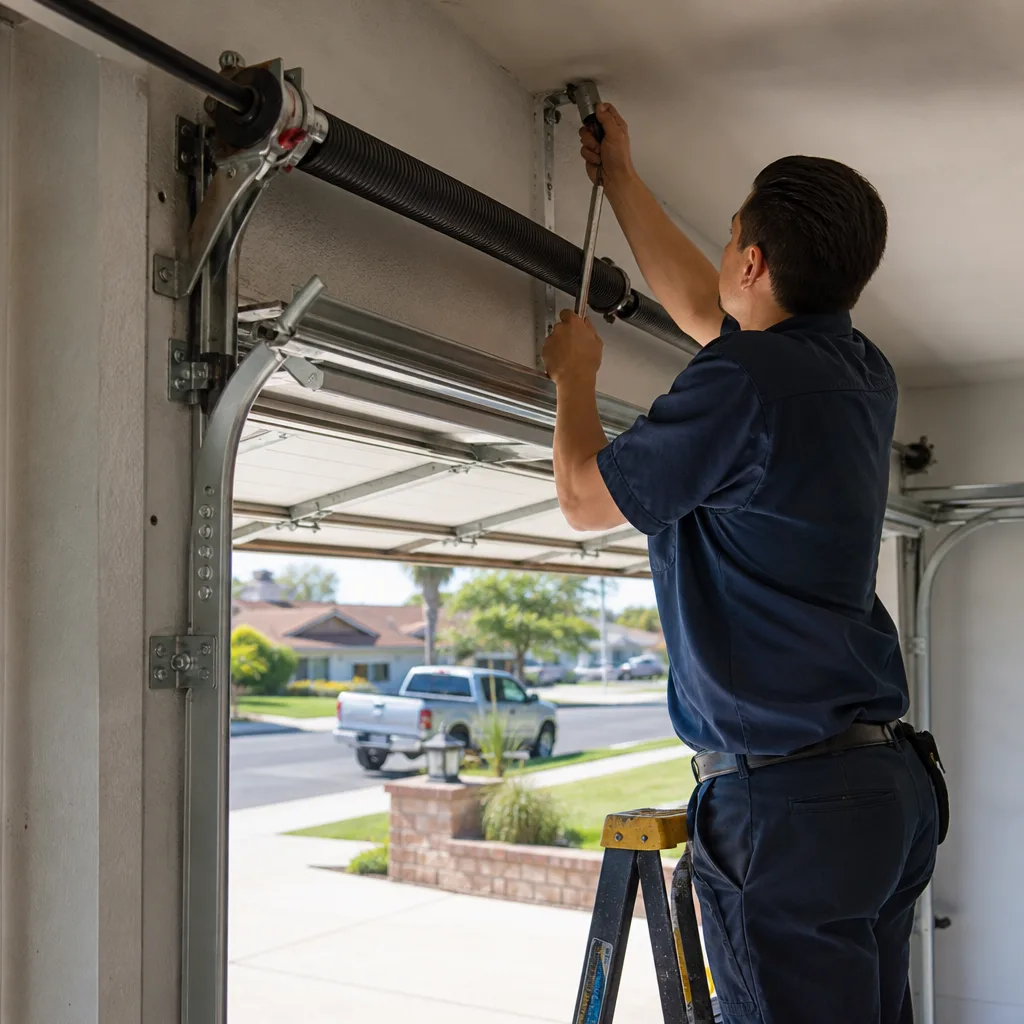
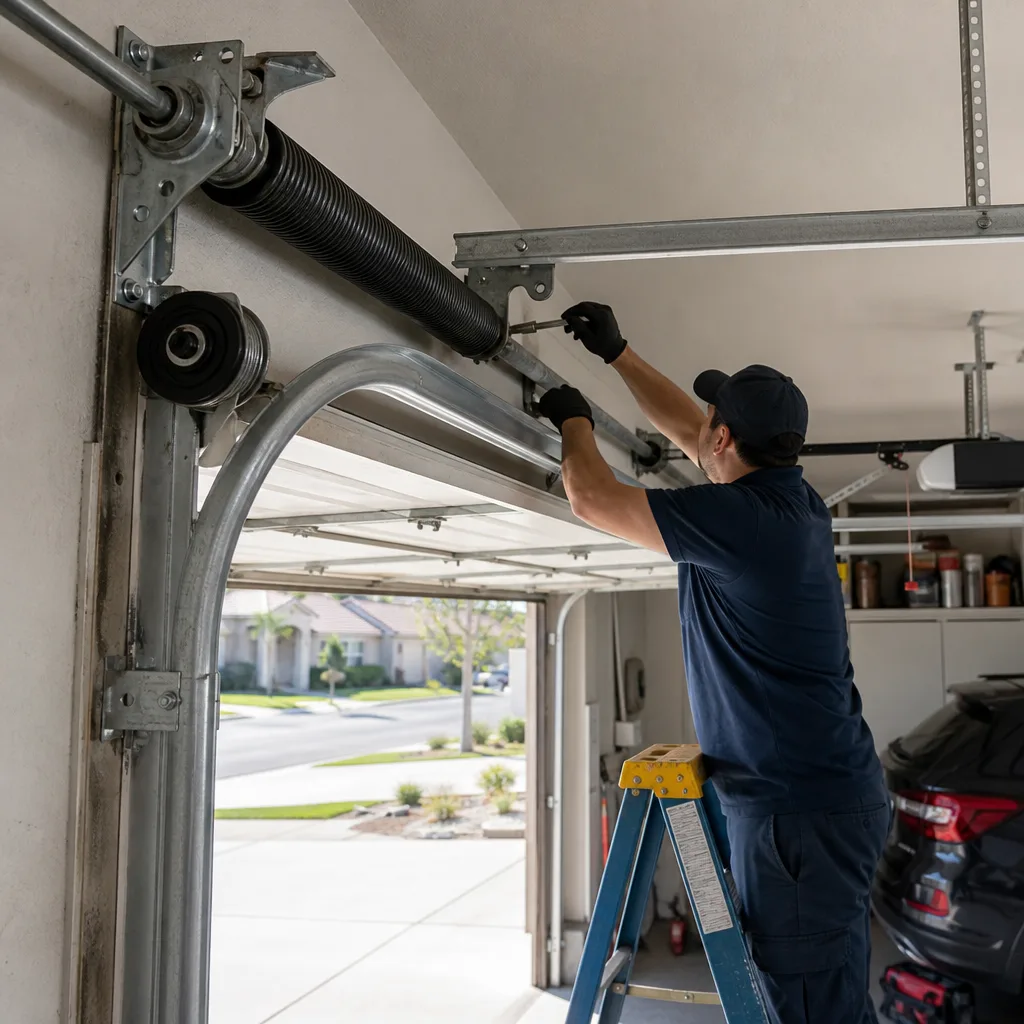
- Spring balance test: Disconnect the opener using the manual release cord and lift the door by hand. It should move smoothly and stay put at the halfway point. If it drops or feels heavy, the spring has lost tension. Summer heat accelerates this on springs that are already 7 years old or more.
- Opener ventilation: Most Fullerton garages lack cross-ventilation. If your opener housing feels hot to the touch at 4 p.m., the motor is running at the edge of its thermal envelope. A small vent or leaving the side door cracked during peak heat helps some LiftMaster and Genie units avoid thermal shutdown.
- Weatherstripping adhesion: The adhesive that holds vinyl weatherstripping to the door frame softens in sustained heat. Run a finger along the top and side seals in July and August. If the material peels away from the framing, it needs re-securing before Santa Ana season.
- Roller wear: Nylon rollers that have been running in a hot, dry garage for several summers develop flat spots faster than rollers in coastal humidity. Listen for a rhythmic thumping during operation. That sound is a flat-spotted roller, not a track problem.
Fullerton’s inland position means it gets hotter than Huntington Beach or Long Beach, but it also means garage doors in neighborhoods like Sunny Hills and the area around Cal State Fullerton dry out faster. Dry heat is harder on weatherstripping and nylon components than humid heat. A door that sits in direct western sun through the afternoon can have surface temperatures 30°F above ambient air temperature, which acts like a slow oven on any rubber or vinyl component facing that direction.
Fall: Santa Ana Wind Season Preparation
Santa Ana winds are the single most underrated threat to garage door hardware in Fullerton. The winds, which typically begin in October and peak between November and February, drive fine dust, leaf litter, and small debris into every gap in the garage door track system. Unlike a rainstorm that passes through in hours, a Santa Ana event can blow for two to three days, continuously depositing grit into the same areas over and over.
What happens next is predictable. Debris accumulates in the vertical tracks and in the curved transition between vertical and horizontal track sections. Each cycle of the door grinds that debris against the rollers. Nylon rollers abrade. Steel rollers score. The track itself develops wear marks. Over a single wind season, a door that previously ran quietly can develop a persistent grinding noise that no amount of spray lubricant will fix, because the problem is embedded grit, not dryness.
October Wind Season Checklist
- Clear the bottom seal track area: Use a brush or blower to remove debris from the concrete threshold where the bottom seal meets the floor. Grit here prevents the seal from closing completely, which is exactly how wind-driven dust enters the garage.
- Inspect the bottom weatherstrip for full compression: Press down on the seal with your foot at the center of the door. It should compress and spring back. A flattened or cracked seal does not keep Santa Ana debris out and must be replaced before the winds arrive.
- Clean both vertical tracks: Loosen debris in the tracks with a dry brush, then wipe the tracks with a clean cloth. Do not use grease; grease traps dust and makes the problem worse. The goal is bare, clean metal.
- Tighten track mounting bolts: Santa Ana gusts shake the door while it is closed. Loose mounting bolts allow the track to shift slightly, which throws off roller alignment and causes the door to bind. A socket wrench and five minutes prevents most binding complaints we see in November.
- Check the roller brackets and hinges for debris buildup: The hinge joints collect airborne dust that mixes with existing lubricant to form a paste. If your hinges have black, gummy buildup, wipe them clean before applying fresh lubricant.
Homeowners in Fullerton neighborhoods with mature tree coverage, particularly near the Fullerton Arboretum and older sections of the city, face more leaf debris than homeowners in newer developments with sparse landscaping. If you have a liquid amber, sycamore, or California pepper tree within 30 feet of your garage, expect to clean the tracks twice during fall rather than once.
Brand-specific note: Wayne Dalton doors with TorqueMaster spring systems have a sealed spring tube, which is a genuine advantage during Santa Ana season because the spring never gets coated in dust. For help selecting the best option for your home, read our guide on Choosing the Right Garage Door Brand: A Buyer’s Guide for Fullerton. Traditional torsion springs mounted on a shaft are fully exposed and collect a layer of gritty film. That film does not damage the spring itself, but it makes spring inspection harder. Wiping the spring coils with a dry cloth each October gives you a clear view of the metal so you can spot surface rust or coil separation before a failure.
Winter: Rain, Drainage, and Bottom Seal Rot
Fullerton’s rainy season is concentrated and often dramatic. The city averages roughly 14 inches of rain per year, which is modest by national standards, but most of it falls between December and March in a handful of significant storms. A garage door that has gone six months without rain exposure can suddenly sit in pooled water for hours during a single afternoon downpour.
The weak point is the bottom seal. Vinyl and rubber bottom seals sit directly on the concrete, and Fullerton garages built before the 1990s frequently have threshold drainage that does not slope away from the door adequately. When water pools against the seal, it wicks into the retainer channel that holds the seal in place. Over repeated rain events, the aluminum retainer corrodes, the seal material degrades from constant moisture exposure, and you get a failure that looks sudden but has been building for years.
Fullerton Rainy Season Maintenance Sequence
- After the first significant rain, check for standing water: Walk out to the garage door during or immediately after heavy rain and look at the threshold. Water should sheet away from the door. If it pools against the bottom seal, your drainage is inadequate and the seal is wicking moisture.
- Inspect the concrete threshold for heaving: Fullerton’s clay-heavy soil expands when saturated. This can push concrete slabs slightly upward, creating a high spot that blocks the door’s travel or prevents the bottom seal from making even contact. Run the door and watch the bottom seal. If one corner compresses more than the other, the slab has shifted.
- Pull the bottom seal out of the retainer and check for trapped moisture: If you see standing water inside the channel or rust forming on the aluminum, dry it completely and consider replacing the seal with a bulb-style vinyl seal that drains better than a flat T-style seal.
- Check the vertical track bottoms for rust: Track bottom brackets sit low enough to be splashed by puddle water. Surface rust on the bracket is cosmetic, but rust that creeps into the roller path will eventually cause roller binding. Wire brush the affected area and paint it if the rust extends beyond surface level.
Fullerton’s winter temperatures rarely drop below 40°F, so you do not need to worry about the lubricant thickening or the door freezing to the ground. What you do need to worry about is what happens when the rain stops. The cycle of wet and dry through a Fullerton winter accelerates oxidation on any exposed steel component. Garage door springs that live their entire life in a dry garage will still develop surface rust faster during a rainy season than during the dry months, because humidity in the garage spikes every time a wet car parks inside.
Spring: Post-Rain Inspection Before Temperatures Spike
Spring in Fullerton is a narrow window. The rain stops in March or April, temperatures climb quickly into the 80s, and by May the garage is back to acting like a kiln. The window between the last rain and the first sustained heat is the best opportunity all year to correct problems while conditions are mild and before heat stress compounds them.
April Inspection Sequence
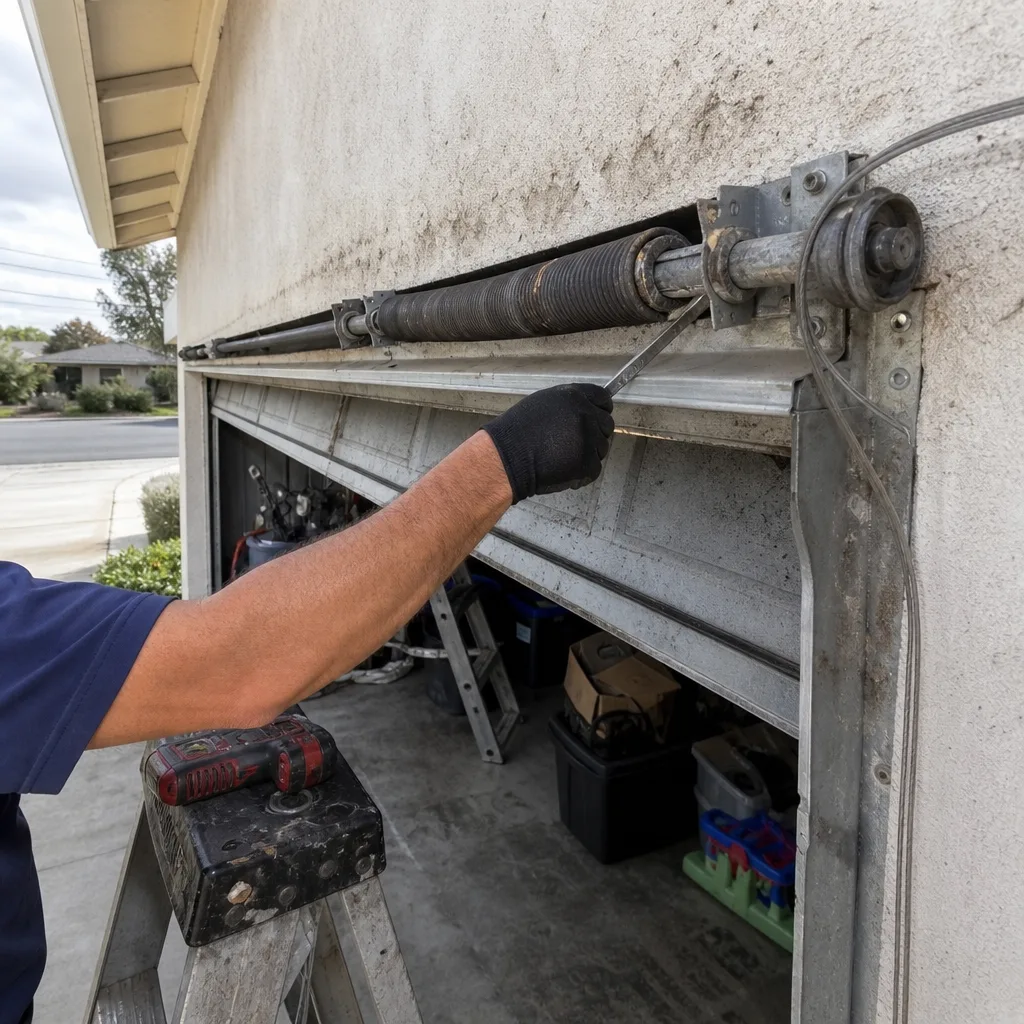
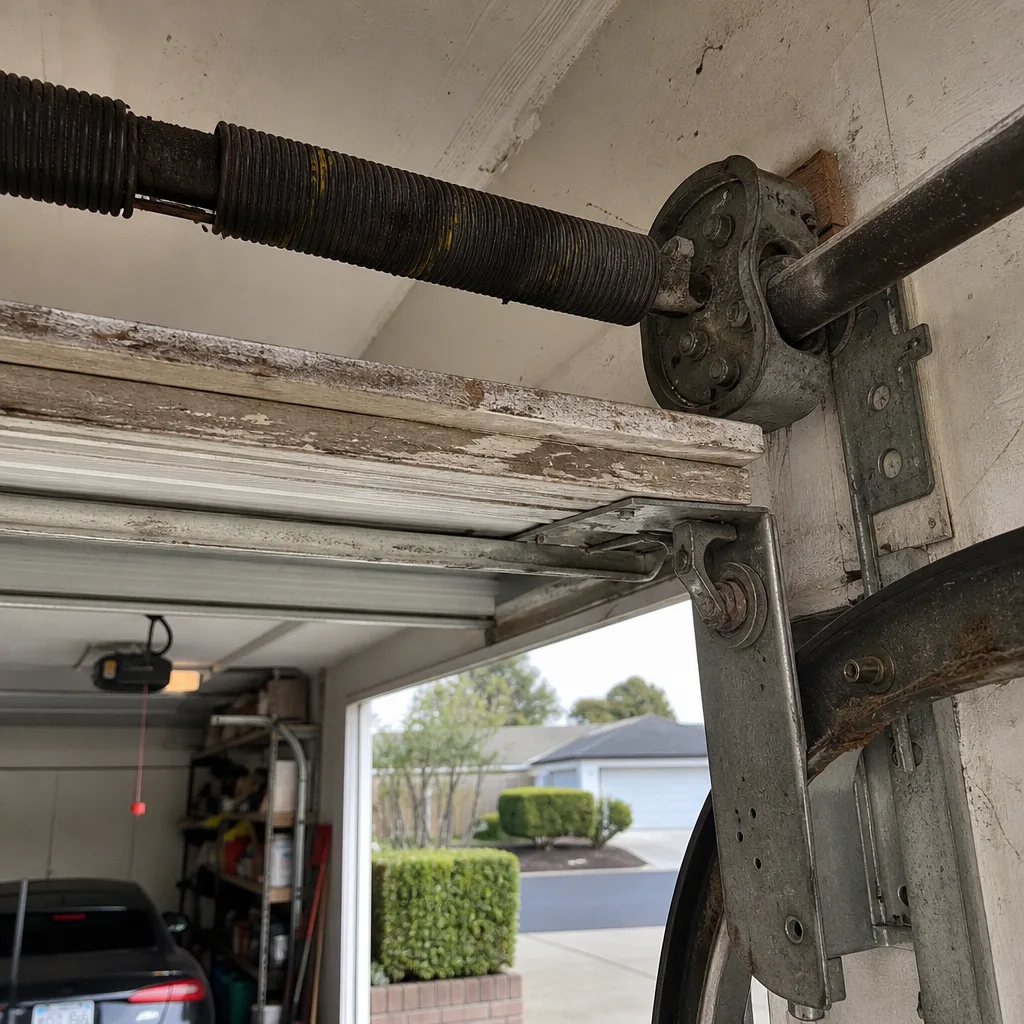
- Check hardware for corrosion: Spring is when corrosion from winter humidity becomes visible. Look at the torsion spring coils, the cable drums, the hinge plates, and the bottom bracket assemblies. Light surface rust on the spring is normal and not a failure indicator. Rust on the cables, frayed strands, or corrosion that has pitted the hinge metal is different and needs professional attention.
- Test the auto-reverse safety system: Place a 2×4 flat on the ground under the door’s path and close the door. It should reverse within two seconds of contacting the wood. This test is required year-round, but spring is a good time to make it a scheduled habit because door alignment can shift subtly during Santa Ana season.
- Examine panel paint oxidation: Fullerton’s dry heat and UV exposure fade and oxidize garage door panels faster than coastal fog zones. Look at the bottom panels first, since those spend the most time in direct sun reflection off concrete. If the paint has a chalky texture or visible fading, address it before summer when heat makes repainting more difficult.
- Lubricate moving parts: Use a silicone or lithium-based spray on the roller bearings, hinges, and torsion spring coils. Do not use WD-40; it is a solvent that strips existing lubrication. One pass per surface is enough. Over-lubrication attracts dust and creates the gritty paste we described earlier.
- Run a full cycle with the opener disconnected: Lift the door manually through its full travel. It should move with one hand and remain balanced at any position. Any stiffness, binding, or imbalance here is a spring issue that will get worse as summer heat softens the spring’s temper.
Homeowners who follow this spring sequence typically reach summer with a properly balanced door, clean tracks, and hardware that has been inspected after the winter wet cycle. Homeowners who skip spring maintenance and jump straight into summer often discover a corrosion problem or a balance problem in July, when the demand for garage door repair in Fullerton is at its highest.
The 12-Month Fullerton Maintenance Calendar
The table below condenses everything above into a monthly schedule built for Fullerton’s climate cycle, not a generic North American template. Each task is tied to the specific condition it addresses.
| Month | Task | Why This Month in Fullerton |
|---|---|---|
| January | Check bottom seal for pooling water after storms | Peak rainy season; drainage failures show now |
| February | Inspect cables and bottom brackets for rust | Wet-dry cycling has had two months to oxidize steel |
| March | Clean tracks after final wind events of season | Santa Ana activity declines; clear debris before summer |
| April | Full spring inspection: corrosion, balance, auto-reverse test | Last mild month; correct problems before heat arrives |
| May | Lubricate rollers, hinges, and springs | Temperatures climbing; lubrication prevents heat-related wear |
| June | Spring balance test and opener ventilation check | First sustained 90°F days; thermal overloads begin |
| July | Weatherstripping adhesion check | Peak heat softens adhesive; seals begin peeling |
| August | Check for heat-related spring fatigue | Metal expansion at annual maximum; balance issues surface |
| September | Panel paint oxidation assessment | End of UV season; damage is visible before fall |
| October | Santa Ana preparation: clean tracks, tighten bolts, check seals | Wind season begins; debris infiltration starts |
| November | Mid-wind-season track cleaning | Santa Ana events are frequent; grind is cumulative |
| December | Threshold drainage inspection after first rains | Rainy season begins; pooling problems appear now |
This is not a high-effort calendar. Most months take 15 to 20 minutes. October and April are the heavier months, with 45 to 60 minutes of work each. The point is not busywork; it is scheduling checks for the specific weeks when Fullerton conditions are actually stressing the door.
Common Mistakes to Avoid
- Using grease in the tracks. Grease attracts Santa Ana dust and creates an abrasive slurry that accelerates roller and track wear. Tracks should be clean and dry. Lubricant goes on rollers and hinges, never on the track surface.
- Following a generic winterization checklist. If a guide tells you to “winterize” your garage door by installing insulation panels or using a de-icer on the threshold, it was not written for Fullerton. You do not have that weather. Time spent on frozen-door prevention is time not spent on the actual threats: heat and wind.
- Ignoring thermal overload shutdowns. When the opener stops mid-cycle in July and restarts 20 minutes later, that is the thermal protector. Repeated thermal shutdowns reduce the lifespan of a LiftMaster or Chamberlain motor. Addressing ventilation now is cheaper than replacing the opener in two years.
- Replacing the bottom seal without checking drainage. If water pools against the threshold, a new seal will rot just as fast as the old one. Fix the drainage first, then the seal.
- Testing auto-reverse with a flimsy object. A cardboard box or a broom handle does not provide the resistance of a 2×4. The test is meaningless unless the object is rigid enough to trigger the reversal mechanism.
- Adjusting spring tension without the proper tools. Torsion springs are under enough tension to cause serious injury. This is not a job for a homeowner with a screwdriver. If the balance test fails, call a professional. We handle garage door opener repair in Fullerton and related spring work, and we would rather replace a spring at standard rates than see a homeowner get hurt trying to save money on one.
- Lubricating the opener chain or belt. Many Chamberlain and Craftsman openers use a belt or chain that does not require homeowner lubrication. Adding lubricant to a belt attracts dust and causes slip. Adding the wrong lubricant to a chain can sling onto the rail and onto the sensors. Check your opener’s manual before lubricating anything on the drive mechanism.
When to Call a Professional
Some conditions in this guide are checks you can do yourself. Others are repairs that require a torsion spring under tension, a cable under load, or an opener logic board diagnostic. If your door fails the manual balance test, if you see frayed cables, if the spring has visible coil separation, or if the opener consistently trips its thermal overload in temperatures below 90°F, stop and call someone who works on these systems every day. The cost of a misdiagnosed spring failure is not just a broken spring; it is a door that falls under its own weight, a damaged panel, and a vehicle that cannot leave the garage until the door is removed from the track.
Westport Garage Door Repair offers free estimates in Fullerton. We work on LiftMaster, Chamberlain, Genie, Clopay, Amarr, Wayne Dalton, Craftsman, and Raynor systems, and we diagnose rather than guess. Call (877) 265-9301.
Frequently Asked Questions
Twice a year. A spring inspection in April addresses corrosion from winter rain before summer heat arrives, and a fall inspection in October prepares the door for Santa Ana wind season. Between those two inspections, the monthly checks in the calendar above take 15 to 20 minutes each. If you use your garage door more than four times daily, consider adding a mid-summer balance check in July, because high-cycle use accelerates spring fatigue in Fullerton’s heat. Call (877) 265-9301 to schedule an inspection and get an honest assessment of what your door actually needs.
Heat does not damage springs directly the way cold does, but sustained 90°F+ temperatures cause metal expansion that reduces spring torque slightly, and high-cycle heat exposure accelerates the fatigue that eventually causes spring failure. A spring rated for 10,000 cycles in a moderate climate may fail earlier in an uninsulated Fullerton garage where interior temperatures reach 120°F in summer. The failure mode is gradual loss of balance, not sudden snapping, which is why summer balance testing matters. If your door feels heavy in August, the spring is the likely cause, and you can reach us at (877) 265-9301 for a free estimate.
A professional seasonal inspection in Fullerton typically runs $75 to $150, depending on the number of doors and whether lubrication and minor adjustments are included. Most companies, including Westport Garage Door Repair, apply the inspection fee toward any repair you approve. Parts like bottom seals, rollers, or weatherstripping are quoted separately and agreed upon before work starts. For a specific quote on your door and opener, call (877) 265-9301.
You can do the inspection and cleaning tasks in this guide: track cleaning, lubrication, visual checks, weatherstripping adhesion tests, and the auto-reverse safety test with a 2×4. You should not attempt any task that involves torsion spring adjustment, cable replacement, or opener logic board work. Those components carry enough tension or electrical current to cause serious injury or death. Fullerton’s climate makes some homeowner tasks easier than in other regions, but spring and cable work remains professional-only regardless of where you live.
Yes. We handle garage door installation in Fullerton across all major brands, including Clopay, Amarr, and Wayne Dalton. Whether you are replacing a builder-grade door from the 1980s or upgrading to an insulated model better suited to Fullerton’s summer heat, we measure, quote, and install with the same crew that handles repairs. The advantage of working with a single-trade specialist is that the installer understands the hardware the way the repair tech does, because garage doors are all we do.
Belt-drive openers from LiftMaster and Chamberlain tend to handle Fullerton’s heat cycles well because the belt does not generate metal-on-metal friction heat the way a chain drive does. DC motor models also run cooler than older AC motor units, which reduces thermal shutdown frequency in uninsulated garages. However, the opener is secondary to the door itself. A properly balanced door extends opener lifespan more than any brand choice. If your current opener is tripping in the heat and you want to know whether the problem is the motor or the door balance, call (877) 265-9301 and we will diagnose it.
The Bottom Line
Fullerton’s climate punishes garage doors in specific ways: summer heat that saps spring tension and trips opener thermal protectors, fall Santa Ana winds that pack tracks with abrasive debris, winter rain that rots bottom seals and corrodes hardware, and spring transitions that reveal everything the previous three seasons did. A maintenance calendar built for Minnesota or Michigan does not address these conditions. The calendar in this guide does. Follow the monthly checks, take the October and April inspections seriously, and call a specialist when the balance test fails or the cables show wear. Explore our more guides & resources for year-round garage door care. The time you spend maintaining your door is dramatically cheaper than the repair you avoid.
Written by the team at Westport Garage Door Repair, serving Fullerton since 2012.
See the difference
 Before
 After
 Before
 After
 Before
 After